Written by: Zhang Yaqi
Source: Wallstreetcn
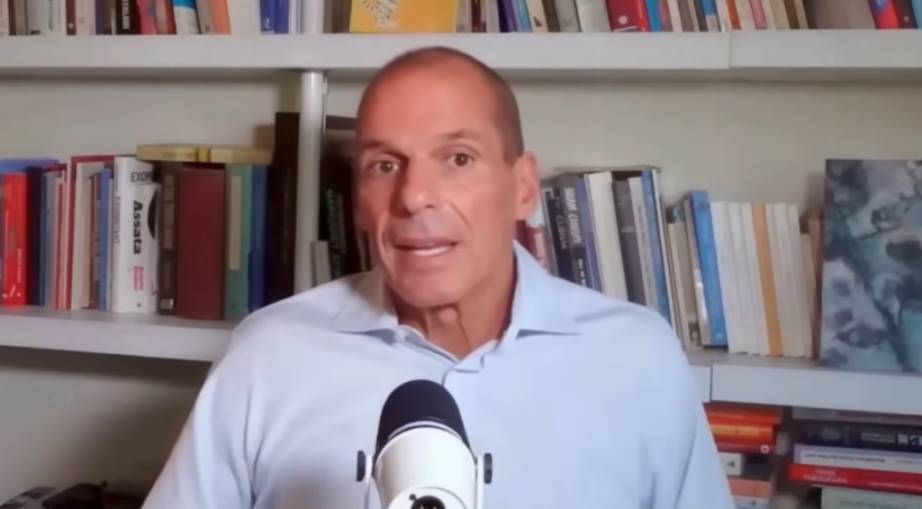
Currently, every major country on Earth is deeply mired in debt, raising the century-old question: “If everyone is in debt, then who is actually lending?” Recently, former Greek Finance Minister Yanis Varoufakis delved into this complex and fragile global debt system on a podcast, warning that the system is facing an unprecedented risk of collapse.
Yanis Varoufakis stated that the lenders of government debt are far from being outsiders; rather, they are part of a closed domestic loop. Taking the United States as an example, the government’s largest creditors are the Federal Reserve and internal government trust funds such as Social Security. The deeper secret is that ordinary citizens, through their pensions and savings, hold a large amount of government bonds, making them the biggest lenders.
For foreign countries like Japan, buying US Treasuries is a tool for recycling trade surpluses and maintaining currency stability. Therefore, in wealthy countries, government bonds are actually the safest assets that creditors compete to hold.
Yanis Varoufakis warned that the system will fall into crisis when confidence collapses, and there are historical precedents. Although the conventional view is that major economies will not default, risks such as soaring global debt, high interest rate environments, political polarization, and climate change are accumulating, which may lead to a loss of confidence in the system and trigger disaster.
Yanis Varoufakis summarized the puzzle of “who is the creditor”: the answer is all of us. Through pensions, banks, central banks, and trade surpluses, countries collectively lend to each other, forming a vast and interconnected global debt system. This system brings prosperity and stability, but is also extremely unstable due to debt levels reaching unprecedented heights.
The question is not whether it can continue indefinitely, but whether the adjustment will be gradual or erupt suddenly in the form of a crisis. He warned that the margin for error is narrowing. Although no one can predict the future, structural issues such as the disproportionate benefit to the wealthy and high interest payments by poor countries cannot last forever, and no one truly controls this complex system with its own logic.
Below is a summary of the podcast highlights:
-
In wealthy countries, citizens are both borrowers (benefiting from government spending) and lenders, because their savings, pensions, and insurance policies are all invested in government bonds.
-
US government debt is not a burden imposed on unwilling creditors, but an asset they want to own.
-
The US is expected to pay $1 trillion in interest in fiscal year 2025.
-
This is one of the great ironies of modern monetary policy: we create money to save the economy, but this money disproportionately benefits those who are already wealthy. The system works, but it exacerbates inequality.
-
Paradoxically, the world needs government debt.
-
Historically, crises often erupt when confidence evaporates—when lenders suddenly decide not to trust borrowers anymore, a crisis emerges.
-
Every country has debt, so who is the creditor? The answer is all of us. Through our pension funds, banks, insurance policies, and savings accounts, through our governments’ central banks, and through the currency created and recycled by trade surpluses to buy bonds, we collectively lend to ourselves.
-
The question is not whether this system can continue indefinitely—it cannot, nothing in history lasts forever. The question is how it will adjust.
Below is the podcast transcript:
Global Debt Crisis: The “Mysterious” Lender Is Ourselves
Yanis Varoufakis:
I want to talk to you about something that sounds like a riddle, or even a magic trick. Every major country on Earth is deeply mired in debt. The US owes $38 trillion, Japan’s debt is equivalent to 230% of its entire economy. The UK, France, Germany—all are deep in deficit. Yet somehow, the world keeps turning, money keeps flowing, and markets keep functioning.
This is the riddle that keeps people up at night: If everyone is in debt, then who is actually lending? Where does all this money come from? When you borrow money from a bank, the bank owns the money, which is a perfectly reasonable question. It comes from somewhere—depositors, investors, bank capital, funding pools, and borrowers. Simple. But when we scale this up to the level of nations, something very strange happens, and the math no longer makes intuitive sense. Let me explain what actually happens, because the answer is far more interesting than most people realize. I must warn you, once you understand how this system really works, you’ll never look at money the same way again.
Let’s start with the US, because it’s the easiest case to examine. As of October 2, 2025, US federal debt reached $38 trillion. That’s not a typo—$38 trillion. To give you a more intuitive sense, if you spent $1 million every day, it would take you over 100,000 years to spend that much money.
Now, who holds this debt? Who are these mysterious lenders? The first answer may surprise you: Americans themselves. The largest single holder of US government debt is actually the US central bank—the Federal Reserve. They hold about $6.7 trillion in US Treasuries. Think about that for a moment: the US government owes money to the US government’s bank. But that’s just the beginning.
Another $7 trillion exists in what we call “intragovernmental holdings”—that is, money the government owes itself. The Social Security Trust Fund holds $2.8 trillion in US Treasuries, the Military Retirement Fund holds $1.6 trillion, and Medicare also holds a significant portion. So, the government borrows from the Social Security fund to finance other projects, promising to pay it back later. It’s like taking money from your left pocket to pay off your right pocket’s debt. So far, the US actually owes itself about $13 trillion, which is already more than a third of the total debt.
The question of “who is the lender” gets weird, doesn’t it? But let’s continue. The next major category is private domestic investors—ordinary Americans participating through various channels. Mutual funds hold about $3.7 trillion, state and local governments own $1.7 trillion, and there are also banks, insurance companies, pension funds, etc. US private investors collectively hold about $24 trillion in US Treasuries.
Now, here’s where it gets really interesting. These pension funds and mutual funds are funded by American workers, retirement accounts, and ordinary people saving for the future. So, in a very real sense, the US government is borrowing from its own citizens.
Let me tell you a story about how this works in practice. Imagine a schoolteacher in California, 55 years old, who has been teaching for 30 years. Every month, part of her salary goes into her pension fund. That pension fund needs to invest the money somewhere safe, somewhere that reliably generates returns so she can enjoy a secure retirement. What could be safer than lending to the US government? So her pension fund buys government bonds. That teacher might also be worried about the national debt. She watches the news, sees those scary numbers, and is understandably concerned. But here’s the twist: she’s one of the lenders. Her retirement depends on the government continuing to borrow and pay interest on those bonds. If the US suddenly paid off all its debt tomorrow, her pension fund would lose one of its safest, most reliable investments.
This is the first major secret of government debt. In wealthy countries, citizens are both borrowers (benefiting from government spending) and lenders, because their savings, pensions, and insurance policies are all invested in government bonds.
Now, let’s talk about the next category: foreign investors. This is what most people imagine when they think about who holds US debt. Japan owns $1.13 trillion, the UK owns $723 billion. Foreign investors, including governments and private entities, collectively hold about $8.5 trillion in US Treasuries, about 30% of the publicly held portion.
But what’s interesting about foreign holdings is: why do other countries buy US Treasuries? Let’s take Japan as an example. Japan is the world’s third-largest economy. They export cars, electronics, and machinery to the US, and Americans buy these products with dollars, so Japanese companies earn a lot of dollars. Now what? These companies need to convert dollars into yen to pay domestic employees and suppliers. But if they all try to convert dollars at once, the yen would appreciate sharply, making Japanese exports more expensive and less competitive.
So what does Japan do? The Bank of Japan buys these dollars and invests them in US Treasuries. This is a way to recycle trade surpluses. Think of it this way: the US buys physical goods from Japan, like Sony TVs and Toyota cars; Japan uses those dollars to buy US financial assets, namely US Treasuries. The money circulates, and the debt is just an accounting record of this circulation.
This leads to a crucial point for most of the world: US government debt is not a burden imposed on unwilling creditors, but an asset they want to own. US Treasuries are considered the world’s safest financial asset. When uncertainty strikes—wars, pandemics, financial crises—money floods into US Treasuries. This is called a “flight to safety.”
But I’ve been focusing on the US. What about the rest of the world? Because this is a global phenomenon. Global public debt currently stands at $111 trillion, 95% of global GDP. In just one year, debt grew by $8 trillion. Japan may be the most extreme example. Japanese government debt is 230% of GDP. If Japan were a person, it would be like earning £50,000 a year but owing £115,000—a bankrupt situation. Yet Japan keeps functioning. Japanese government bond yields are near zero, sometimes even negative. Why? Because Japan’s debt is almost entirely held domestically. Japanese banks, pension funds, insurance companies, and households hold 90% of Japanese government debt.
There’s a psychological factor here. Japanese people are known for their high savings rate—they diligently save money. These savings are invested in government bonds because they are seen as the safest store of wealth. The government uses these borrowed funds for schools, hospitals, infrastructure, and pensions, benefiting the very citizens whose savings fund the debt, forming a closed loop.
Mechanisms and Inequality: QE, Trillions in Interest, and the Global Debt Predicament
Now let’s explore how it works: Quantitative Easing (QE).
Quantitative Easing essentially means that central banks create money out of thin air by typing numbers on a keyboard, then use this newly created money to buy government bonds. The Federal Reserve, Bank of England, European Central Bank, Bank of Japan—they don’t need to raise funds elsewhere to lend to their own governments; they create money by increasing the numbers in accounts. This money didn’t exist before; now it does. During the 2008 and 2009 financial crisis, the Fed created about $3.5 trillion this way. During the COVID-19 pandemic, they created another huge sum.
Before you think this is some elaborate scam, let me explain why central banks do this and how it’s supposed to work. During crises like financial crashes or pandemics, the economy stalls. People stop spending out of fear, businesses stop investing due to lack of demand, and banks stop lending out of fear of defaults, creating a vicious cycle. Less spending means less income, which leads to even less spending. At this point, the government needs to step in—building hospitals, issuing stimulus checks, bailing out failing banks, whatever it takes. But the government also needs to borrow massively to do this. In abnormal times, there may not be enough willing lenders at reasonable rates. So, the central bank steps in, creates money, and buys government bonds to keep interest rates low and ensure the government can borrow what it needs.
In theory, this new money flows into the economy, encouraging borrowing and spending, and helps end the recession. Once the economy recovers, the central bank can reverse the process, selling those bonds back to the market and withdrawing the money, returning things to normal.
However, reality is more complicated. The first round of QE after the financial crisis seemed to work well, preventing a total systemic collapse. But at the same time, asset prices soared—stocks and real estate included. That’s because all the new money ended up in the hands of banks and financial institutions. They didn’t necessarily lend it to small businesses or homebuyers, but used it to buy stocks, bonds, and property. As a result, the wealthy, who own most financial assets, became even wealthier.
Research by the Bank of England estimates that QE raised stock and bond prices by about 20%. But behind this, the wealthiest 5% of UK households saw their average wealth increase by about £128,000, while households with little or no financial assets benefited barely at all. This is one of the great ironies of modern monetary policy: we create money to save the economy, but this money disproportionately benefits those who are already wealthy. The system works, but it exacerbates inequality.
Now, let’s talk about the cost of all this debt, because it’s not free—it accrues interest. The US is expected to pay $1 trillion in interest in fiscal year 2025. That’s right, interest payments alone will reach $1 trillion, more than the country’s entire military spending. It’s the second-largest item in the federal budget after Social Security, and the number is rising rapidly. Interest payments have nearly doubled in three years, from $497 billion in 2022 to $909 billion in 2024. By 2035, interest payments are expected to reach $1.8 trillion per year. Over the next decade, the US government will spend $13.8 trillion on interest alone—money not spent on schools, roads, healthcare, or defense, just interest.
Think about what this means: every dollar spent on interest is a dollar not spent elsewhere. It’s not used to build infrastructure, fund research, or help the poor—it just pays interest to bondholders. Here’s the current math: as debt increases, interest payments increase; as interest payments increase, deficits increase; as deficits increase, more borrowing is needed. It’s a feedback loop. The Congressional Budget Office projects that by 2034, interest costs will consume about 4% of US GDP and 22% of total federal revenue, meaning more than one out of every five tax dollars will go purely to interest payments.
But the US is not the only country in this predicament. Among the wealthy countries of the OECD, interest payments now average 3.3% of GDP, more than these governments spend on defense. Globally, over 3.4 billion people live in countries where government debt interest payments exceed spending on education or healthcare. In some countries, governments pay more to bondholders than they spend educating children or treating patients.
For developing countries, the situation is even more dire. Poor countries paid a record $96 billion to service external debt. In 2023, their interest costs reached $34.6 billion, four times what they were a decade ago. In some countries, interest payments alone account for 38% of export income. This money could have modernized their militaries, built infrastructure, or educated citizens, but instead it flows as interest to foreign creditors. Sixty-one developing countries now spend 10% or more of government revenue on interest payments, and many are in distress, spending more to service existing debt than they receive from new loans. It’s like drowning—paying off your mortgage while watching your house sink into the sea.
So why don’t countries just default and refuse to pay? Of course, defaults do happen. Argentina has defaulted nine times in its history, Russia defaulted in 1998, and Greece nearly defaulted in 2010. But the consequences of default are catastrophic: being shut out of global credit markets, currency collapse, unaffordable imports, pensioners losing their savings. No government chooses to default unless it has no other option.
For major economies like the US, UK, Japan, and the leading European countries, default is unthinkable. These countries borrow in their own currencies and can always print more money to pay. The problem is not the ability to pay, but inflation—printing too much money devalues the currency, which is another kind of disaster.
The Four Pillars Sustaining the Global Debt System and Collapse Risks
This raises the question: what exactly keeps this system running?
The first reason is demographics and savings. Populations in wealthy countries are aging, people are living longer, and need safe places to store retirement wealth. Government bonds meet this need. As long as people need safe assets, there will be demand for government debt.
The second reason is the structure of the global economy. We live in a world with huge trade imbalances. Some countries have massive trade surpluses, exporting far more than they import; others run huge deficits. Surplus countries often accumulate financial claims on deficit countries in the form of government bonds. As long as these imbalances persist, so will the debt.
The third reason is monetary policy itself. Central banks use government bonds as policy tools—buying bonds to inject money into the economy, selling bonds to withdraw money. Government debt is the lubricant of monetary policy, and central banks need large quantities of government bonds to function properly.
The fourth reason is that in modern economies, safe assets are valuable precisely because they are scarce. In a world full of risk, safety commands a premium. Government bonds from stable countries provide that safety. If governments actually paid off all their debt, there would be a shortage of safe assets. Pension funds, insurance companies, and banks would all be scrambling for safe investments. Paradoxically, the world needs government debt.
However, there’s one thing that keeps me up at night and should concern us all: this system is stable right up until it collapses. Historically, crises often erupt when confidence evaporates—when lenders suddenly decide not to trust borrowers anymore, a crisis emerges. This happened to Greece in 2010. It happened during the Asian financial crisis in 1997, and in many Latin American countries in the 1980s. The pattern is always the same: everything seems normal for years, then suddenly, triggered by some event or loss of confidence, investors panic, demand higher interest rates, governments can’t pay, and a crisis erupts.
Could this happen to a major economy? Could it happen to the US or Japan? The conventional view says no, because these countries control their own currencies, have deep financial markets, and are “too big to fail” on a global scale. But conventional wisdom has been wrong before. In 2007, experts said nationwide house prices would never fall, but they did. In 2010, experts said the euro was unbreakable, but it nearly collapsed. In 2019, no one predicted a global pandemic would shut down the world economy for two years.
Risks are accumulating. Global debt is at peacetime highs. After years of near-zero interest rates, rates have risen sharply, making debt service more expensive. Political polarization is intensifying in many countries, making it harder to craft coherent fiscal policy. Climate change will require massive investment, which must be raised at already historically high debt levels. An aging population means fewer workers to support the elderly, putting pressure on government budgets.
Finally, there’s the issue of trust. The whole system depends on confidence in a few things: that governments will honor their payment promises, that money will hold its value, and that inflation will remain moderate. If that confidence collapses, the whole system falls apart.
Who Is the Creditor? We All Are
Back to our original question: every country has debt, so who is the creditor? The answer is all of us. Through our pension funds, banks, insurance policies, and savings accounts, through our governments’ central banks, and through the currency created and recycled by trade surpluses to buy bonds, we collectively lend to ourselves. Debt is the claim of one part of the global economy on another—a vast, interconnected web of obligations.
This system has brought enormous prosperity, funding infrastructure, research, education, and healthcare; it allows governments to respond to crises without being constrained by tax revenue; it creates financial assets that support retirement and provide stability. But it is also extremely unstable, especially as debt levels reach unprecedented heights. We are in uncharted territory—never in peacetime have governments borrowed so much, or interest payments consumed such a large share of budgets.
The question is not whether this system can continue indefinitely—it cannot, nothing in history lasts forever. The question is how it will adjust. Will the adjustment be gradual? Will governments slowly control deficits and will economic growth outpace debt accumulation? Or will it erupt suddenly in a crisis, forcing all the painful changes to happen at once?
I don’t have a crystal ball—no one does. But I can tell you: the longer this goes on, the narrower the path between these two possibilities, and the margin for error is shrinking. We have built a global debt system in which everyone owes everyone else, central banks create money to buy government bonds, and today’s spending is paid for by tomorrow’s taxpayers. In such a system, the rich benefit disproportionately from policies meant to help everyone, while poor countries pay heavy interest to creditors in rich countries. This cannot go on forever; choices must be made. The only questions are what to do, when to do it, and whether we can manage the transition wisely—or let it spiral out of control.
When everyone is in debt, the riddle of “who is lending” is not really a riddle at all—it’s a mirror. When we ask who the lender is, we are really asking: who is involved? Where is this system headed? Where will it take us? And the unsettling truth is that no one is really in control. The system has its own logic and momentum. We have built something complex, powerful, and fragile—and we are all trying to steer it.





