Zcash News Today: Zcash’s Sharp Decline Challenges Grayscale ETF Prospects as Distribution Concerns Rise
Zcash Faces Steep Decline Amid Market Turmoil
Zcash (ZEC) experienced a sharp drop of more than 20% within a single day, as a combination of technical failures and widespread liquidations intensified the downward momentum. This downturn has pushed ZEC to hover around $364, a significant fall from its October high of $760, despite having soared nearly 770% earlier in the year.
Factors Driving the Selloff
Market analysts point to several overlapping causes for the recent plunge. Notably, Hyperliquid’s release of 1.75 million HYPE tokens, a major trading halt triggered by a data center outage in Chicago, and shifting attitudes toward privacy-centric cryptocurrencies have all contributed to the volatility.
Technical Breakdown and On-Chain Signals
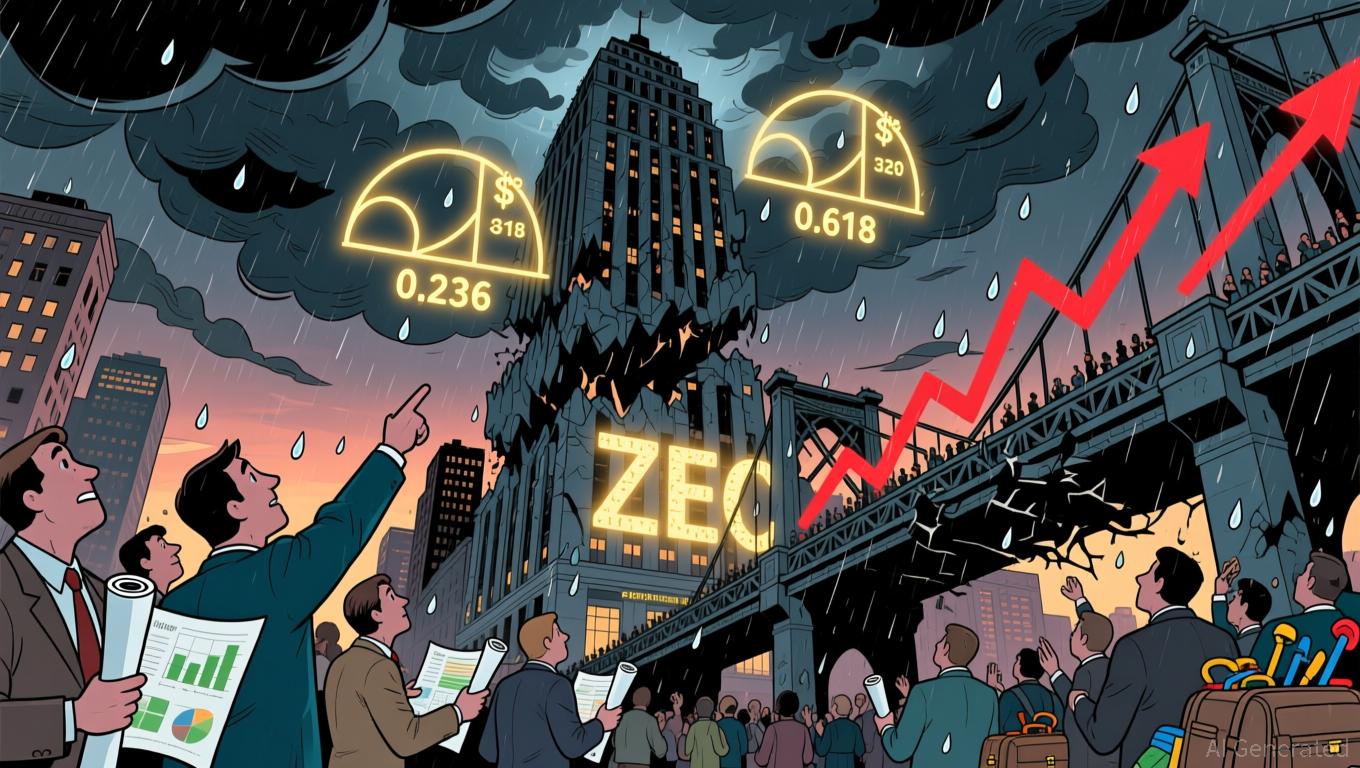
ZEC’s price collapse has breached important Fibonacci retracement markers, specifically the 0.236 and 0.618 levels, which are typically seen as vital for sustaining bullish trends. With these supports broken, the next key zones are at $361 and $320. Blockchain data shows that November saw net outflows totaling $39.34 million, indicating that many holders are selling off their positions. In the derivatives market, open interest has fallen sharply from $900 million to below $600 million, reflecting a waning appetite for leveraged trades.
Impact of Hyperliquid’s Token Unlock
The recent unlocking of HYPE tokens, valued at $60.4 million, has sparked concerns about increased selling pressure, leading to a 4.6% decline in HYPE’s price. Arthur Hayes, BitMEX’s founder, remarked that while such events are often anticipated, the ongoing market downturn since September highlights skepticism about the utility and governance of new tokens. Hyperliquid’s approach of prioritizing community distribution over venture capital initially fueled enthusiasm, but as prices retreat, this strategy is now under scrutiny.
Grayscale’s ETF Proposal: A Potential Game Changer?
Amid the current instability, Grayscale has submitted a proposal to convert its Zcash Trust into a spot ETF, aiming to replicate its earlier successes with Bitcoin and Ethereum ETFs. This move could provide institutional investors with regulated access to ZEC, trading under the ticker ZCSH. Grayscale has emphasized Zcash’s privacy features as a unique asset, though privacy coins continue to face regulatory challenges. The filing comes on the heels of a remarkable 500% rally in ZEC over two months, fueled in part by institutional moves like Reliance Group’s decision to allocate its entire crypto portfolio to Zcash.
Broader Market Challenges
Market conditions have been further complicated by a 10-hour trading suspension at the CME Group, caused by a data center failure near Chicago. This disruption heightened volatility, forcing traders to adjust positions in spot markets. Reduced liquidity and wider spreads have added to the pressure on assets like ZEC, which depend on stable derivatives trading.
Outlook: Uncertainty Ahead
Experts remain split on ZEC’s short-term direction. Some believe that holding the $361 support could trigger a recovery toward $424 and $480, while others caution that a failure to maintain current levels could see the price fall to $280. Recent criticism from Vitalik Buterin regarding token-based governance has also cast doubt on the long-term prospects of privacy-oriented networks.
ETF Approval: Key to Future Stability?
Grayscale’s ETF application could play a crucial role in shaping ZEC’s future. If regulators give the green light, the ETF would offer traditional investors a compliant way to gain exposure to Zcash, potentially reducing speculative selling. However, the product’s 2.5% annual fee and delays in in-kind share creation due to regulatory uncertainty present ongoing obstacles.
For now, ZEC’s fate depends on whether institutional interest and technical support can counterbalance persistent selling. As the token tests new lows, investors are closely monitoring for signs of renewed accumulation or a deeper breakdown that could redefine its outlook for 2025.





