
What Is Nesa (NES)? The Layer-1 Blockchain for Trusted AI
Artificial intelligence has become an important part of digital services, finance, trading, research, and Web3 applications. However, most AI systems still depend on centralized platforms. Users often send prompts, documents, code, or private business data to servers they do not control. In many cases, they cannot verify how the model handled the data, whether the same model was used each time, or whether the final output was produced correctly. This creates problems around privacy, transparency, reliability, cost, and user control.
Blockchain networks can verify transactions and smart contract logic, but they were not originally designed to run large AI models. This makes it difficult for decentralized applications to use AI in a trustless and verifiable way. Nesa aims to address this gap by building a Layer-1 blockchain for private, verifiable, and decentralized AI inference. Its goal is to help users and applications access AI models through a distributed network instead of relying only on centralized AI providers. In this article, we will learn what Nesa (NES) is, who created it, how it works, and how the NES token supports the network.
What Is Nesa (NES)?
Nesa is a Layer-1 blockchain built for trusted AI on-chain. The project focuses on AI inference, which is the process of using an AI model to generate an output from a user’s input. Instead of depending on a single centralized AI provider, Nesa uses a distributed network of nodes to process AI requests, verify results, and coordinate payments through blockchain infrastructure. Its general purpose is to make AI execution more private, more transparent, and more suitable for decentralized applications.
The native token of the network is NES. It is used for AI query payments, network fees, staking, node rewards, model developer incentives, and governance. Nesa supports different types of AI models, including language models, text classification models, translation models, summarization models, image models, and other machine learning tools. In the broader crypto market, Nesa belongs to the decentralized AI sector, which combines blockchain technology, artificial intelligence, distributed computing, and token-based incentives.
Who Created Nesa (NES)?
Nesa was founded by Dr. Marco Di Maggio and Patrick Colangelo. Dr. Marco Di Maggio is the Director of the Harvard Crypto & Web3 Lab, a former professor at Harvard Business School, a professor at Imperial College London, and a fellow at the National Bureau of Economic Research. Patrick Colangelo is a Harvard graduate with experience in software and hardware development, as well as building technology at scale.
The broader Nesa leadership team includes specialists in artificial intelligence, cryptography, security, deep learning, distributed systems, and blockchain infrastructure. This background helps explain the project’s focus on private AI inference, verifiable computation, and decentralized AI execution. Rather than presenting AI as a simple blockchain add-on, Nesa approaches it as an infrastructure problem that requires both AI research and crypto-economic design.
How Nesa (NES) Works
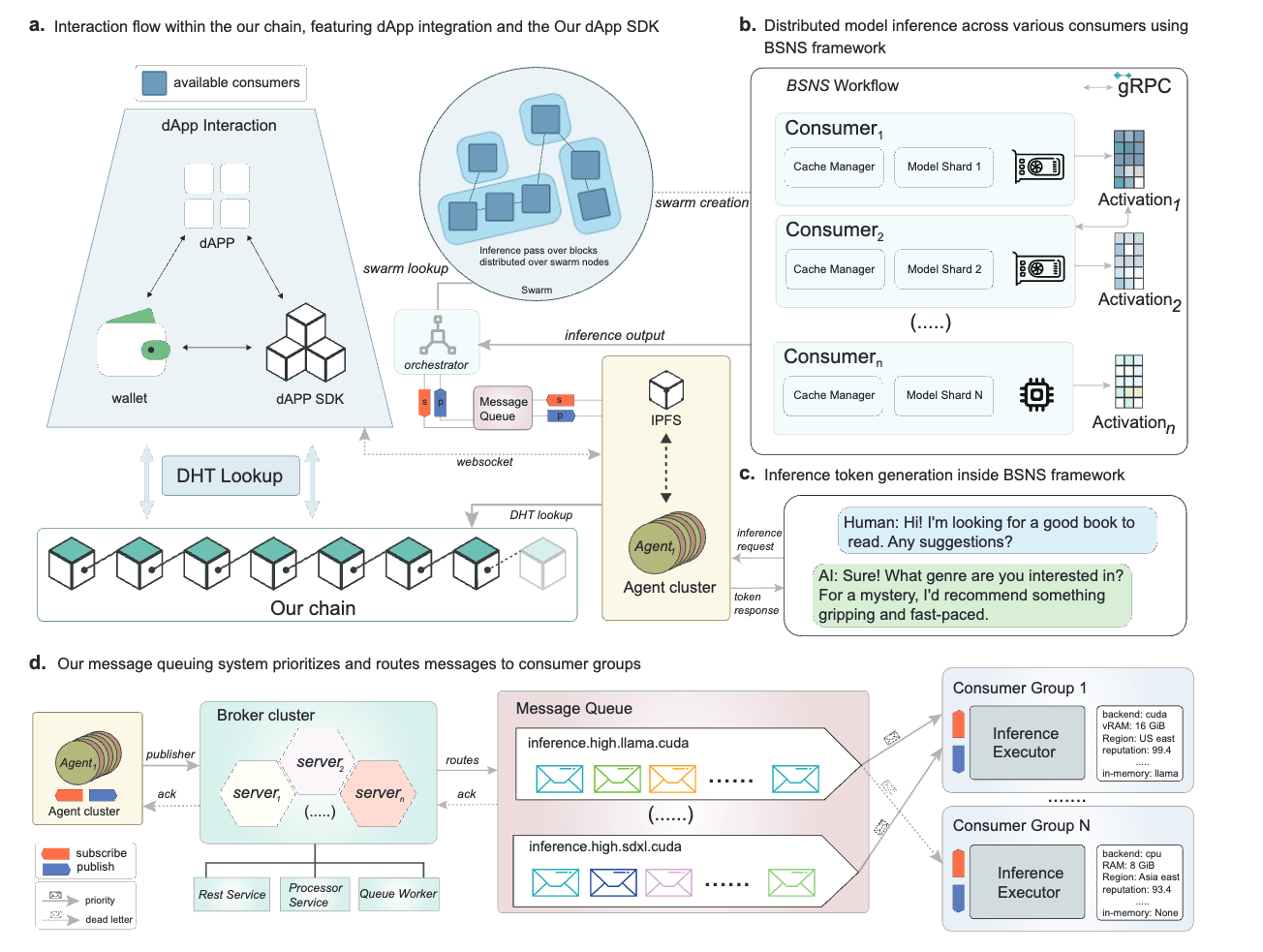
Nesa's system overview
Nesa works by allowing users, developers, and decentralized applications to submit AI inference requests to the network. These requests may include tasks such as text generation, sentiment analysis, translation, summarization, image analysis, or other model-based outputs. Instead of sending the request to one centralized AI provider, Nesa distributes the task across a network of nodes that help process, verify, and return the result.
A central part of this design is the Artificial Intelligence Terminal, or AIT. The AIT acts as a standard execution environment for AI models. It helps different nodes run the same model under the same conditions, which is important for reliable AI inference. Without a consistent execution environment, model outputs may differ because of software versions, hardware settings, random seeds, or runtime differences. Nesa uses the AIT to improve consistency, reduce disagreement between nodes, and support trustless AI execution.
Main features of Nesa include:
-
Layer-1 blockchain for AI: Nesa uses its own blockchain network to coordinate AI-related transactions, staking, verification, and payments.
-
Decentralized AI inference: AI requests are processed by distributed nodes instead of a single centralized provider.
-
Artificial Intelligence Terminal: The AIT provides a uniform execution environment so that AI models can run in a consistent and repeatable way.
-
Model repository: Nesa supports a large AI model repository where developers and users can access different models for inference.
-
Private inference: Nesa is designed to protect user data and reduce exposure to third-party infrastructure providers.
-
Verifiable results: The network uses cryptographic and consensus-based methods to make AI outputs more trustworthy.
-
Two-phase transaction process: A user first submits an inference request. Selected nodes then process the task and return the result.
-
Commit-reveal mechanism: Nodes commit to their results before revealing them, which helps prevent copying, free-riding, and dishonest participation.
-
Inference committee selection: Nodes can be selected to process AI tasks through secure and verifiable selection methods.
-
Result aggregation: The network can compare outputs from multiple nodes and choose a final result through majority voting or custom aggregation logic.
-
Node incentives: Node operators may earn NES for processing AI inference tasks and supporting the network.
-
AI query marketplace: Users pay for AI inference, while model developers and node operators receive rewards for useful participation.
Through this structure, Nesa attempts to make AI inference more suitable for blockchain applications. Its design combines distributed computing, cryptographic verification, and token incentives so that AI tasks can be processed without relying on a single central provider.
Nesa (NES) Tokenomics
NES is the native token of the Nesa ecosystem and is designed to coordinate incentives between users, developers, validators, model contributors, and node operators. It is used to pay for AI inference requests, secure the network through staking, reward participants that support decentralized AI execution, and support governance across the protocol. The token plays a central role in connecting AI demand with blockchain-based verification and settlement.
Token Details
-
Token Ticker: NES
-
Blockchain: Nesa Layer-1
-
Total Supply at Genesis: 1,000,000,000 NES
-
Supply Inflation: Starts at 8% annually and decreases by 8% each year until it reaches a long-term issuance rate of 1.8%
Token Utilities
-
AI Query Payments: NES is used to pay for AI inference requests on the Nesa network. Developers can submit PayForQuery transactions when they want to run model inference or publish query-related data.
-
Network Fees: NES is used for transaction fees and query-related costs. Nesa uses a gas-price prioritized fee market, where transactions with higher fees may receive higher priority from validators.
-
Staking: Validators and delegators can stake NES to help secure the Proof-of-Stake network. Staking supports consensus, verification, and the broader security of the protocol.
-
Node Rewards: Node operators and miners can earn NES for processing inference tasks, validating network activity, and supporting decentralized AI execution.
-
Model Developer Incentives: Developers that contribute AI models to the Nesa ecosystem may receive NES when their models are used by applications or users.
-
Governance: NES holders can propose and vote on selected network parameters and governance decisions. This gives token holders a role in the future development of the protocol.
-
Community Pool: A portion of block rewards is directed to the community pool. These funds can support ecosystem initiatives, protocol growth, and community-led development.
-
Security and Query Processing: Miners are required to stake NES, giving them an economic interest in honest and efficient AI query processing. The token fee mechanism also helps balance cost and security, since larger token commitments can support larger miner pools and stronger verification.
Nesa (NES) Goes Live on Bitget
We are thrilled to announce that Nesa (NES) will be listed in the AI zone. Check out the details below:
-
Deposit: Open
-
Trading: Opens on June 24, 2026, 13:00 (UTC)
-
Withdrawal: Opens on June 25, 2026, 14:00 (UTC)
-
Spot trading link: NES/USDT
Convert: Opens within 10 minutes after trading begins. You can exchange tokens for BTC, USDT, and other tokens supported by Bitget Convert, with no transaction fees.
Conclusion
Nesa (NES) is a Layer-1 blockchain project that focuses on private, verifiable, and decentralized AI inference. It aims to address several limitations of current AI infrastructure, including centralized control, limited transparency, data privacy risks, high infrastructure costs, and the difficulty of using AI in trustless blockchain applications.
The project combines blockchain coordination, distributed compute, standardized model execution, cryptographic verification, and token incentives. Its core components include the AIT execution environment, decentralized inference, model repositories, staking, node rewards, and the NES token economy.
For users and investors, Nesa represents part of the growing AI crypto sector, where blockchain networks are used to support artificial intelligence infrastructure. Its long-term development will depend on real network usage, developer adoption, model quality, node participation, security, and demand for decentralized AI services.
Disclaimer: The opinions expressed in this article are for informational purposes only. This article does not constitute an endorsement of any of the products and services discussed or investment, financial, or trading advice. Qualified professionals should be consulted prior to making financial decisions.


- What Is Nesa (NES)?
- Who Created Nesa (NES)?
- How Nesa (NES) Works
- Nesa (NES) Tokenomics
- Nesa (NES) Goes Live on Bitget
- Conclusion

 What Is 2U2.ai (2U2)? The AI-Powered Meme Layer for Web32026-08-02 | 5m