Bitget GetAgent: Why did gold, U.S. stocks, and Bitcoin react differently to the same news?
On the afternoon of September 16, 2026, the Federal Reserve delivered its first rate hike in three years under Kevin Warsh, raising the federal funds rate by 25 basis points to a target range of 3.75%–4.00% in a unanimous decision. The median dot plot projection pointed to 4.1% by year-end, while inflation forecasts were revised upward and unemployment forecasts downward. The phrase “supply shocks” quietly disappeared from the statement. In the hours after the announcement, markets did not move in lockstep.
The U.S. Dollar Index jumped, and short-term U.S. Treasury yields rose. Gold initially plunged to a six-week low before quietly recovering the next day. Oil prices tumbled instead on news that a Saudi pipeline had been repaired. Among U.S. stocks, the Dow fell sharply while the Nasdaq barely moved. Bitcoin hovered around $75,000, seemingly uninterested in the interest rate drama.
Why did the same “rate hike plus hawkish stance” signal produce three completely different reactions from gold, U.S. stocks, and Bitcoin? This article uses Bitget GetAgent to show you how to interpret a Fed rate hike as a cross-market map. Through four rounds of follow-up questions, we will bring the U.S. dollar, U.S. Treasuries, gold, oil, U.S. stocks, and cryptocurrencies to the same table and make sense of their reactions.

Question 1: How did different assets react immediately after the Fed rate hike?
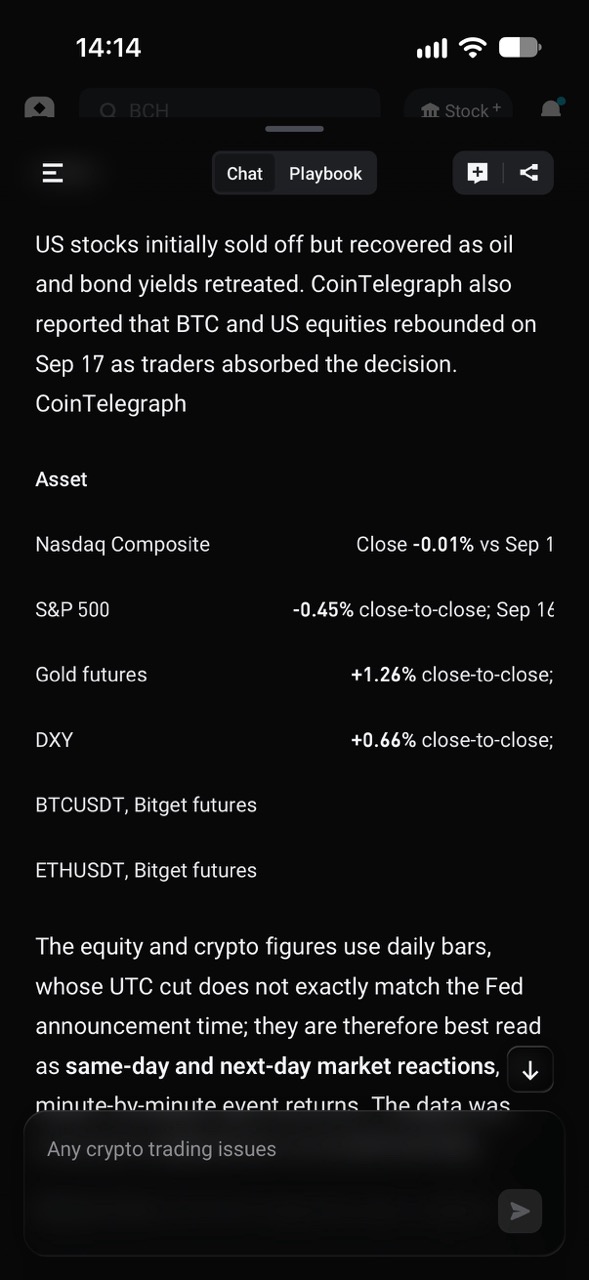
GetAgent quickly provided a clear timeline, covering the September 16 close and the following 1–2 trading days:
● The U.S. Dollar Index rose by about 0.6%–0.7%, reaching a multiweek high
● The 2-year U.S. Treasury yield rose by about 7 basis points, while the 10-year yield hovered near 5%
● Spot gold first fell and then rose, declining by about 1% that day before rebounding by more than 2% the next day
● Brent crude fell by more than 2.5%, primarily due to supply-side news rather than interest rates alone
● The S&P 500 fell by 0.45%–0.69%, the Dow posted a steeper decline, and the Nasdaq was virtually unchanged
● BTC was significantly less volatile than traditional risk assets, while also facing separate noise from stalled progress on crypto legislation
Instead of attributing every gain or loss to the rate hike, GetAgent clearly identified which moves reflected the direct transmission of interest rate expectations, which had already been priced in, and which were concurrently driven by supply news from the Middle East.
Question 2: Through which channels did this event affect these markets?
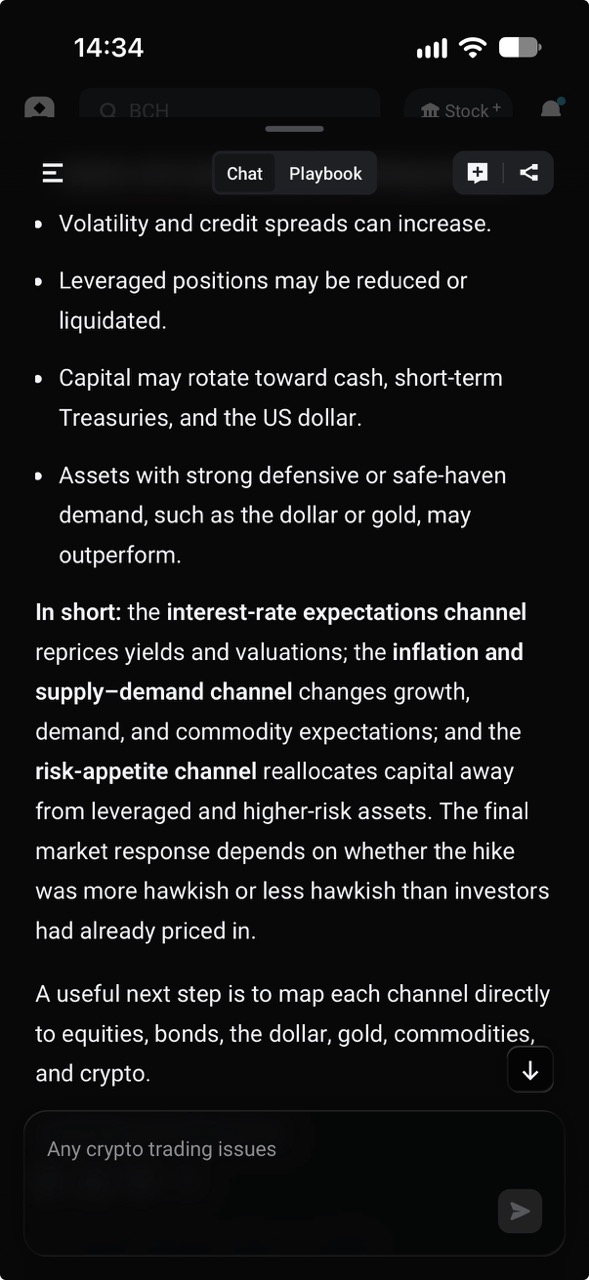
GetAgent mapped out the transmission paths using an “event change—transmission mechanism—affected assets” structure:
● Direct channel: rising interest rate expectations: Confirmed rate hike + hawkish dot plot → higher nominal and real interest rates and a stronger U.S. dollar → higher costs of holding gold and pressure on growth stock valuations.
● Inflation and supply-demand channel: Officials confirmed that inflation remained sticky, theoretically supporting a more hawkish policy path. However, oil prices fell independently on news about the Saudi pipeline, weakening the “energy inflation → further rate hikes” feedback loop.
● Risk appetite channel: Marginally tighter financial conditions → pressure first emerging in cyclical and financial U.S. stocks. As a high-volatility asset, BTC also came under pressure, but the transmission was clearly weaker than for stocks.
On this map, gold’s “fall followed by a rebound,” oil’s “sharp move in the opposite direction,” and Bitcoin’s “relative insensitivity” suddenly made sense rather than appearing as conflicting noise.
Question 3: Why did they not move in sync?
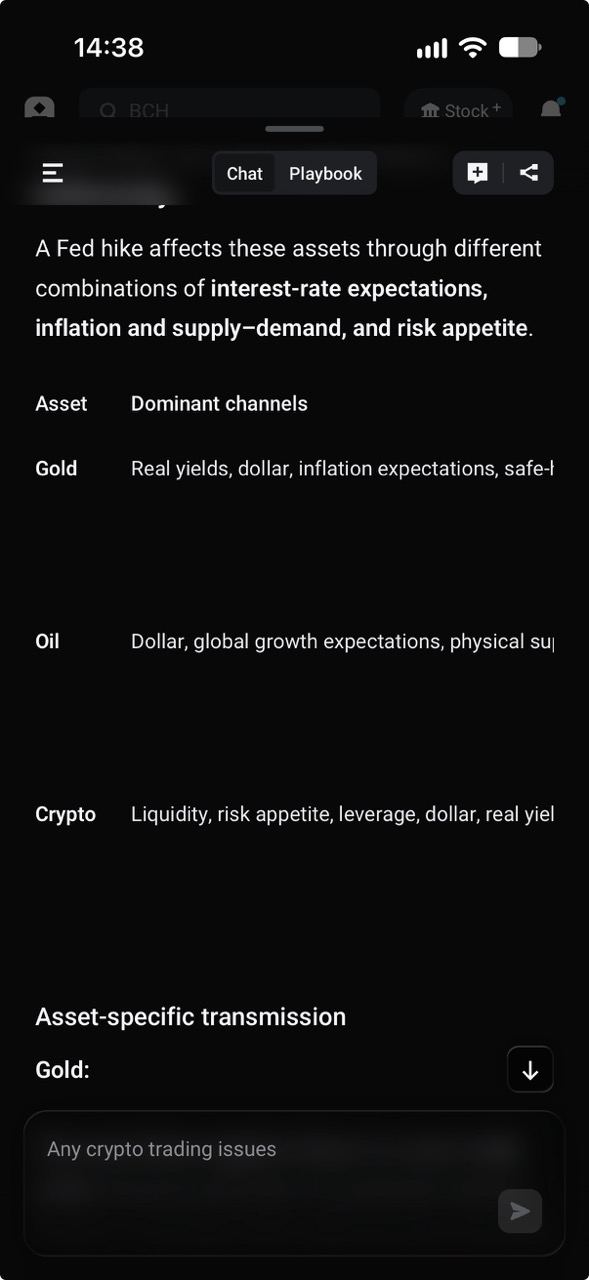
By the third round of follow-up questions, GetAgent did not offer a simplistic answer such as “the rate hike caused everything to fall.” Instead, it broke down the divergence:
● Gold faced both pressure from interest rates and support from its safe-haven and inflation-hedging properties, recovering after being oversold that day
● Supply-side developments temporarily became the dominant driver of oil, with interest rates merely serving as background noise
● In addition to macro risk appetite, BTC had its own regulatory narrative, making it inherently less sensitive to interest rates
This reminds us not to force every asset into the same narrative. The value of cross-market research lies precisely in identifying which effects are shared and which reactions differ.
Final question: Which signals really matter over the coming week?
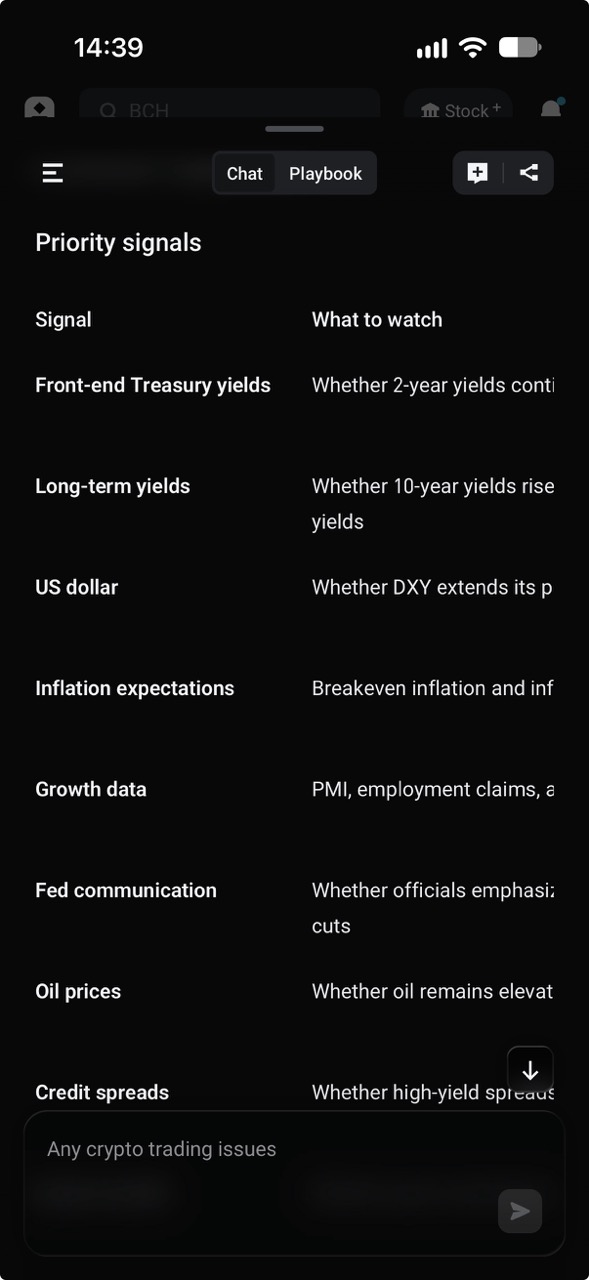
In the final round of follow-up questions, GetAgent provided a concise cross-market watchlist:
● Real interest rates and the U.S. dollar—determining whether pressure on gold and growth stocks persists
● Oil supply and geopolitical developments—affecting the strength of the inflation expectations feedback loop
● Upcoming PCE and employment data, as well as remarks from Fed officials—confirming or revising the probability of another rate hike
● Risk appetite and liquidity indicators—showing whether U.S. stocks and Bitcoin move back into sync

Conclusion
In short, asking a series of follow-up questions about a macro 【event】 can produce a unified cross-market perspective:
1. Verify the latest developments regarding the 【event】 and review the performance of the U.S. dollar, U.S. Treasury yields, gold, oil, U.S. stocks, and BTC before and after the event, citing sources and specifying the observation period. Which changes may be related to the event, and which currently lack evidence of a connection?
2. Through which channels does this event affect these markets? Select the relevant factors from interest rate expectations, inflation, supply and demand, and risk appetite. List the “event change—transmission mechanism—affected assets,” distinguishing between direct and indirect effects.
3. Based on their actual performance, which assets reacted consistently, and which diverged? Explain the possible reasons, distinguishing among the effects of the event itself, advance pricing, and factors specific to each market.
4. To determine whether the event’s impact will persist, which data and market signals should be monitored together over the coming week? Explain which assets each signal affects and what changes would require the previous assessment to be reevaluated.
One rate hike, six types of assets. What truly matters is not remembering which assets rose or fell on a particular day, but having a framework that lets you bring them to the same table and understand how they interact.
That is exactly what GetAgent was built for.