XRP News Today: XRP ETF Progress Faces Challenge from Stablecoin's Leading Role in Payments
XRPZ ETF Debut: A Turning Point for XRP
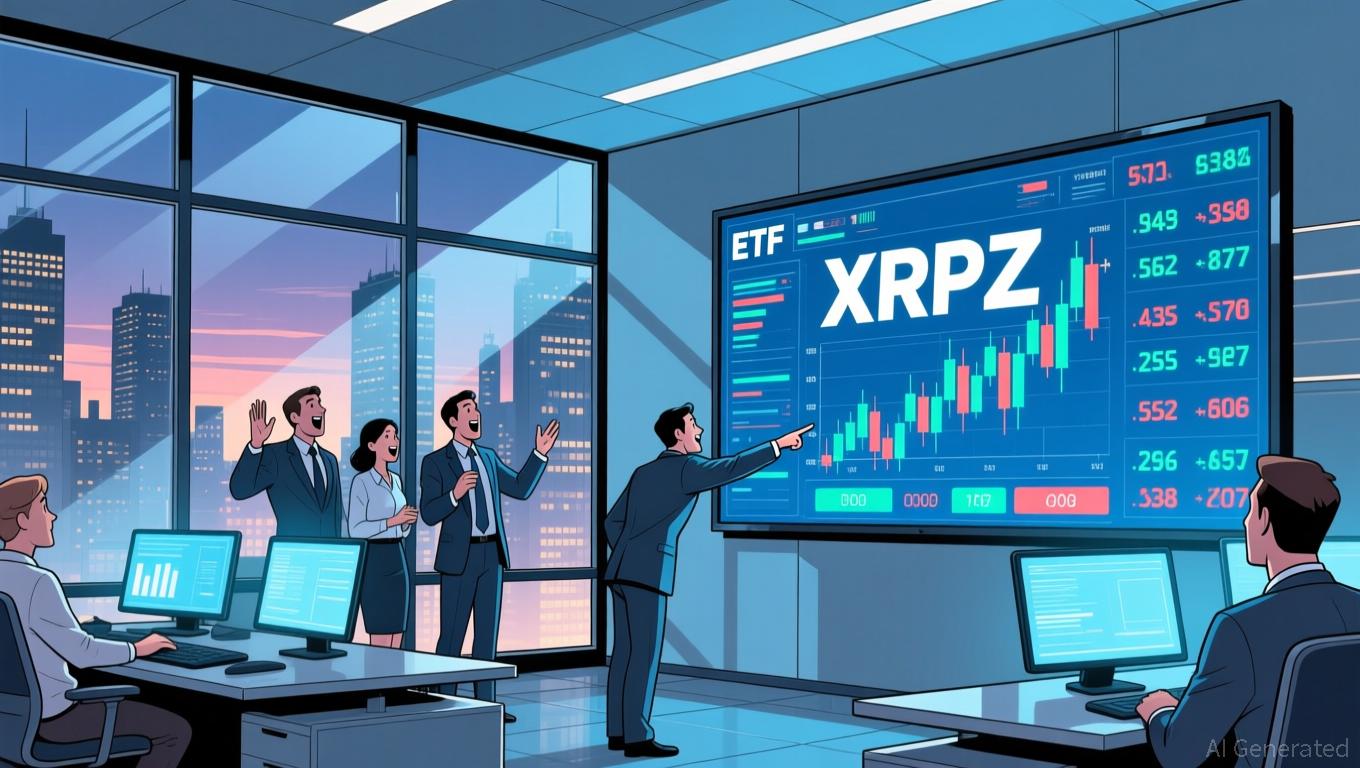
Franklin Templeton’s introduction of the XRPZ ETF on NYSE Arca has marked a significant milestone for XRP. On the day of its launch, XRP experienced a notable price increase of over 8%. This SEC-approved, institutional-grade fund offers regulated exposure to XRP, a digital asset integral to international payment systems. The arrival of XRPZ, alongside Grayscale’s GXRP ETF, highlights the growing integration of cryptocurrencies within mainstream financial markets. For XRP, this could reinforce its standing as a potential reserve asset, especially as its price action and market fundamentals appear to be stabilizing.
Recent Price Movements and Technical Outlook
Analysis of blockchain data reveals that XRP reached a high of $3.66 in July 2025 before pulling back to $1.80 by November. Following this, the token rebounded by 20%, climbing back above $2. This recovery has sparked debate among analysts about whether the rally is sustainable or merely a temporary uptick in a larger downward trend. Experts stress that holding above the $2.40–$2.50 resistance zone is essential for XRP to avoid further declines. If XRP can break through this barrier, it could be poised to challenge its previous record high by the end of the year. However, failure to maintain these levels may result in renewed selling pressure and erode investor confidence.
On-Chain Activity Signals Growing Optimism
Blockchain metrics provide additional insight into XRP’s current landscape. Since May 2025, the decentralized exchange (DEX) on the XRP Ledger has seen a significant uptick in transaction volume, even as the token’s price consolidates. This surge in DEX activity suggests that seasoned traders are injecting liquidity and positioning themselves for potential price movements. The high frequency of order placements and cancellations points to a market preparing for a possible sustained rally, which could further strengthen XRP’s case as a reserve asset if institutional interest continues to rise.
Challenges in the Cross-Border Payments Arena
Despite these positive developments, XRP faces mounting challenges in the global payments sector. Originally designed to disrupt traditional correspondent banking with instant, borderless transfers, XRP now finds itself competing with stablecoins that have captured much of its intended market. Additionally, banks are developing their own tokenized payment solutions for fiat currencies, further eroding XRP’s dominance. New projects such as Digitap ($TAP) and Remittix (RTX) are emerging as strong contenders. Digitap provides a comprehensive banking platform that unites fiat, stablecoins, and cryptocurrencies, while Remittix focuses on affordable crypto-to-fiat remittance services. Both leverage stablecoin technology to address areas where XRP’s utility has fallen short, challenging its relevance in a rapidly changing environment.
The Road Ahead for XRP
XRP’s future as a reserve asset will depend on its ability to evolve. While the ETF launch and increased on-chain activity offer immediate momentum, long-term success will require outpacing new competitors and proving its indispensability in global settlements. If XRP can consistently trade above crucial resistance levels and attract wider institutional support, its transition to a reserve asset could become a reality. Conversely, if it fails to innovate amid the rise of stablecoins, XRP risks becoming a marginal player in a sector it once aimed to revolutionize.





