Bitcoin News Update: Bitcoin ETFs Shift Investment Flows, Delaying the Onset of Altcoin Season
Sharp Downturn Hits Bitcoin and Crypto Markets
On December 1, 2025, Bitcoin’s value slipped below $90,000, experiencing its most significant monthly drop since the middle of 2021. This decline was fueled by a renewed sense of caution among investors, prompting a retreat from both digital assets and stocks. Over a 24-hour period, Bitcoin fell by 5.2%, nearing an eight-month low of approximately $80,553. November proved especially challenging, with the cryptocurrency losing more than $18,000 in value and U.S. Bitcoin ETFs witnessing record-breaking outflows.
Ethereum (ETH) followed a similar path, dropping nearly 6% to $2,840 and accumulating a 22% loss for the month—its steepest decline since February’s 32% plunge. The broader digital asset market has shed over $1 trillion since reaching a $4.3 trillion high, with altcoins such as XRP and Solana (SOL) also falling between 6.9% and 7.1%.
Massive Liquidations and ETF Outflows
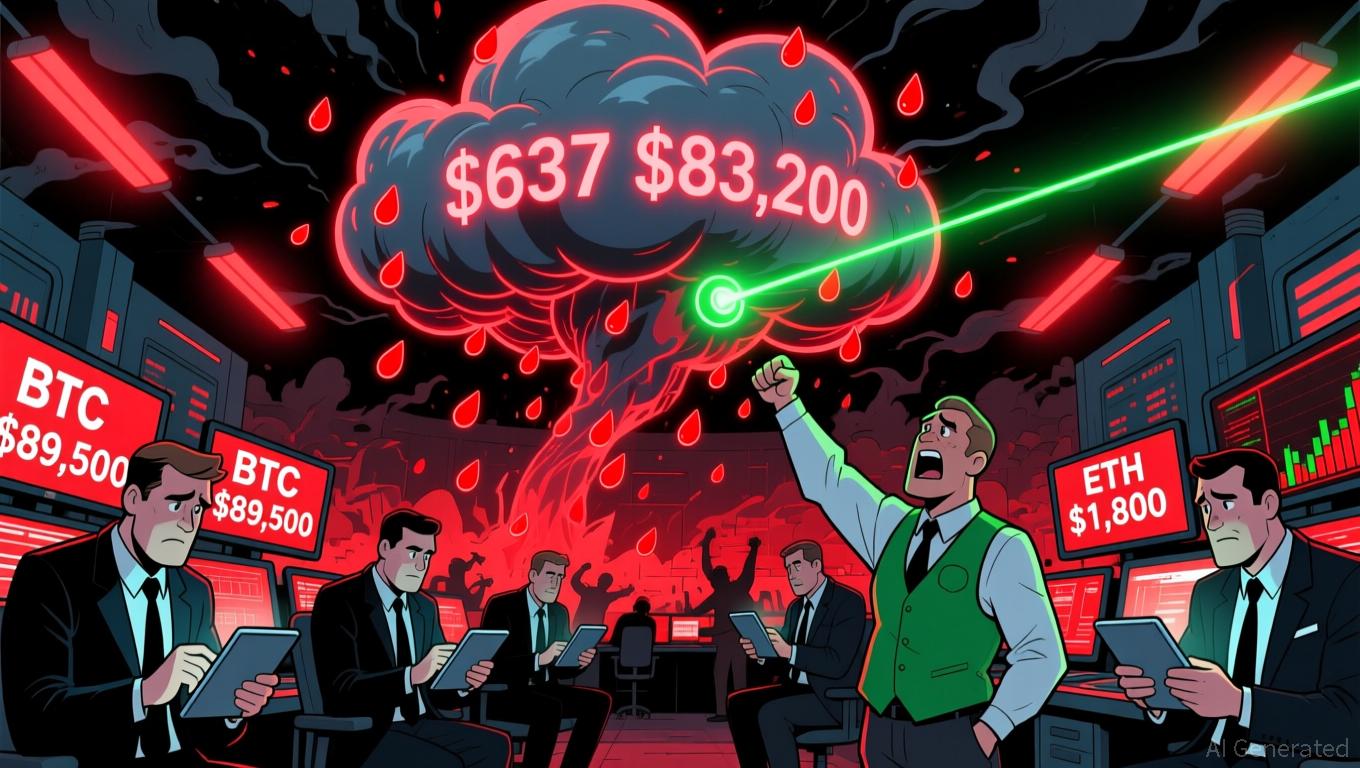
The recent selloff resulted in $637 million worth of leveraged positions being liquidated, triggered by Bitcoin’s intraday dip to around $85,700. U.S. spot Bitcoin ETFs, which had previously attracted substantial inflows in 2025, saw $3.48 billion in net outflows during November—their second-largest monthly withdrawal on record. BlackRock’s IBIT led the way with $2.34 billion in redemptions, while Fidelity’s FBTC and Grayscale’s GBTC lost $412.5 million and $333 million, respectively. Despite these outflows, Bitcoin managed to stabilize in the mid-$80,000 range, indicating that underlying demand remained relatively strong.
Altcoin Season Delayed
The absence of a typical “altcoin season” has left many investors uncertain. Bitcoin’s dominance index hovered near 58%, a level that has historically preceded a shift of capital into smaller cryptocurrencies. However, the Altcoin Season Index remains at just 22, well below the 75 needed to signal a broad altcoin rally. Analysts suggest that this is due to changing capital flows, with institutional investors now favoring Bitcoin ETFs over direct altcoin investments, a departure from patterns seen in previous bull markets.
While some expect an altcoin rally to materialize in 2026, it is unlikely to match the explosive surges of 2017 or 2021. Ethereum, the second-largest cryptocurrency, is positioned as a potential leader for any future breakout, currently trading close to its previous all-time high of $4,800. Ongoing development of institutional infrastructure and a bullish $8,000 price target from Standard Chartered—should tokenization gain traction—reflect optimism for ETH. Solana, known for its rapid 0.15-second transaction speeds and increasing institutional interest, is also seen as a strong contender for outperformance.
Market Fragmentation and Standout Performers
Despite thousands of alternative tokens, 98% of the crypto market’s total value remains concentrated in the top 100 projects. Assets with real-world utility, such as Ripple’s XRP—which has surged 347% year-to-date following regulatory clarity—are viewed as better positioned for outsized gains. In contrast to the broader downturn, MYX Finance (MYX) bucked the trend, jumping 24% amid rising open interest and trading volume, signaling short-term optimism for liquidity.
Looking Ahead: December’s Uncertainty
December’s market direction will be shaped by Bitcoin ETF flows and broader economic uncertainty. The Federal Reserve’s upcoming meeting, set to take place without the latest CPI data, introduces a level of unpredictability that could heighten volatility. Thin liquidity at year-end and institutional portfolio adjustments further increase risk. However, if ETF inflows stabilize between $50 million and $100 million per day, they could absorb daily miner supply and provide a foundation of support for Bitcoin.
Changing Market Dynamics
Bitcoin’s increasing separation from the rest of the crypto market, driven by ETF-related capital flows, highlights the sector’s evolving landscape. While a robust altcoin season could still emerge in 2026, its success will likely hinge on projects with real utility rather than speculative hype.





