
Fed removes reputational barrier and frees banks to serve cryptocurrencies

- Fed eliminates reputational risk in banking supervision
- Banks gain freedom to serve cryptocurrency companies
- New guideline strengthens integration between banks and digital assets
The Federal Reserve has announced a significant shift in its regulatory approach by removing the reputational risk factor from its banking supervision guidelines. The decision, revealed on June 21, opens the door for U.S. banks to serve cryptocurrency businesses with fewer restrictions.
According to the official statement, regulators will now be required to focus only on objective and measurable financial risks. This represents an important adjustment from previous practices, where a bank’s exposure to the cryptocurrency sector could be seen as a reputational issue, undermining its regulatory scrutiny.
With the new policy, the Fed aligns with the position already adopted by the Federal Deposit Insurance Corporation (FDIC) and the Office of the Comptroller of the Currency (OCC), which also recently revised their guidance on bank involvement with digital assets.
This flexibility is seen as a significant step towards the integration of the traditional financial system and the cryptocurrency sector. Banks can now provide services such as custody, transaction settlement and even crypto trading without fear of being penalized for subjective risk assessments.
Additionally, the Fed said bank examiners will undergo a training program to ensure the new guidance is applied uniformly across all supervised institutions. The goal is to create a more predictable and transparent regulatory environment for banks and crypto businesses.
The move comes as Fed Chairman Jerome Powell has been pushing for a clearer regulatory framework for the sector. In a recent address to Congress, Powell reinforced the importance of establishing specific rules for stablecoins and stressed that the Fed does not intend to restrict legitimate banking relationships with cryptocurrency companies.
While the elimination of the reputational factor reduces important barriers, banks remain subject to other regulatory requirements, such as capital, liquidity and risk controls. Still, the market sees the decision as a step forward in expanding cryptocurrency companies’ access to the US banking system.
Disclaimer: The content of this article solely reflects the author's opinion and does not represent the platform in any capacity. This article is not intended to serve as a reference for making investment decisions.
You may also like
Five charts to help you understand: Where does the market go after each policy storm?
After this regulatory crackdown, is it a harbinger of an impending downturn, or the beginning of a new cycle where all negative news has been fully priced in? Let’s examine the trajectory after the storm through five key policy milestones.

Mars Morning News | The crypto market rebounds across the board, Bitcoin rises above $94,500; The "CLARITY Act" draft is expected to be released this week
The crypto market has fully rebounded, with bitcoin surpassing $94,500 and US crypto-related stocks rising across the board. The US Congress is advancing the CLARITY Act to regulate cryptocurrencies. The SEC chairman stated that many ICOs are not securities transactions. Whales are holding a large number of profitable ETH long positions. Summary generated by Mars AI. The accuracy and completeness of the content generated by the Mars AI model is still being iteratively updated.

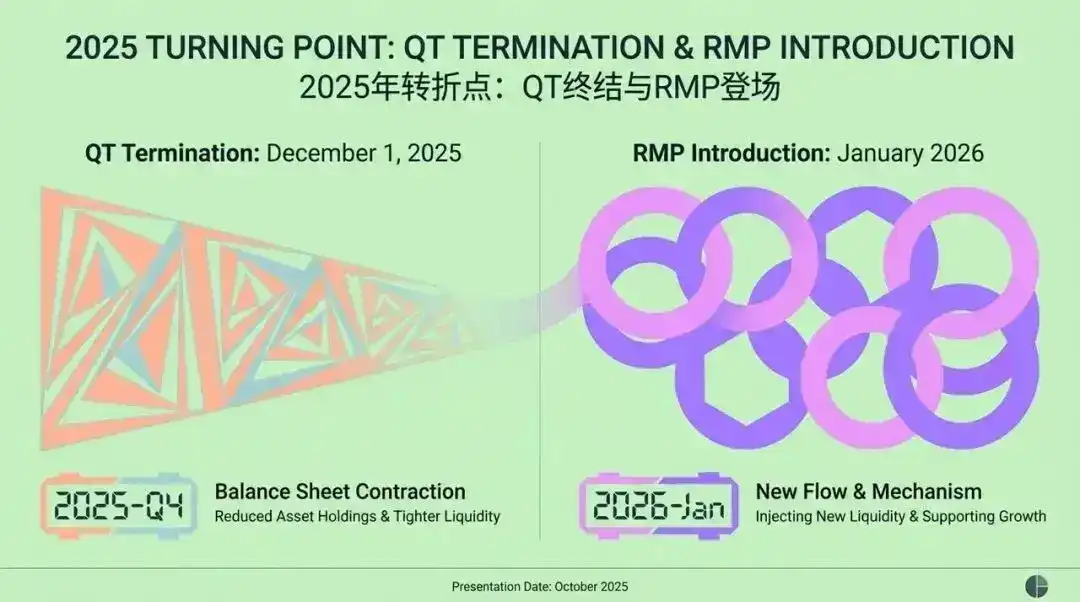
Federal Reserve’s Major Shift: From QT to RMP, How Will the Market Transform by 2026?
The article discusses the background, mechanism, and impact on financial markets of the Federal Reserve's introduction of the Reserve Management Purchases (RMP) strategy after ending Quantitative Tightening (QT) in 2025. RMP is regarded as a technical operation aimed at maintaining liquidity in the financial system, but the market interprets it as a covert easing policy. The article analyzes RMP's potential effects on risk assets, the regulatory framework, and fiscal policy, and provides strategic recommendations for institutional investors. Summary generated by Mars AI This summary was generated by the Mars AI model, and the accuracy and completeness of its content are still in the process of iterative improvement.
Rate Hike in Japan: Will Bitcoin Resist Better Than Expected?

Trending news
MoreCrypto prices
More





