
UK eyes $7 billion Bitcoin sale to ease pressure on public finances
Key Takeaways
- The UK Home Office may sell 61,000 seized Bitcoin worth $7 billion to help ease public finance pressures.
- Legal and logistical challenges, including victim restitution and international claims, could impact the asset liquidation process.
The UK Home Office is exploring the sale of seized crypto assets, including 61,000 Bitcoin worth approximately $7 billion from a 2018 Chinese Ponzi scheme, to help address public finance pressures, The Telegraph reported today.
With Bitcoin hovering around $118,000 at press time, the Bitcoin hoard is now valued at over $7 billion. However, with limited public disclosure in other cases, the total amount of confiscated crypto assets is unknown.
The potential sale comes as the UK government faces a £20 billion budget gap due to rising borrowing costs and slow growth. Chancellor Rachel Reeves is seeking funding for welfare reversals and cost-of-living measures.
The interior ministry is considering developing a framework to manage and liquidate seized crypto assets, which would streamline how law enforcement agencies store and handle digital assets. The Bitcoin holdings are currently under UK police control as part of the country’s asset recovery regime.
While seized assets should typically be returned to victims, this often proves challenging when victims are anonymous, located overseas, or involved in large-scale Ponzi schemes. UK authorities generally retain 20 to 30 percent of recovered assets, split between law enforcement budgets and government funds.
The 2018 Chinese money laundering case could potentially provide the Treasury with £2.6 billion if confiscated. However, critics point to the 1999 UK gold reserve sale under then-Chancellor Gordon Brown as a cautionary tale, where selling at market lows resulted in billions in missed gains.
Moreover, legal complexities surrounding victim restitution, international claimants, frozen wallets, and pending appeals could complicate the liquidation process. Victims of the 2018 fraud continue to pursue restitution claims.
Disclaimer: The content of this article solely reflects the author's opinion and does not represent the platform in any capacity. This article is not intended to serve as a reference for making investment decisions.
You may also like
Research Report|In-Depth Analysis and Market Cap of Talus (US)

Five charts to help you understand: Where does the market go after each policy storm?
After this regulatory crackdown, is it a harbinger of an impending downturn, or the beginning of a new cycle where all negative news has been fully priced in? Let’s examine the trajectory after the storm through five key policy milestones.

Mars Morning News | The crypto market rebounds across the board, Bitcoin rises above $94,500; The "CLARITY Act" draft is expected to be released this week
The crypto market has fully rebounded, with bitcoin surpassing $94,500 and US crypto-related stocks rising across the board. The US Congress is advancing the CLARITY Act to regulate cryptocurrencies. The SEC chairman stated that many ICOs are not securities transactions. Whales are holding a large number of profitable ETH long positions. Summary generated by Mars AI. The accuracy and completeness of the content generated by the Mars AI model is still being iteratively updated.

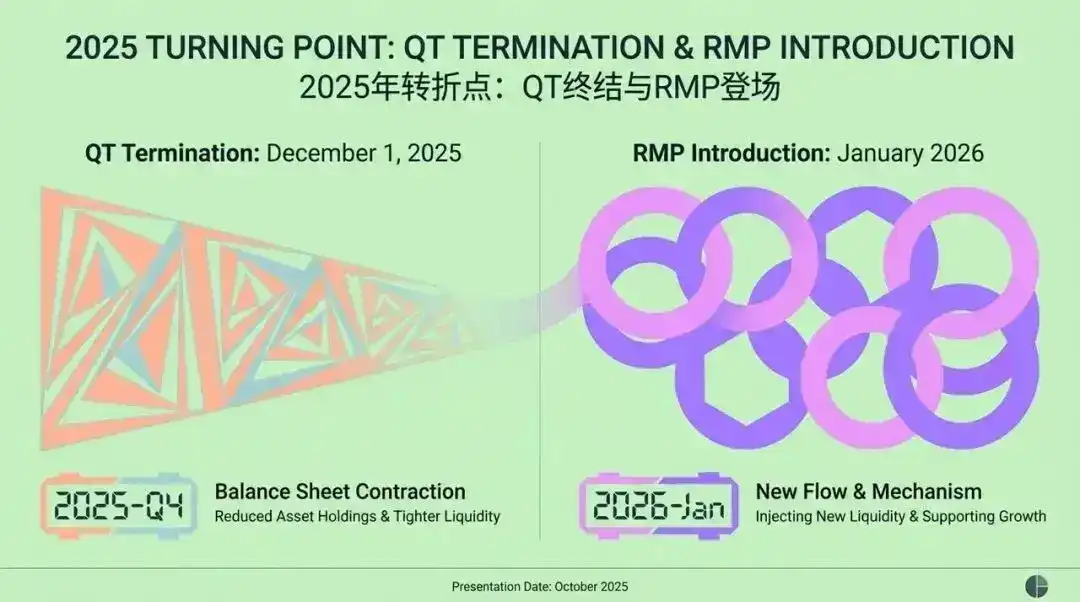
Federal Reserve’s Major Shift: From QT to RMP, How Will the Market Transform by 2026?
The article discusses the background, mechanism, and impact on financial markets of the Federal Reserve's introduction of the Reserve Management Purchases (RMP) strategy after ending Quantitative Tightening (QT) in 2025. RMP is regarded as a technical operation aimed at maintaining liquidity in the financial system, but the market interprets it as a covert easing policy. The article analyzes RMP's potential effects on risk assets, the regulatory framework, and fiscal policy, and provides strategic recommendations for institutional investors. Summary generated by Mars AI This summary was generated by the Mars AI model, and the accuracy and completeness of its content are still in the process of iterative improvement.
Trending news
MoreCrypto prices
More





