
The Institutionalization of Dogecoin: A Strategic Play on Memecoin Legitimacy and Investor Appetite
- Dogecoin's 2025 institutionalization reflects strategic infrastructure, regulatory clarity, and capital inflows, shifting its narrative from meme to speculative investment. - Bit Origin's $500M treasury and green mining initiatives, alongside CFTC commodity classification, address institutional adoption barriers and environmental concerns. - Despite ETF approval potential and real-world use cases, Dogecoin faces structural challenges like inflationary supply and limited DeFi integration compared to Bitco
The institutionalization of Dogecoin in 2025 marks a pivotal shift in its narrative, transforming it from a meme-driven asset to a speculative yet increasingly legitimate investment vehicle. This evolution is driven by a confluence of strategic infrastructure developments, regulatory clarity, and institutional capital inflows. While skeptics remain wary of its volatility and speculative roots, the emerging ecosystem suggests a calculated attempt to align Dogecoin with broader institutional crypto adoption trends.
Institutional Infrastructure: A New Foundation
Bit Origin Ltd’s $500 million Dogecoin treasury initiative—comprising $400 million in equity and $100 million in convertible debt—has become a cornerstone of institutional adoption [1]. This move, coupled with Alex Spiro’s $200 million publicly traded Dogecoin Treasury project, addresses regulatory and legal hurdles while offering indirect exposure to institutional investors [2]. Such efforts are complemented by green energy-powered mining infrastructure, such as Hyper Bit’s 11 MW facility, which aligns Dogecoin with ESG priorities and reduces its environmental footprint [1]. Protocol upgrades like v1.14.8 further enhance scalability, signaling a commitment to technical robustness [1].
Regulatory clarity from the CFTC, which classified Dogecoin as a commodity, has also lowered barriers for institutional participation [1]. This contrasts with the U.S. SEC’s ongoing conflicts with crypto frameworks, creating a fragmented but navigable landscape for investors. The potential approval of a Dogecoin ETF by late 2025—a 60–70% probability—could mirror Bitcoin’s 2024 ETF-driven rally, unlocking billions in capital [1].
Comparative Analysis: Dogecoin vs. Bitcoin and Ethereum
While Dogecoin’s institutionalization is notable, its long-term viability remains constrained by structural limitations. Unlike Bitcoin’s capped supply of 21 million coins, Dogecoin’s inflationary model—adding 5.2 billion tokens annually—poses a headwind to value retention [3]. Ethereum’s transition to proof-of-stake and its dominance in DeFi and smart contracts further highlight Dogecoin’s technological gaps [5]. However, Dogecoin’s utility in low-cost transactions and partnerships with platforms like X (formerly Twitter) and AMC Theatres provide real-world use cases that differentiate it from purely speculative assets [5].
Institutional adoption of Dogecoin also lags behind Bitcoin and Ethereum . While Bitcoin ETFs attracted $65 billion in assets under management (AUM) by 2025, Dogecoin’s institutional allocations remain niche, driven by ESG-aligned mining and whale accumulations [6]. Solana’s superior infrastructure and institutional partnerships further underscore Dogecoin’s challenges in competing for long-term capital [4].
Risks and Realities
Dogecoin’s price remains highly sensitive to social media sentiment and celebrity endorsements. Elon Musk’s tweets and public appearances have historically triggered sharp price swings, a pattern that persists in 2025 [3]. Whale activity, while stabilizing, cannot fully mitigate this volatility. For instance, DOGE’s price fluctuated between $0.25 and $0.19 within weeks in Q2 2025, reflecting its susceptibility to retail-driven momentum [2].
The lack of native smart contracts and limited DeFi integration also restricts Dogecoin’s utility compared to Ethereum or Solana [4]. While initiatives like Dogebox aim to expand its use in gaming and e-commerce, these are still in early stages.
Conclusion: A High-Risk, High-Reward Proposition
Dogecoin’s institutionalization represents a strategic play on memecoin legitimacy, leveraging regulatory clarity, green infrastructure, and speculative demand. However, its long-term investment potential hinges on balancing its inflationary supply model with growing utility. For investors, Dogecoin remains a high-risk, high-reward asset, better suited for speculative portfolios or those prioritizing social media-driven momentum [6]. As the crypto market matures, Dogecoin’s ability to evolve beyond its meme roots will determine whether it secures a lasting role in institutional portfolios.
Source:
[1] Dogecoin's Institutional Turn: A New Era or a Speculative ...
[2] The Institutionalization of Dogecoin: A New Era for Meme Coin Investing
[3] Dogecoin 2025: Opportunities, Risks & Trading Guide
[4] Solana vs. Dogecoin: Evaluating Institutional Adoption and ...
[5] Dogecoin Use Cases in 2025: What You Can Actually Do ...
[6] Bitcoin vs. Ethereum in 2025: Comparison & Outlook
Disclaimer: The content of this article solely reflects the author's opinion and does not represent the platform in any capacity. This article is not intended to serve as a reference for making investment decisions.
You may also like
"Validator's Pendle" Pye raises $5 million, enabling SOL staking yields to be tokenized
There are truly no creative bottlenecks in the financialization of Web3.

DiDi has become a digital banking giant in Latin America
DiDi has successfully transformed into a digital banking giant in Latin America by addressing the lack of local financial infrastructure, building an independent payment and credit system, and achieving a leap from a ride-hailing platform to a financial powerhouse. Summary generated by Mars AI. This summary was produced by the Mars AI model, and its accuracy and completeness are still being iteratively improved.

Fed rate cuts in conflict, but Bitcoin's "fragile zone" keeps BTC below $100,000
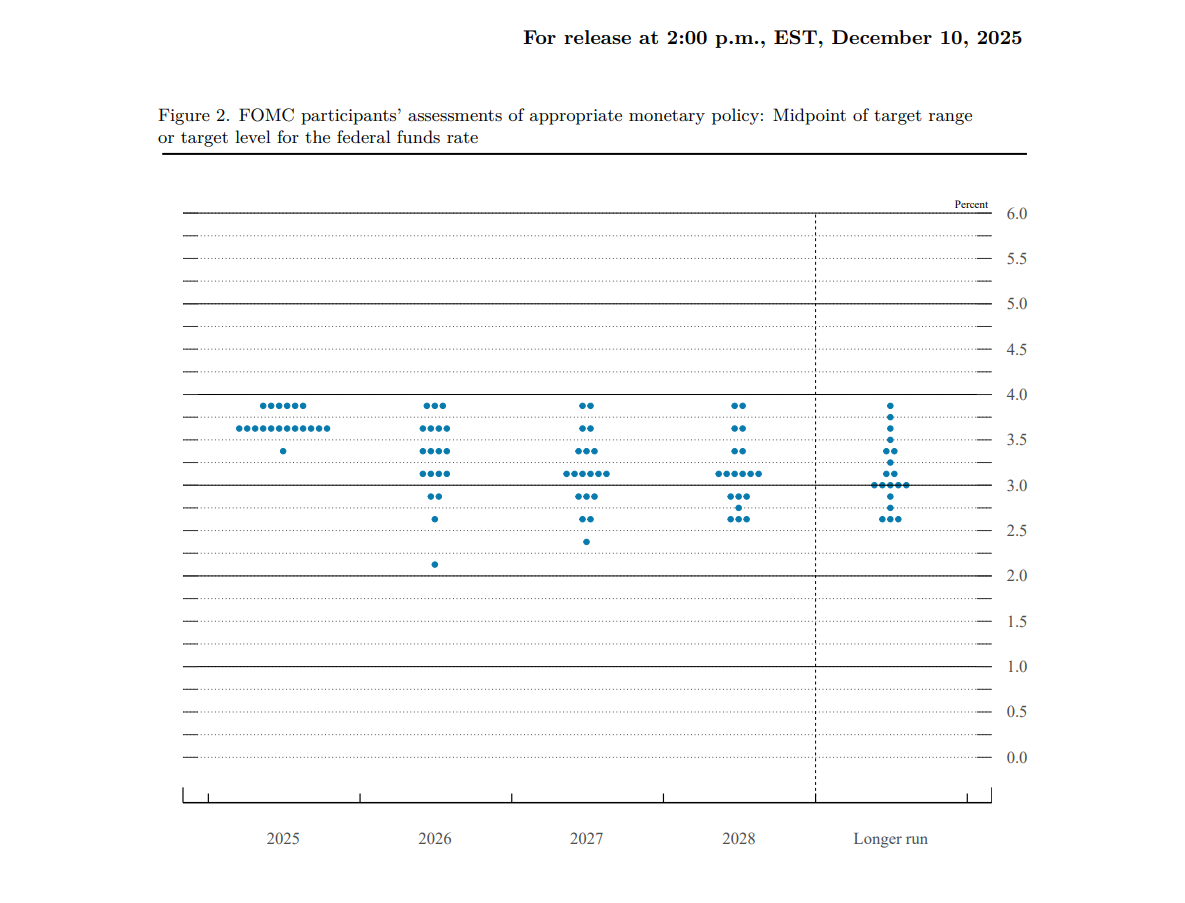
The Federal Reserve cut interest rates by 25 basis points, but the market interpreted the move as hawkish. Bitcoin is constrained by a structurally fragile range, making it difficult for the price to break through $100,000. Summary generated by Mars AI This summary was generated by the Mars AI model, and the accuracy and completeness of its content are still being iteratively updated.

Full text of the Federal Reserve decision: 25 basis point rate cut, purchase of $4 billion in Treasury bills within 30 days
The Federal Reserve cut interest rates by 25 basis points with a 9-3 vote. Two members supported keeping rates unchanged, while one supported a 50 basis point cut. In addition, the Federal Reserve has restarted bond purchases and will buy $40 billion in Treasury bills within 30 days to maintain adequate reserve supply.
Trending news
MoreCrypto prices
More





