
U.S. job openings declined in July, signaling a weakening labor market

The number of job openings in the United States in July fell more than expected, and hiring activity was also relatively moderate, in line with the trend of a slowing labor market environment.
The Job Openings and Labor Turnover Survey (JOLTS) report released by the U.S. Department of Labor's Bureau of Labor Statistics on Wednesday showed that as of the last day of July, the number of job openings, a key indicator of labor demand, decreased by 176,000 to 7.181 million. Economists surveyed by Reuters had previously predicted that the number of unfilled positions in July would be 7.378 million.
The number of hires in July increased by 41,000 to 5.308 million; the number of layoffs increased by 12,000 to 1.808 million. The current labor market has already shown signs of slowing down. Economists believe this phenomenon is related to the broad tariff policies implemented by President Donald Trump. At the same time, the Trump administration's tightening of immigration policies has also led to a reduction in labor supply.
A Reuters survey of economists showed that the market expects the highly anticipated employment report to be released by the U.S. government on Friday will show that non-farm payrolls increased by 75,000 in August (compared to an increase of 73,000 in July). In August, the U.S. government announced that over the past three months, non-farm payrolls increased by an average of 35,000 per month, while the average monthly increase for the same period in 2024 was 123,000.
The market also predicts that the unemployment rate in August will rise to 4.3% from 4.2% in July.
Federal Reserve Chair Jerome Powell hinted last month that an interest rate cut might be implemented at the Federal Reserve policy meeting to be held from September 16 to 17. He acknowledged that risks facing the labor market are rising, but also pointed out that inflation remains a major threat.
Since December last year, the Federal Reserve has kept its benchmark overnight interest rate in the range of 4.25% to 4.50%.
Disclaimer: The content of this article solely reflects the author's opinion and does not represent the platform in any capacity. This article is not intended to serve as a reference for making investment decisions.
You may also like
Castle Island Ventures partner: I don’t regret spending eight years in the cryptocurrency industry
A cryptocurrency practitioner who once held libertarian ideals became disillusioned after reflecting on a career spent building "financial casinos," sparking a profound reflection on the divergence between the original aspirations and the current reality of the crypto space.

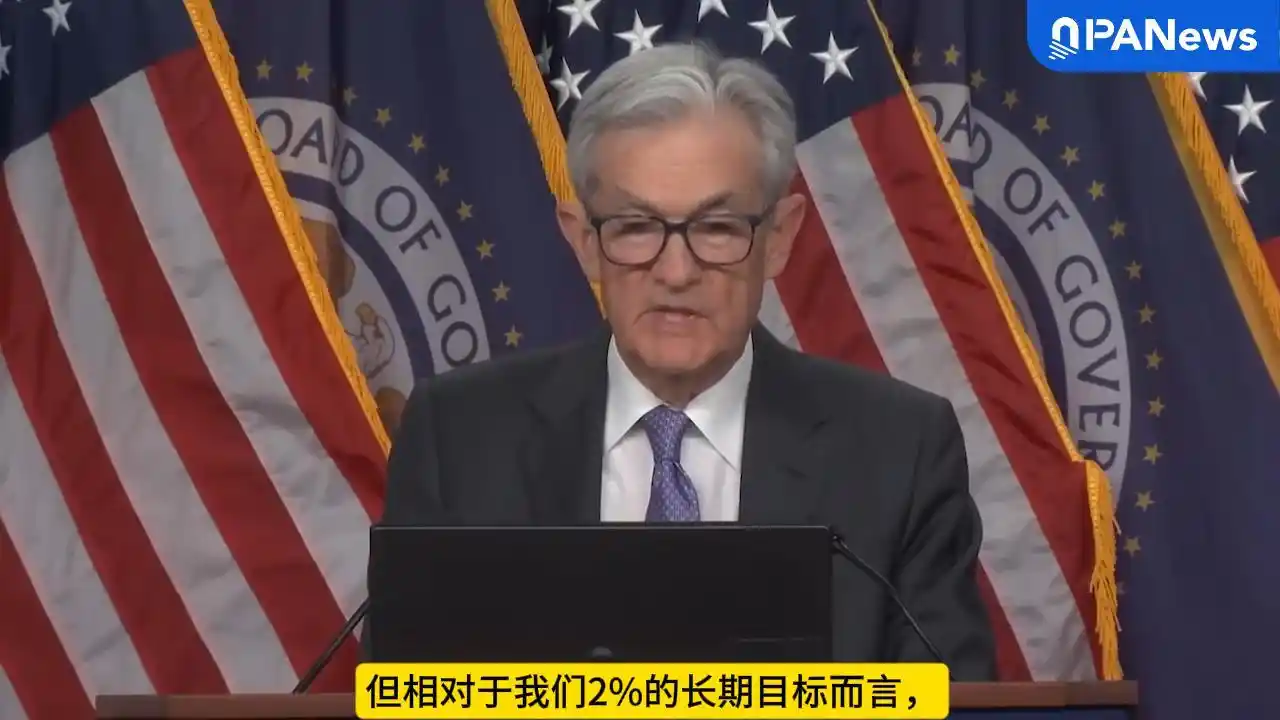
Powell: Employment is weakening, inflation remains high, and no one is talking about rate hikes now
Powell pointed out that the U.S. labor market is cooling, with hiring and layoffs slowing down and the unemployment rate rising to 4.4%. Core PCE inflation remains above the 2% target, but service inflation is slowing. The Federal Reserve has cut interest rates by 25 basis points and started purchasing short-term Treasury bonds, emphasizing that the policy path needs to balance risks between employment and inflation. Future policies will be adjusted based on data. Summary generated by Mars AI. This summary is produced by the Mars AI model, and the accuracy and completeness of its generated content are still in the process of iterative improvement.
$RAVE TGE Countdown: When Clubbing Becomes an On-Chain Economic Activity, the True Web3 Breakthrough Moment Arrives
RaveDAO is rapidly growing into an open cultural ecosystem driven by entertainment, becoming a key infrastructure for Web3 to achieve real-world adoption and mainstream breakthrough.

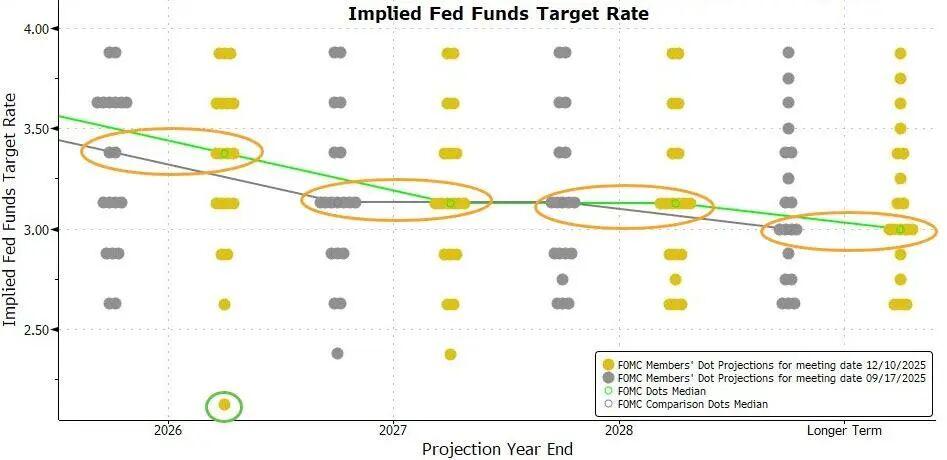
A "hawkish rate cut" that's not so "hawkish," and balance sheet expansion that's "not QE"
The Federal Reserve has cut interest rates by another 25 basis points as expected, still projecting one rate cut next year, and has launched an RMP to purchase $40 billion in short-term bonds.
Trending news
MoreCrypto prices
More





