
Ethereum ETFs See $447M Outflows, Bitcoin ETFs Drop $160M

Quick Take Summary is AI generated, newsroom reviewed. Ethereum spot ETFs recorded $447 million in outflows, the second-largest in history. Bitcoin ETFs also saw significant withdrawals, with a combined $160 million in outflows. The synchronized outflows suggest widespread investor caution in the crypto market. Despite the withdrawals, cumulative crypto ETF inflows for the year remain positive.References On September 5, Ethereum spot ETFs saw total net outflows of $447 million
Ethereum spot ETFs saw a significant investor pullback on September 5. It recorded $447 million in net outflows. According to data from SoSoValue, it was the second-largest outflow in the category’s history. The withdrawals highlight shifting investor sentiment during a volatile period for crypto markets. BlackRock’s ETHA ETF led the outflows. It lost nearly $310 million in a single day. Grayscale’s ETHE followed with $51.7 million in withdrawals. While Fidelity’s FETH reported $37.7 million in outflows.
Other funds, including Grayscale’s ETH and 21Shares’ TETH, also faced losses, though smaller in scale. Collectively, Ethereum ETFs ended the day with a net decline of nearly half a billion dollars. Despite the large outflows, Ethereum’s market price showed relative resilience. ETH ended the session higher by more than 1%. It signals that retail and offshore demand provided some support. Still, analysts view the magnitude of withdrawals as a warning sign of reduced institutional appetite.
Bitcoin ETFs Also Record Withdrawals
Bitcoin ETFs also faced pressure. With $160 million in combined outflows on the same day. None of the twelve listed U.S. Bitcoin spot ETFs registered positive inflows. That marks a rare moment of synchronized withdrawals. While the figure was smaller than Ethereum’s losses. It underscores that investor caution extended across the broader crypto ETF market. Until this week, Bitcoin ETFs had consistently attracted new capital .
This is contributing to a strong increase in total net assets. Even after the pullback, Bitcoin ETFs remain the dominant force in the crypto ETF sector. They continue to hold significantly larger assets. That is under management compared to their Ethereum counterparts. Still, the absence of inflows suggests that investors are re-evaluating risk exposure.
Data Insights and Market Signals
SoSoValue data showed cumulative net inflows into crypto ETFs remain positive at $12.7 billion. Total net assets for Bitcoin and Ethereum ETFs combined now stand at $27.6 billion. This represents about 5.3% of Ethereum’s market capitalization. Trading activity was also strong. With $2.79 billion in value exchanged across ETF products during the day. The high turnover reflects active repositioning by investors rather than a broad retreat from the sector. Analysts suggest capital is rotating rather than exiting completely.
Chart: Total Ethereum Spot ETF Net Inflow on September 6, 2025, by SoSoValue
The dominance of red bars on the SoSoValue inflow chart marks a sharp contrast with the prior trend. Until recently, green inflow bars were more common. This reflects consistent institutional interest. But on September 5, the chart revealed a temporary reversal. It shows profit-taking and risk management strategies.
Implications for Investors and Market Outlook
The heavy Ethereum ETF outflows highlight uncertainty around its short-term investment case. Institutional investors may be shifting capital toward more established assets. They are favoring Bitcoin in risk-off environments. Still, Ethereum ETFs have maintained billions in assets under management. This underlines their growing role in U.S. markets. Bitcoin’s parallel decline in ETF flows suggests broader caution. Rather than an Ethereum-specific weakness. Analysts believe in macroeconomic factors. It includes regulatory updates and shifting interest rate expectations. These continue to shape demand for digital assets.
Market watchers will closely track whether these withdrawals persist. Additionally, they represent a short-lived adjustment. Sustained outflows could dampen momentum for Bitcoin and Ethereum ETFs. It is slowing the sector’s expansion. Conversely, renewed inflows would reinforce confidence in digital assets as part of mainstream portfolios. Currently, September 5 stands out as a pivotal day. Ethereum and Bitcoin ETFs faced rare synchronized pressure. It tests investor conviction in the short run. The coming weeks will reveal whether capital rotation stabilizes or extends into deeper withdrawals.
Disclaimer: The content of this article solely reflects the author's opinion and does not represent the platform in any capacity. This article is not intended to serve as a reference for making investment decisions.
You may also like
A decade-long tug-of-war ends: "Crypto Market Structure Bill" sprints to the Senate
At the Blockchain Association Policy Summit, U.S. Senators Gillibrand and Lummis stated that the "Crypto Market Structure Bill" is expected to have its draft released by the end of this week, with revisions and hearings scheduled for next week. The bill aims to establish clear boundaries for digital assets by adopting a classification-based regulatory framework, clearly distinguishing between digital commodities and digital securities, and providing a pathway for exemptions for mature blockchains to ensure that regulation does not stifle technological progress. The bill also requires digital commodity trading platforms to register with the CFTC and establishes a joint advisory committee to prevent regulatory gaps or overlapping oversight. Summary generated by Mars AI. The accuracy and completeness of this summary, generated by the Mars AI model, is still being iteratively updated.

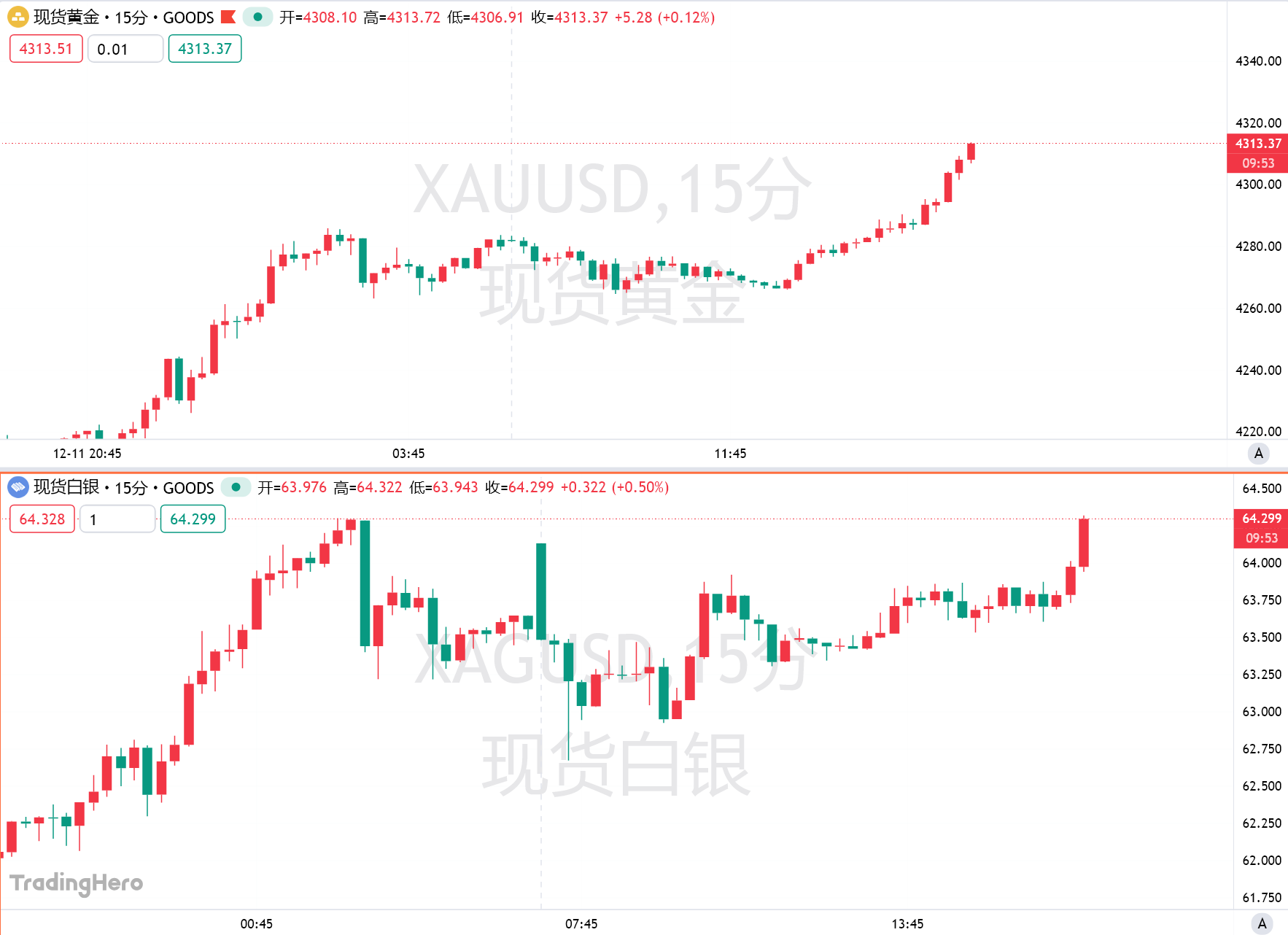
Gold surpasses the $4,310 mark—Is the "bull frenzy" returning?
Boosted by expectations of further easing from the Federal Reserve, gold has risen for four consecutive days. Technical indicators show strong bullish signals, but there remains one more hurdle before reaching a new all-time high.
Trend Research: Why Are We Still Bullish on ETH?
Against the backdrop of relatively accommodative expectations in both China and the US, which suppress asset downside volatility, and with extreme fear and capital sentiment not yet fully recovered, ETH remains in a favorable "buy zone."

Trending news
MoreCrypto prices
More





