
Two whale addresses control 56% of WLFI token burn governance proposal

World Liberty Financial’s community is throwing near-unanimous support behind a new governance measure aimed at strengthening the value of its native token, WLFI.
The proposal, introduced earlier this month, would direct fees collected from protocol-owned liquidity (POL) to repurchase tokens on the open market and permanently destroy them.
The vote, which opened on Sept. 11, remains active until Sept. 18 but has already attracted overwhelming community approval.
According to governance records, more than 99% of votes, representing roughly 1.5 billion WLFI, have backed the measure. Fewer than 2 million tokens have been cast against it, while about 5.8 million chose to abstain.
Meanwhile, an analysis of the voting pattern showed that only two whale addresses were responsible for over 56% of the “Yes” vote as of press time.
This shows that the whale WLFI holders are significantly skewing the governance vote in their favor.
So, it is unsurprising that the market has yet to respond favorably to the move. Data from CryptoSlate shows that WLFI is trading at $0.1992, down more than 35% since it launched at the beginning of this month.
WLFI’s burn strategy
The buyback program would apply to POL fees earned on Ethereum, Binance Smart Chain, and Solana liquidity pools, while funds from independent liquidity providers would be excluded.
The project leaders have suggested the scope could expand over time to include other revenue channels. WLFI’s Dylan said:
“This is only the first part of the deflationary mechanism. Burning tokens under a non-inflationary model is an excellent strategy. WLFI not only incorporates multiple deflationary features but also has actual profit-generating components, all of which are sustainable in the long term.”
Moreover, the DeFi project’s supporters also say the move is designed to make WLFI scarcer by shrinking supply, an approach many blockchain projects use to reinforce long-term value.
By consistently removing tokens from circulation, the plan seeks to shift more WLFI into the hands of committed holders rather than short-term speculators.
To set the stage for the program, the team recently destroyed 47 million WLFI tokens worth more than $11 million. These tokens were drawn directly from unlocked Treasury reserves and sent to designated burn addresses, marking the first major step toward the continuous burn model.
The post Two whale addresses control 56% of WLFI token burn governance proposal appeared first on CryptoSlate.
Disclaimer: The content of this article solely reflects the author's opinion and does not represent the platform in any capacity. This article is not intended to serve as a reference for making investment decisions.
You may also like
Five charts to help you understand: Where does the market go after each policy storm?
After this regulatory crackdown, is it a harbinger of an impending downturn, or the beginning of a new cycle where all negative news has been fully priced in? Let’s examine the trajectory after the storm through five key policy milestones.

Mars Morning News | The crypto market rebounds across the board, Bitcoin rises above $94,500; The "CLARITY Act" draft is expected to be released this week
The crypto market has fully rebounded, with bitcoin surpassing $94,500 and US crypto-related stocks rising across the board. The US Congress is advancing the CLARITY Act to regulate cryptocurrencies. The SEC chairman stated that many ICOs are not securities transactions. Whales are holding a large number of profitable ETH long positions. Summary generated by Mars AI. The accuracy and completeness of the content generated by the Mars AI model is still being iteratively updated.

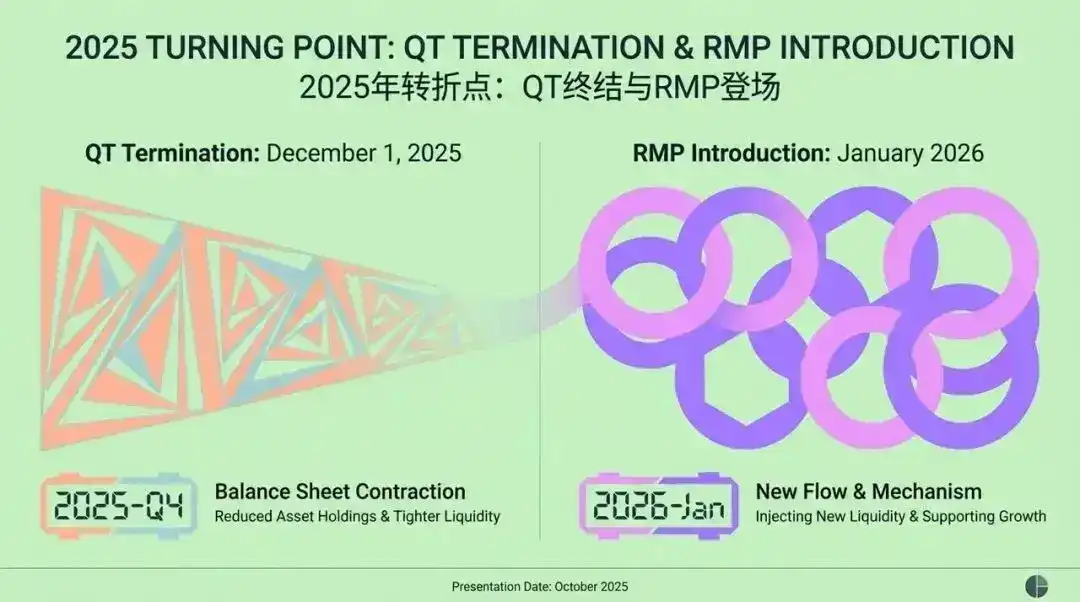
Federal Reserve’s Major Shift: From QT to RMP, How Will the Market Transform by 2026?
The article discusses the background, mechanism, and impact on financial markets of the Federal Reserve's introduction of the Reserve Management Purchases (RMP) strategy after ending Quantitative Tightening (QT) in 2025. RMP is regarded as a technical operation aimed at maintaining liquidity in the financial system, but the market interprets it as a covert easing policy. The article analyzes RMP's potential effects on risk assets, the regulatory framework, and fiscal policy, and provides strategic recommendations for institutional investors. Summary generated by Mars AI This summary was generated by the Mars AI model, and the accuracy and completeness of its content are still in the process of iterative improvement.
Rate Hike in Japan: Will Bitcoin Resist Better Than Expected?
Trending news
MoreCrypto prices
More





