
Banks Invest in Fnality's Blockchain to Shape the Future of Financial Infrastructure
- Fnality secures $136M Series C led by WisdomTree, Bank of America, and Citi to expand blockchain-based wholesale payment systems. - Platform enables real-time, secure tokenized asset settlements using DLT, with £FnPS already operational and USD/euro expansions pending. - Investors highlight its role in modernizing finance by bridging traditional markets with tokenized assets through central bank-backed liquidity. - With $280M+ in cumulative funding from 30+ institutions, Fnality aims to standardize cross

Fnality International has secured $136 million in Series C financing, with the round being spearheaded by
Fnality’s solution connects conventional finance with new tokenized markets by settling transactions in digital cash backed by central banks, helping to lower both counterparty and settlement risks Fnality Raises $136 Million in Series C Funding | Fnality [ 1 ]. The platform supports delivery-versus-payment (DvP) for securities, payment-versus-payment (PvP) for FX, and real-time repo operations, allowing institutions to better manage liquidity and streamline operations Fnality Raises $136 Million in Series C Funding | Fnality [ 1 ]. Investors have highlighted the platform’s transformative potential, with Bank of America Co-President Jim DeMare stating the collaboration “accelerates the digitization of institutional markets,” and Citi’s Deepak Mehra noting its importance in providing “innovative solutions for the digital asset landscape” Fnality Raises $136 Million in Series C Funding | Fnality [ 1 ].
This Series C round follows a $95 million Series B in 2023, led by Goldman Sachs and BNP Paribas, and a $67 million Series A in 2019. With total funding now surpassing $280 million, Fnality’s shareholder base includes over 30 leading financial institutions, demonstrating widespread support for its hybrid finance vision Fnality Raises $136 Million in Series C Funding | Fnality [ 1 ]. The company plans to broaden its network to cover more major currencies, develop on-chain processes, and align with tokenization projects like JPMorgan’s Onyx and HSBC’s deposit token pilots. Jonathan Steinberg of WisdomTree called the investment a “critical foundation for tokenized finance,” highlighting the company’s commitment to blockchain-driven innovation Fnality Raises $136 Million in Series C Funding | Fnality [ 1 ].
Industry experts see Fnality’s progress as a sign of growing institutional interest in tokenized assets. By offering a regulated, central bank-supported settlement layer, the platform helps solve liquidity fragmentation and reduces operational risks for both cross-border and tokenized transactions. Its earmarking feature, which lets institutions allocate funds for specific uses, further boosts automation and programmability in financial operations. As tokenized markets continue to grow, Fnality’s infrastructure is set to play a pivotal role in global capital markets, enabling smooth integration between decentralized finance (DeFi) and traditional systems.
This funding round highlights the pressing need to resolve inefficiencies in wholesale payments, which are currently slow, expensive, and require significant capital reserves. Fnality’s DLT-based model eliminates intermediaries through direct, atomic settlements, giving institutions quicker access to liquidity and reducing operational burdens. As regulatory frameworks adapt to digital assets, Fnality’s partnerships with central banks and market operators position it to help shape the next generation of financial market infrastructure Fnality Raises $136 Million in Series C Funding | Fnality [ 1 ]. CEO Michelle Neal commented that the investment speeds up the creation of a “resilient, inclusive, and hybrid future of global finance,” where traditional and tokenized markets work side by side Fnality Raises $136 Million in Series C Funding | Fnality [ 1 ].
Disclaimer: The content of this article solely reflects the author's opinion and does not represent the platform in any capacity. This article is not intended to serve as a reference for making investment decisions.
You may also like
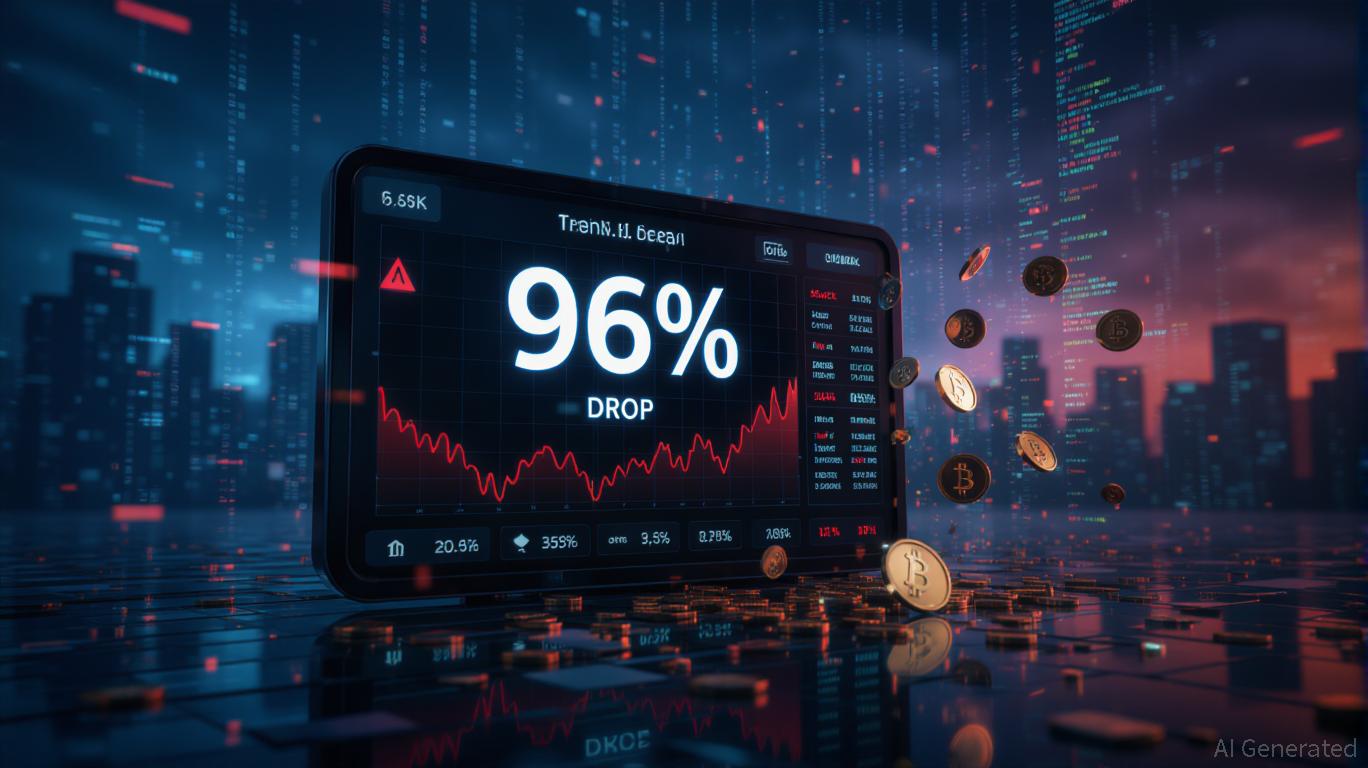
Why is the COAI Index Plummeting in Late 2025? Investor Confidence, Policy Changes, and What Lies Ahead for AI-Powered Learning
- COAI Index collapsed 96% in late 2025 due to governance failures, regulatory ambiguity, and AI-generated misinformation. - Centralized token distribution (97% in 10 wallets) and C3 AI's $116.8M loss exposed systemic vulnerabilities in AI-driven crypto assets. - AI-generated deepfakes and fake news triggered panic selling, accelerating the crash in emerging markets like Indonesia. - Post-crash, investors are prioritizing STEM/vocational education over speculative crypto, but funding delays and infrastruct
The Rise of MMT Token: Analyzing Driving Forces and Assessing Its Sustainability in the Cryptocurrency Market
- Momentum (MMT) token surged 1,300% in November 2025, driven by product innovation, regulatory clarity, and institutional investment. - Strategic moves included a Sui-based perpetual futures DEX, CLARITY Act/MiCA 2.0 compliance, and $10M funding for cross-chain expansion. - Institutional holdings rose 84.7%, while on-chain activity showed growing utility in real-world asset tokenization and governance models. - Risks persist: 3M tokens moved to OKX, $109M in liquidations, and 20.41% circulating supply cre
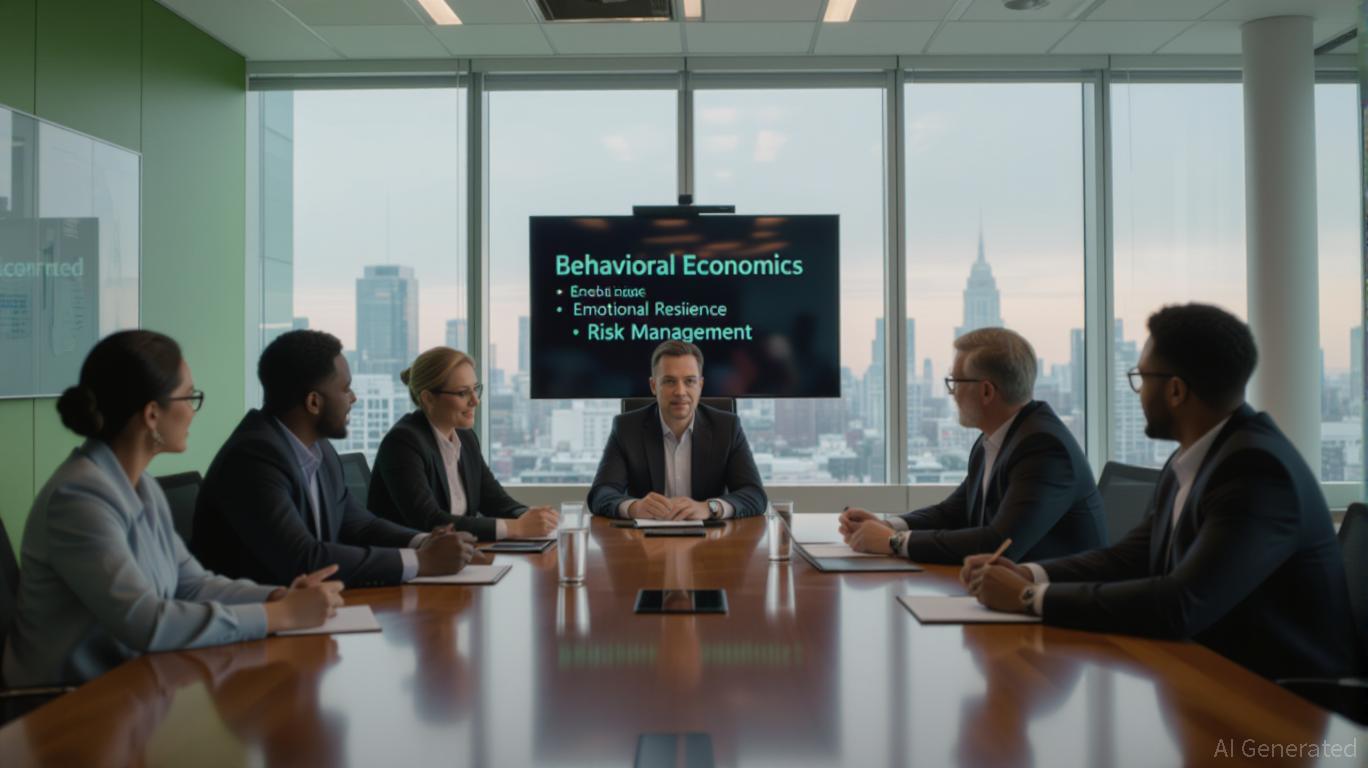
The Financial Wellness Aspect: The Influence of Investor Actions on Market Results
- Behavioral economics integrates psychology to explain how emotional, intellectual, and environmental wellness shape investor decisions and market outcomes. - Emotional resilience reduces cognitive biases like loss aversion, while intellectual engagement through AI tools improves long-term investment returns according to 2024-2025 studies. - Environmental factors such as ESG frameworks and workplace wellness programs demonstrate measurable economic benefits, including 20% higher productivity and reduced f
Regulatory Changes in U.S. Agriculture: The Impact of USDA Policy Decisions on Long-Term Investments in Livestock and Poultry Industries
- USDA’s 2023–2025 Organic Livestock and Poultry Standards (OLPS) impose stricter animal welfare rules, with phased compliance until 2029 to ease small producers’ adjustments. - Compliance costs for organic producers are high initially but projected to yield $59.1–$78.1 million annual benefits via enhanced consumer trust and premium pricing. - Investors favor scalable, tech-driven operations amid OLPS-driven capital shifts, though small producers face compliance challenges and market exit risks in poultry

Trending news
MoreCrypto prices
More





