
100 victims and €100M stolen: A large European crypto fraud network dismantled

Malicious minds never give up in the cryptosphere. Today, one network is dismantled, and tomorrow another forms in the shadows. There are those we see, and those who work silently, lurking behind screens, until authorities spot them. Despite the spotlight on this network with hundreds of victims, the crypto industry remains a moving target. Scammers always invent new schemes, fake portals, flashy promises, invisible banking circuits. This raid reveals once again that in the world of digital currencies, danger never sleeps.

In brief
- 100 European victims were trapped by well-built fake crypto investment platforms.
- The network laundered money in Lithuania after scamming through sophisticated sites.
- The crypto scam was active since 2018 and extended to 23 European countries.
- A joint action led to the arrest of five suspects and freezing of multiple accounts.
Crypto illusion: when promises become mirages
In June, several arrests already followed kidnappings targeting French crypto figures. A chilling reminder, while other scammers bet everything on “pro” platforms and sleek interfaces. They sold dreams. They promised colossal returns. Naive investors injected euros converted into bitcoin or altcoins. When they requested withdrawal, “additional fees” were demanded, then the site disappeared.
Result: the user lost everything. This mechanism, worthy of a classic scam, was sadly well adapted to the crypto environment.
According to Eurojust, the network progressed since 2018 in 23 countries and affected more than 100 victims with at least 100 million euros stolen . To do this, funds were routed via Lithuanian accounts. At the slightest withdrawal request, the trap closed: the platforms vanished.
The promoters used fake professionalism to deceive: clean graphics, credible communication, thoughtful encouragement messages. The gap was invisible. They hid behind crypto complexity to mask the simplicity of the scam.
It is a mirror of the current challenges in the crypto market: trust tools are weak, insurances rare, regulation late. In this context, illusions thrive, and victims flock. The virus of the fake investor remains far from eradicated.
Europe networked: anatomy of a cross-border fraud
This network was not local: it was a European web. Arrests took place simultaneously in Spain, Portugal, Italy, Bulgaria, and Romania, while funds transited through Lithuania. Eurojust orchestrated the action with the establishment of a Joint Investigation Team (JIT) Spain-Lithuania, coordinated by Europol.
Five suspects arrested. Assets frozen. Sites dismantled. A massive operation on a continental scale.
To counter this fraud, it was necessary to pool European warrants, freezing orders, and coordinated arrests at the very heart of the European banking system. Investigators seized digital traces, crypto flows, and holder bank accounts. They exploited legislative flaws and the open borders of the financial system.
This structure highlights the issue: in the crypto industry, criminal networks surf on international connectivity. The fragmented architecture of national regulations becomes an asset for scammers. The dismantling of this network shows the European capacity to react.
But it also reminds us that regulatory laxity, grey zones, and technical ignorance offer fertile ground to scammers. The challenge: strengthening cooperation, harmonizing crypto laws, and anticipating shady circuits.
Here are some key points of the case:
- Since 2018: operation ongoing;
- 23 countries impacted;
- 100 million euros stolen;
- 5 suspects arrested;
- Laundering route via Lithuania.
With these precise elements, we see how crypto crime becomes a European hydra: cut off one head, two appear elsewhere. The real challenge is making this ground too uncertain for scammers.
France recently experienced a wave of kidnappings targeting crypto entrepreneurs, with spectacular abductions and mutilated victims. The government has already responded : strengthened security, prioritized emergency services, emergency meeting. But is it enough to discourage the networks? The question remains open, those working in the shadows know the effort must last.
Disclaimer: The content of this article solely reflects the author's opinion and does not represent the platform in any capacity. This article is not intended to serve as a reference for making investment decisions.
You may also like
Five charts to help you understand: Where does the market go after each policy storm?
After this regulatory crackdown, is it a harbinger of an impending downturn, or the beginning of a new cycle where all negative news has been fully priced in? Let’s examine the trajectory after the storm through five key policy milestones.
Mars Morning News | The crypto market rebounds across the board, Bitcoin rises above $94,500; The "CLARITY Act" draft is expected to be released this week
The crypto market has fully rebounded, with bitcoin surpassing $94,500 and US crypto-related stocks rising across the board. The US Congress is advancing the CLARITY Act to regulate cryptocurrencies. The SEC chairman stated that many ICOs are not securities transactions. Whales are holding a large number of profitable ETH long positions. Summary generated by Mars AI. The accuracy and completeness of the content generated by the Mars AI model is still being iteratively updated.

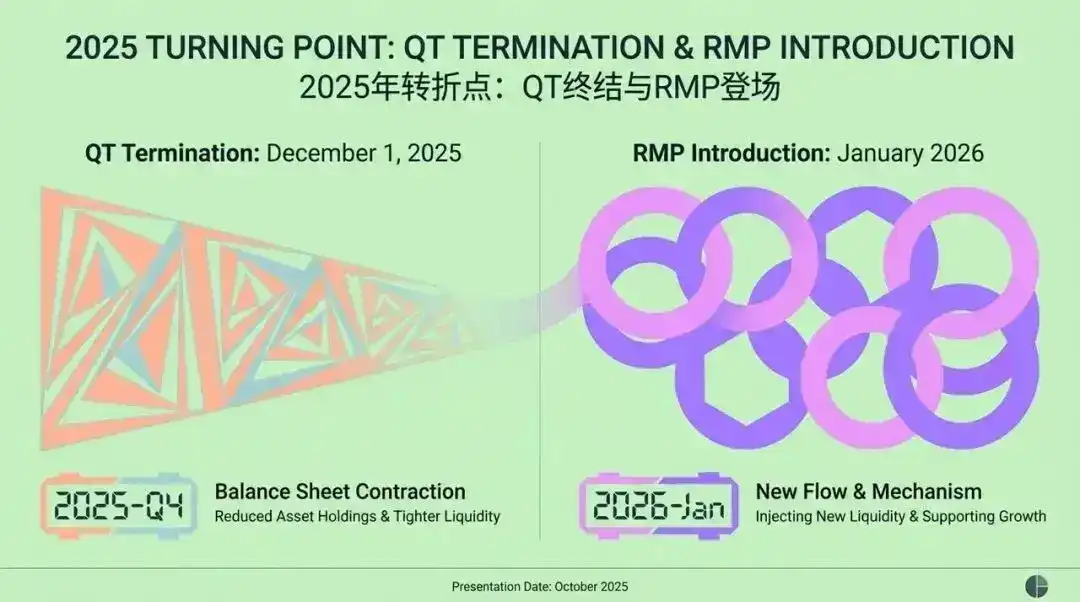
Federal Reserve’s Major Shift: From QT to RMP, How Will the Market Transform by 2026?
The article discusses the background, mechanism, and impact on financial markets of the Federal Reserve's introduction of the Reserve Management Purchases (RMP) strategy after ending Quantitative Tightening (QT) in 2025. RMP is regarded as a technical operation aimed at maintaining liquidity in the financial system, but the market interprets it as a covert easing policy. The article analyzes RMP's potential effects on risk assets, the regulatory framework, and fiscal policy, and provides strategic recommendations for institutional investors. Summary generated by Mars AI This summary was generated by the Mars AI model, and the accuracy and completeness of its content are still in the process of iterative improvement.
Rate Hike in Japan: Will Bitcoin Resist Better Than Expected?

Trending news
MoreCrypto prices
More





