
SEC Balances Regulatory Challenges While Bitwise Pursues Approval for Inaugural Hyperliquid ETF
- Bitwise files first ETF proposal for Hyperliquid's HYPE token, a DeFi-focused Layer 1 blockchain platform with $11B market cap. - SEC delays approval amid cautious regulatory approach, scrutinizing crypto ETFs under Rule 431 and extending review timelines for multi-token products. - Industry faces regulatory uncertainty as firms expand crypto ETFs (e.g., XRP, Solana) while awaiting standardized frameworks to resolve overlapping compliance challenges. - Analysts highlight risks of prolonged limbo, with ET
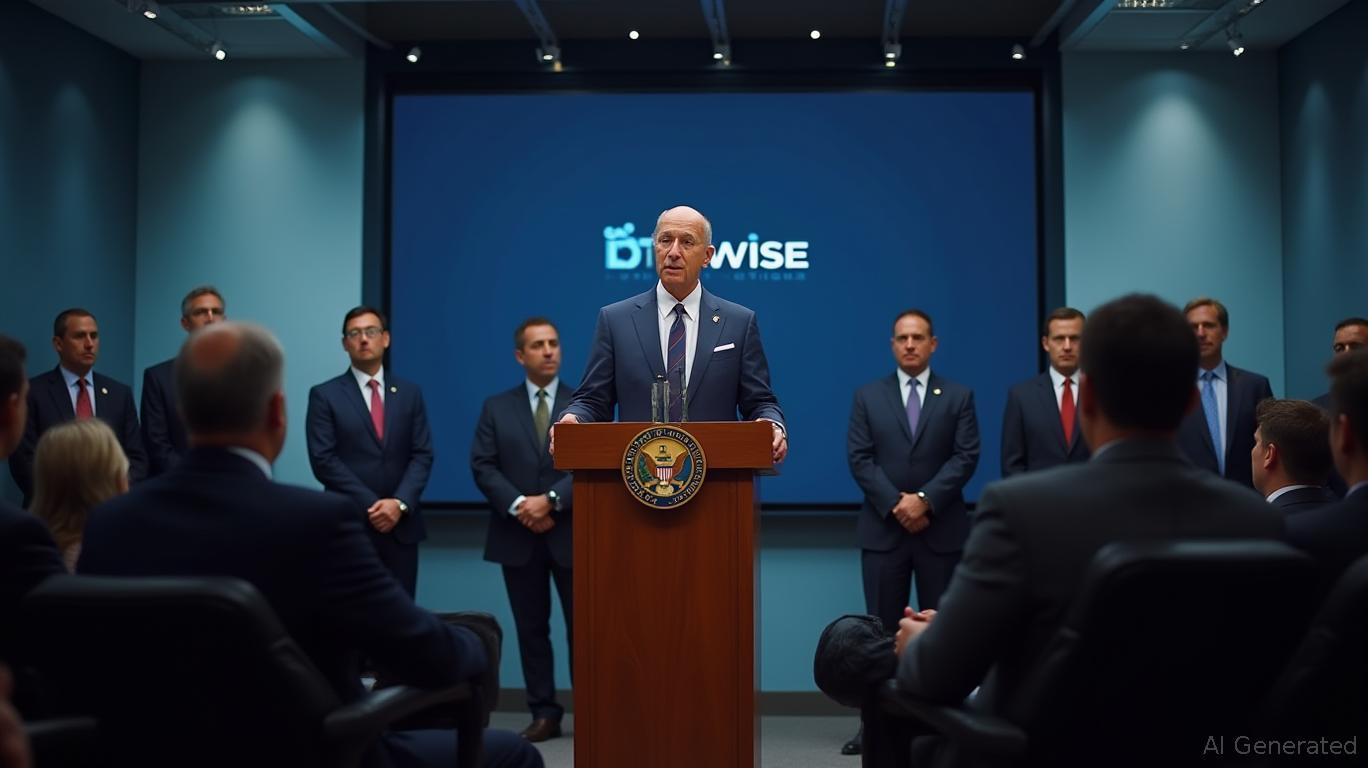
The U.S. Securities and Exchange Commission (SEC) has taken center stage in crypto asset oversight as Bitwise Investment Advisers filed an S-1 registration for the Bitwise Hyperliquid ETF, the first fund proposal to target Hyperliquid’s native token, HYPE The Block . Hyperliquid is a Layer 1 blockchain that aims to serve as a decentralized finance (DeFi) backbone, specifically for perpetual futures trading. The SEC’s ongoing postponements of this and other crypto ETF applications highlight its measured stance toward digital asset regulation, with significant consequences for both market structure and investor participation.
According to Bitwise’s prospectus, the ETF is intended to mirror the performance of HYPE, which boasts a market cap of $11 billion and is currently the 21st-largest cryptocurrency The Block . HYPE’s circulating supply is 270.8 million tokens, and recent figures indicate its price dropped 11% in the last 24 hours, closing at $40.51 The Block . Such price swings underscore the volatility of crypto assets, a risk the SEC has frequently highlighted in its statements.
The SEC’s review of Bitwise’s submission is consistent with its broader scrutiny of crypto ETFs. Although the Division of Trading and Markets initially gave the green light for Bitwise’s crypto index fund to transition into an ETF in July 2025, the agency subsequently issued a stay under Rule 431, enabling the full commission to reassess the approval Cointelegraph . This approach mirrors recent delays on other filings, such as Canary’s spot SUI and PENGU funds, as well as staked INJ and
The regulatory ambiguity has drawn reactions from industry stakeholders. Howard Lindzon, StockTwits co-founder, commented on social media that the venture capital strategies of the web 2.0 era are being echoed in crypto, with investors pursuing early-stage bets despite the uncertainty of regulatory delays The Block . At the same time, companies like Hashdex have broadened their ETF offerings to include
The SEC’s recent moves illustrate its effort to balance encouraging innovation with maintaining market stability. Its decision to extend the review period for in-kind redemption rules for
The results of these regulatory discussions will influence the future of crypto ETFs in the U.S. While Bitwise’s proposal is a notable milestone, the SEC’s hesitancy has led to a fragmented environment. Rivals such as Grayscale and VanEck are facing similar regulatory obstacles, with their Avalanche and staked token ETF applications also awaiting decisions The Block . This ongoing uncertainty has led industry organizations like The ETF Institute to push for faster approvals to better meet market needs The Currency Analytics .
As the SEC continues its evaluation, the larger crypto sector remains in a state of
Disclaimer: The content of this article solely reflects the author's opinion and does not represent the platform in any capacity. This article is not intended to serve as a reference for making investment decisions.
You may also like
Why the COAI Index Is Plummeting and Its Implications for Technology Investors
- The COAI Index, tracking AI-focused crypto assets, has dropped 88% year-to-date in late 2025 due to deteriorating market sentiment, regulatory uncertainty, and sector volatility. - C3 AI , a key index constituent, reported a $116.8M net loss and 19% revenue decline in Q1 2025, compounded by a lawsuit and CEO departure. - Regulatory shifts, including the U.S. CLARITY Act and EU AI Act, created compliance burdens, deterring investment and straining smaller firms. - The index's 97% token concentration in to
The Rise of Dynamic Clean Energy Markets
- CleanTrade’s CFTC-approved SEF platform in 2025 revolutionizes clean energy markets by enabling transparent trading of VPPAs, PPAs, and RECs. - The platform addresses institutional barriers through standardized protocols, reducing counterparty risk and aligning with traditional energy exchange frameworks. - Within two months, it facilitated $16B in notional value, offering real-time liquidity and ESG-aligned tools to track carbon impact and prevent greenwashing. - Institutional investors now access diver

KITE Price Forecast Post-Listing: Understanding Institutional Attitudes and Market Fluctuations
- KITE's post-IPO price fell 63% by Nov 2025 amid divergent institutional strategies and retail sector uncertainty. - Analysts split between "Buy" ($30 target) and "Hold" ratings, citing operational gains vs. macro risks like the $3.4T deficit bill. - Q3 net loss (-$0.07 EPS) and 5,400% payout ratio highlight structural risks despite industrial real estate pivots and 7.4% dividend hike. - Institutional trading directly impacted price swings, with COHEN & STEERS' stake increase briefly stabilizing shares be
The Financial Wellness Factor: An Overlooked Driver of Sustainable Wealth Building
- Financial wellness combines objective financial health and subjective well-being to drive long-term wealth creation, beyond mere asset accumulation. - Behavioral traits like conscientiousness correlate with disciplined investing habits, while neuroticism increases impulsive decisions during market volatility. - Studies show financially literate investors maintain portfolios during downturns, with 38% of "content" quadrant participants achieving superior risk-adjusted returns. - Debt management and saving

Trending news
MoreCrypto prices
More





