
Hashdex expands Crypto Index US ETF under SEC generic listing standards

Asset manager Hashdex expanded its Crypto Index US exchange-traded fund (ETF) to include XRP , SOL and Stellar following the generic listing rule change from the Securities and Exchange Commission (SEC).
The Nasdaq stock exchange-listed ETF now includes five cryptocurrencies held 1:1 by the fund, including Bitcoin and Ether, and is trading under the ticker symbol NCIQ, according to Thursday’s announcement .
The SEC approved generic listing standards for ETFs in September, paving the way for a faster ETF approval process for eligible cryptocurrencies.
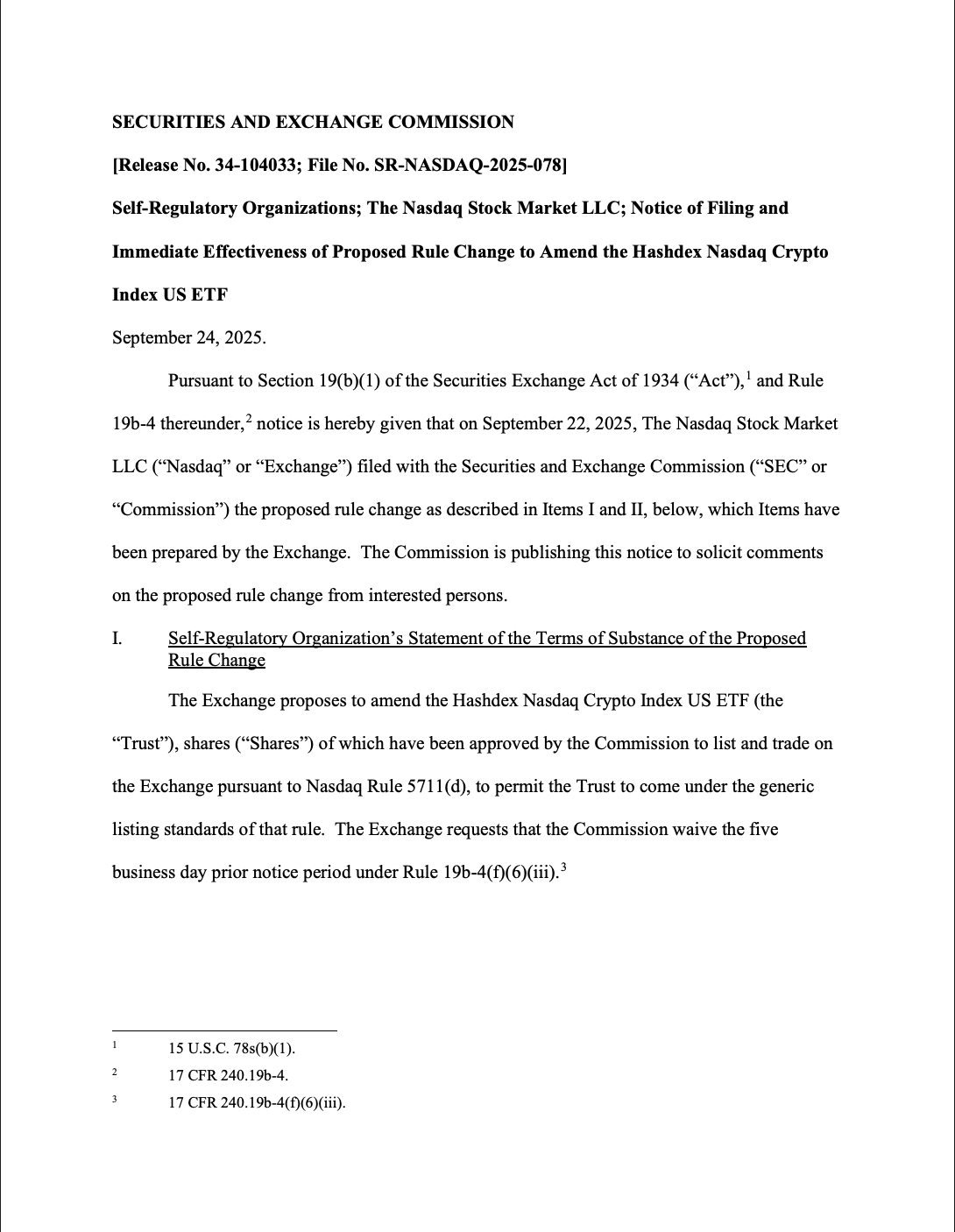 Hashdex's notice of expanding its ETF under the proposed SEC rule change for generic listings. Source: SEC
To qualify for generic listing eligibility, a cryptocurrency must be classified as a commodity or feature futures contracts listed on reputable exchanges. Additionally, eligible cryptos must be subject to financial surveillance under the US Intermarket Surveillance Group.
Market analysts and industry executives anticipate a torrent of new crypto ETF filings due to the new standards, which will give stock market participants access to the crypto markets and blur the line between traditional financial instruments and digital assets.
US SEC begins approving multi-asset crypto ETFs to hasten innovation
The SEC approved the Grayscale Digital Large Cap Fund , the first US multi-asset crypto ETF, on Sept. 17. Grayscale’s fund includes BTC, ETH, XRP, SOL and Cardano .
SEC Chair Paul Atkins is spearheading efforts to streamline the ETF approval process for cryptocurrencies as part of a broader initiative to modernize the financial system for digital finance.
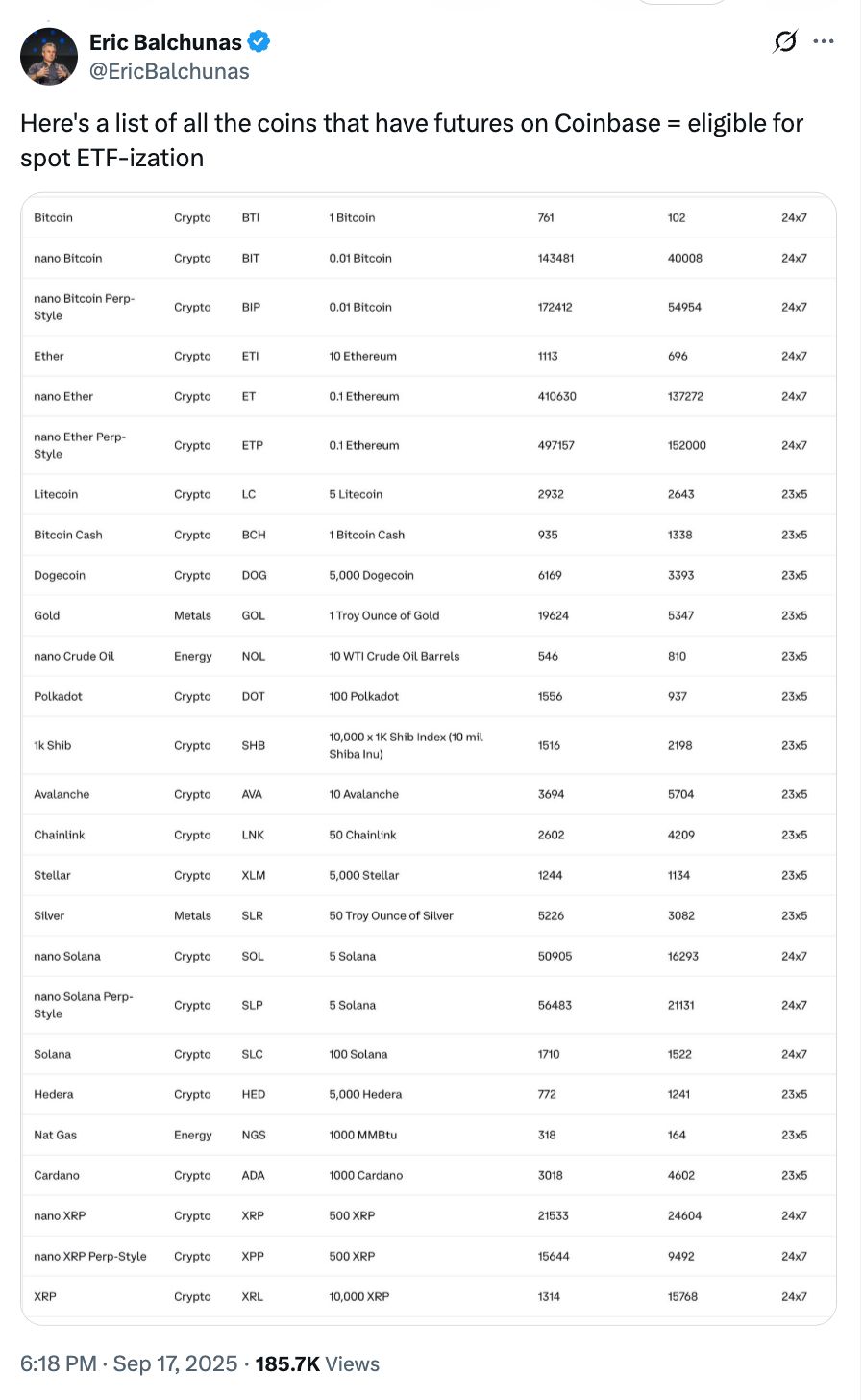 Source: Eric Balchunas
Atkins recently proposed an “innovation exemption” for crypto companies , a regulatory sandbox that would allow crypto projects to experiment with new technologies without fear of regulatory reprisal from government agencies.
The SEC, at the behest of US President Donald Trump’s administration, has issued a series of statements and policy proposals in 2025 designed to reduce the regulatory burden on crypto companies — a stark departure from the SEC under former Chair Gary Gensler’s leadership .
These policies include ending regulation by enforcement or filing lawsuits against projects without due notice, crafting comprehensive market structure rules for digital assets and classifying most cryptocurrencies as commodities.
Disclaimer: The content of this article solely reflects the author's opinion and does not represent the platform in any capacity. This article is not intended to serve as a reference for making investment decisions.
You may also like
Conflicted Fed cuts rates but Bitcoin’s ‘fragile range’ pins BTC under $100K

Fed rate cut may pump stocks but Bitcoin options call sub-$100K in January

"Validator's Pendle" Pye raises $5 million, enabling SOL staking yields to be tokenized
There are truly no creative bottlenecks in the financialization of Web3.

DiDi has become a digital banking giant in Latin America
DiDi has successfully transformed into a digital banking giant in Latin America by addressing the lack of local financial infrastructure, building an independent payment and credit system, and achieving a leap from a ride-hailing platform to a financial powerhouse. Summary generated by Mars AI. This summary was produced by the Mars AI model, and its accuracy and completeness are still being iteratively improved.

Trending news
MoreCrypto prices
More





