
The US September ADP employment unexpectedly recorded a negative value, strengthening expectations of a Federal Reserve rate cut.

U.S. ADP employment in September posted the largest decline since March 2023, with the previous figure also revised to negative growth. As the release of the non-farm payroll report is likely to be delayed, the "mini non-farm" data may carry additional significance in guiding the Federal Reserve's October meeting.
At 20:15 on Wednesday in the East 8th District, the US September ADP employment number recorded a decrease of 32,000, marking the largest decline since March 2023 and the third drop in four months, falling short of the market expectation of 50,000. The previous value was revised down from 54,000 to -3,000.
After the data was released, US Treasury yields fell, and spot gold showed little short-term volatility. Traders increased their bets on two further Fed rate cuts within the year. Interest rate swap contracts tied to upcoming Fed meeting dates now show an expected rate cut of 46 basis points by year-end, compared to 42 basis points before the data release.
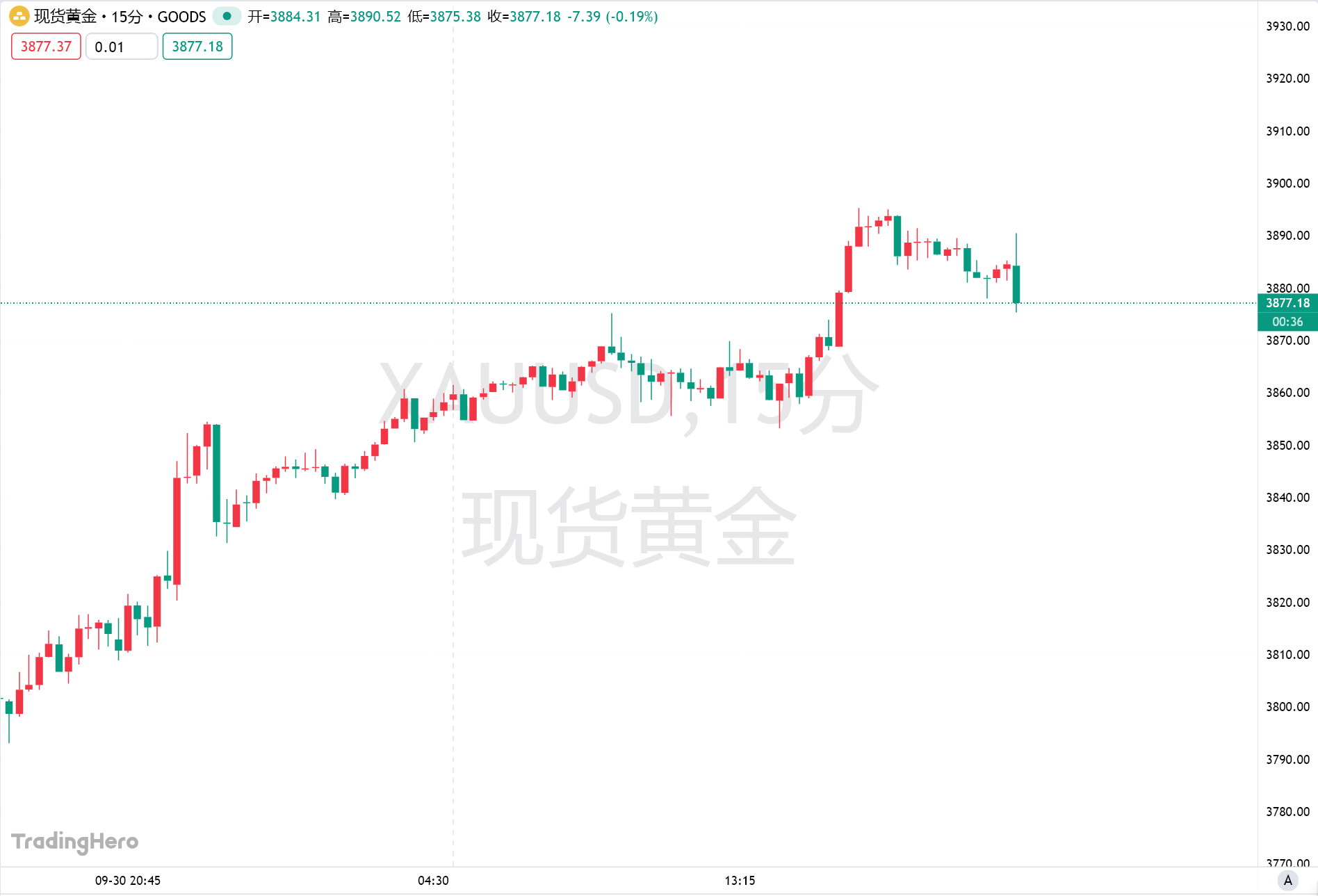
ADP Chief Economist Dr. Nela Richardson stated: "Despite strong economic growth in the second quarter, this month's data further confirms the labor market trends we previously observed, namely that US employers have remained cautious in hiring."
By industry breakdown,
In September, construction employment decreased by 5,000, compared to an increase of 16,000 in August.
In September, manufacturing employment decreased by 2,000, compared to a decrease of 7,000 in August.
In September, trade/transportation/utilities employment decreased by 13,000, compared to a decrease of 17,000 in August.
In September, financial services employment decreased by 9,000, compared to a decrease of 2,000 in August.
In September, professional/business services employment decreased by 13,000, compared to an increase of 15,000 in August.
After the US government shut down at midnight local time, the ADP employment report may be the only report investors need to focus on this week.The weekly initial jobless claims and the official employment report from the US Bureau of Labor Statistics are expected to be delayed until the budget dispute in Washington is resolved.The last time the Bureau of Labor Statistics delayed the release of the employment report was in 2013.
Historically, ADP data has not been ideal in predicting the official US employment report released a few days later. However, this year, after the Trump administration launched the largest trade war in decades, ADP detected a sharp decline in hiring as early as spring.
Fed officials refer to nonfarm payroll data when making interest rate decisions. The next Fed meeting will be held on October 28-29, which means they may not have access to the latest nonfarm payroll report before then. Therefore, the ADP data carries extra significance.
Gregory Faranello, Head of US Rates Trading and Strategy at AmeriVet Securities, said: "The job market is clearly weakening, and the market is reacting this way because the likelihood of the official nonfarm payroll report being released on Friday seems low. In addition, the official employment data has already been revised previously, which both reinforces expectations that 'the Fed will resume rate cuts' and supports the trend judgment of 'overall interest rates moving lower.'"
In September, unemployment appeared across various industries, but as schools reopened, the education and health services sector added 3,000 jobs, and the healthcare sector continued its long-term hiring momentum, offsetting some of the weakness in other sectors.
According to the Atlanta Fed's GDPNow data tracker, the US economy did indeed grow by 3.8% in the second quarter and is expected to grow by 3.9% in the third quarter.
However, despite the unemployment rate being at a relatively low 4.3%, concerns about the state of the labor market have increased.
Boston Fed President Collins said on Tuesday: "My baseline expectation is that the labor market will not weaken further, but risks remain. In particular, I believe labor demand may fall significantly below supply, leading to a more pronounced and unwelcome rise in the unemployment rate."
Disclaimer: The content of this article solely reflects the author's opinion and does not represent the platform in any capacity. This article is not intended to serve as a reference for making investment decisions.
You may also like
"Validator's Pendle" Pye raises $5 million, enabling SOL staking yields to be tokenized
There are truly no creative bottlenecks in the financialization of Web3.

DiDi has become a digital banking giant in Latin America
DiDi has successfully transformed into a digital banking giant in Latin America by addressing the lack of local financial infrastructure, building an independent payment and credit system, and achieving a leap from a ride-hailing platform to a financial powerhouse. Summary generated by Mars AI. This summary was produced by the Mars AI model, and its accuracy and completeness are still being iteratively improved.

Fed rate cuts in conflict, but Bitcoin's "fragile zone" keeps BTC below $100,000
The Federal Reserve cut interest rates by 25 basis points, but the market interpreted the move as hawkish. Bitcoin is constrained by a structurally fragile range, making it difficult for the price to break through $100,000. Summary generated by Mars AI This summary was generated by the Mars AI model, and the accuracy and completeness of its content are still being iteratively updated.

Full text of the Federal Reserve decision: 25 basis point rate cut, purchase of $4 billion in Treasury bills within 30 days
The Federal Reserve cut interest rates by 25 basis points with a 9-3 vote. Two members supported keeping rates unchanged, while one supported a 50 basis point cut. In addition, the Federal Reserve has restarted bond purchases and will buy $40 billion in Treasury bills within 30 days to maintain adequate reserve supply.
Trending news
MoreCrypto prices
More





