
Centralized Exchange Bitcoin Balances Hit Multi Year Low During Price Rally
Bitcoin reached a new all-time high above $125,700 on Coinbase Sunday morning, according to Cointelegraph. The previous peak stood at $124,500 on August 14. Bitcoin pulled back 13.5% by September 1 but recovered strongly over the past week.
The total Bitcoin balance on centralized exchanges fell to 2.83 million BTC on Saturday, data from Glassnode shows. This represents a six-year low. The last time fewer coins were stored on exchanges was early June 2019, when Bitcoin traded around $8,000. CryptoQuant reports an even lower total exchange reserve of 2.45 million BTC, which marks a seven-year low.
More than 114,000 BTC worth over $14 billion left exchanges in the past two weeks. Matthew Sigel, head of digital assets research at VanEck, warned Saturday that exchanges may be running out of Bitcoin. Trader Mike Alfred reported Sunday that a major OTC desk could be completely out of Bitcoin to sell within two hours of futures opening Monday, unless prices reach $126,000 to $129,000.
Why This Matters
The withdrawal of Bitcoin from exchanges into self-custody, institutional funds, or digital asset treasuries reduces immediate selling pressure. Bitcoin sitting on exchanges represents available supply that could hit the market at any moment. When this available supply shrinks dramatically, the market becomes more sensitive to demand changes.
Yahoo Finance reports that public companies have acquired nearly 350,000 BTC since November 2024. Strategy led these purchases with 285,980 BTC accumulated during this period. The Exchange Whale Ratio fell below 0.3 in April 2025, indicating retail investors now have more market influence than large traders.
The supply shortage creates conditions for rapid price movements. When institutional demand increases but available supply decreases, each dollar of buying pressure has a larger impact on price. We previously reported that 15 US states moved forward with plans for Bitcoin reserves, which could further reduce available supply. Large-scale government purchases could drive prices up substantially given Bitcoin's fixed supply cap of 21 million coins.
Industry Implications
The cryptocurrency market is experiencing a fundamental shift in how Bitcoin is held and traded. The declining exchange reserves reflect growing confidence among long-term holders and institutions. This trend transforms Bitcoin from a speculative trading asset into a strategic reserve holding.
Expert predictions for 2025 show this confidence. Finder.com surveyed 24 crypto industry specialists in July 2025 who forecast Bitcoin reaching $145,167 by year-end. Mitesh Shah of Omnia Markets sees strong institutional demand colliding with a supply squeeze. On-chain data shows nearly 70% of Bitcoin has not moved in over a year.
The traditional finance sector is watching these developments closely. Bitcoin ETFs in the United States now generate $5 billion to $10 billion in daily trading volume on active days, sometimes surpassing major cryptocurrency exchanges. The ETF structure allows institutional investors to gain exposure without managing custody themselves.
However, skeptics note that rapid price increases driven by supply constraints can create volatility. Market liquidity has decreased as coins move off exchanges. A sudden shift in sentiment could trigger sharp price movements in either direction. The concentration of Bitcoin among institutional holders also raises questions about market structure and potential centralization of holdings.
Disclaimer: The content of this article solely reflects the author's opinion and does not represent the platform in any capacity. This article is not intended to serve as a reference for making investment decisions.
You may also like
A decade-long tug-of-war ends: "Crypto Market Structure Bill" sprints to the Senate
At the Blockchain Association Policy Summit, U.S. Senators Gillibrand and Lummis stated that the "Crypto Market Structure Bill" is expected to have its draft released by the end of this week, with revisions and hearings scheduled for next week. The bill aims to establish clear boundaries for digital assets by adopting a classification-based regulatory framework, clearly distinguishing between digital commodities and digital securities, and providing a pathway for exemptions for mature blockchains to ensure that regulation does not stifle technological progress. The bill also requires digital commodity trading platforms to register with the CFTC and establishes a joint advisory committee to prevent regulatory gaps or overlapping oversight. Summary generated by Mars AI. The accuracy and completeness of this summary, generated by the Mars AI model, is still being iteratively updated.
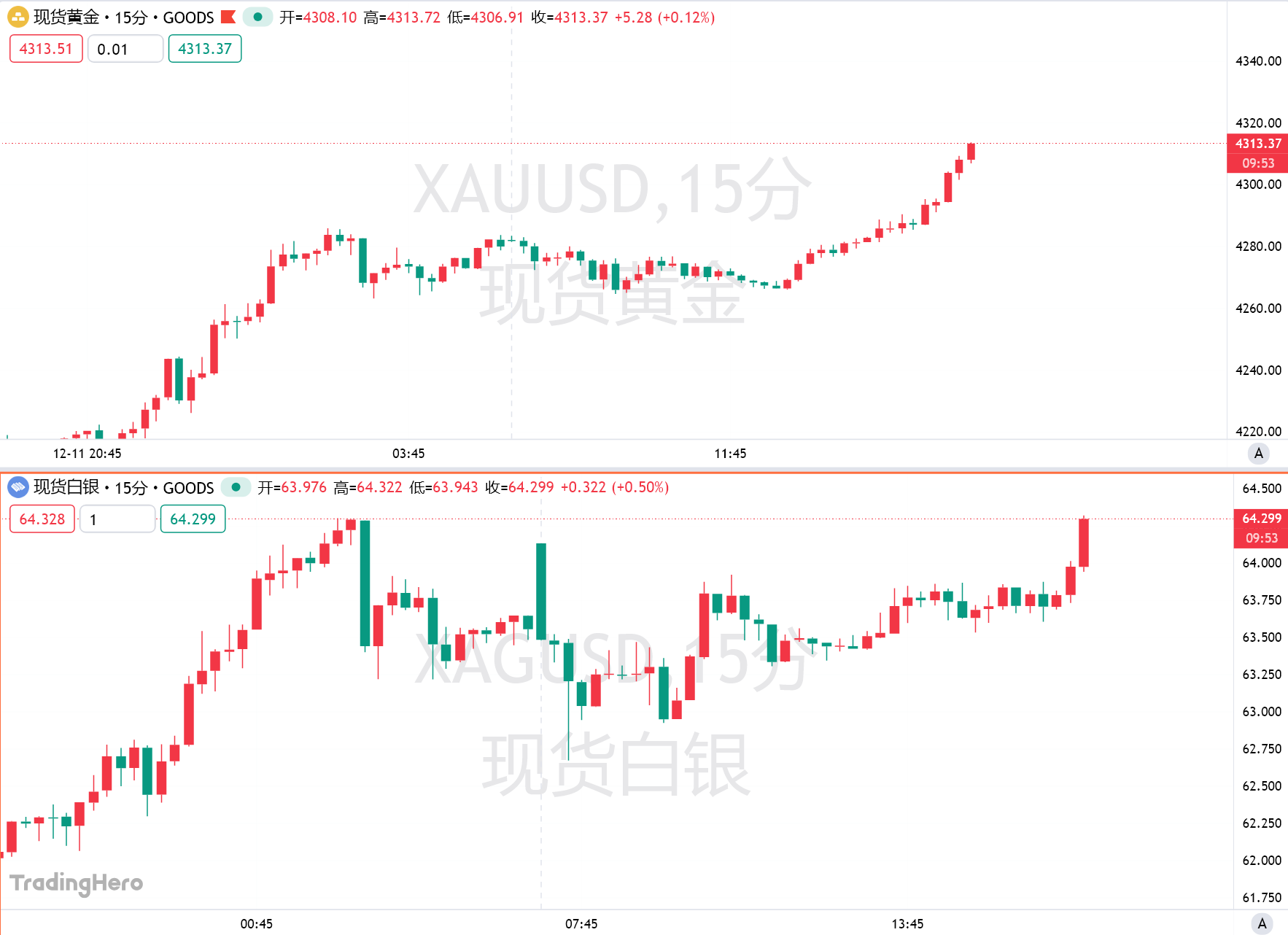
Gold surpasses the $4,310 mark—Is the "bull frenzy" returning?
Boosted by expectations of further easing from the Federal Reserve, gold has risen for four consecutive days. Technical indicators show strong bullish signals, but there remains one more hurdle before reaching a new all-time high.
Trend Research: Why Are We Still Bullish on ETH?
Against the backdrop of relatively accommodative expectations in both China and the US, which suppress asset downside volatility, and with extreme fear and capital sentiment not yet fully recovered, ETH remains in a favorable "buy zone."

Trending news
MoreCrypto prices
More





