
Bitcoin slides below $108,000; volatility to continue amid US-China tensions: analyst

Quick Take Bitcoin fell below $108,000 as traders derisked ahead of unpredictable macroeconomic events. U.S. President Trump is expected to meet Chinese leader Xi Jinping later this month, with trade tensions likely to persist afterward.

Bitcoin fell below $108,000 as traders assess lingering macroeconomic risks, mainly trade tensions between the U.S. and China.
According to The Block's crypto price page , bitcoin fell 2.6% in the past 24 hours to $107,854 as of 1:40 a.m. ET Tuesday. The cryptocurrency had briefly rebounded above $111,200 on Monday after recovering from a three-day slump.
One analyst told The Block that crypto prices may continue to exhibit similar volatility in the near term.
"We simply believe that macro concerns are driving day-to-day changes in the market," said Jeff Mei, COO at BTSE. "Volatility will continue as long as there [are] trade tensions between the U.S. and China."
Mei added that the latest decline was primarily driven by traders derisking ahead of the upcoming meeting between Chinese leader Xi Jinping and U.S. President Trump, scheduled to take place in South Korea at the end of October.
"While it's possible that they may come to an agreement at the end of the month and cause markets to rally, it's unlikely that tensions will evaporate altogether," Mei added.
Macro headwinds also dragged down major altcoins, with ether slipping 4.77% to $3,855, BNB falling 5.36%, and Solana losing 4.26%
Spot crypto exchange-traded funds saw outflows on Monday. Spot BTC ETFs reported $40.5 million in net outflows, while spot ETH ETFs saw $145.7 million move out from the fund, according to SoSoValue data . This came after BTC ETFs recorded their second-largest net weekly outflows last week, worth $1.23 billion.
With retail and institutional both showing unfavorable numbers, The Block's Fear and Greed Index stands at 29, which indicates fear among market participants.
"The biggest risk to crypto markets today is the fact that macro developments and trade discussions are unpredictable — markets can rise and fall at the whims of a single tweet," Mei said. "All investors can really do is diversify their assets and attempt to hedge against uncertainty."
Traders, hopeful for another interest rate cut this month and an early end to quantitative tightening, now look to Friday's release of the consumer price index data, an important inflation indicator.
CME Group's FedWatch Tool currently indicates a 98.9% chance that the Federal Reserve may cut rates by 25 basis points.
Disclaimer: The content of this article solely reflects the author's opinion and does not represent the platform in any capacity. This article is not intended to serve as a reference for making investment decisions.
You may also like
Five charts to help you understand: Where does the market go after each policy storm?
After this regulatory crackdown, is it a harbinger of an impending downturn, or the beginning of a new cycle where all negative news has been fully priced in? Let’s examine the trajectory after the storm through five key policy milestones.

Mars Morning News | The crypto market rebounds across the board, Bitcoin rises above $94,500; The "CLARITY Act" draft is expected to be released this week
The crypto market has fully rebounded, with bitcoin surpassing $94,500 and US crypto-related stocks rising across the board. The US Congress is advancing the CLARITY Act to regulate cryptocurrencies. The SEC chairman stated that many ICOs are not securities transactions. Whales are holding a large number of profitable ETH long positions. Summary generated by Mars AI. The accuracy and completeness of the content generated by the Mars AI model is still being iteratively updated.

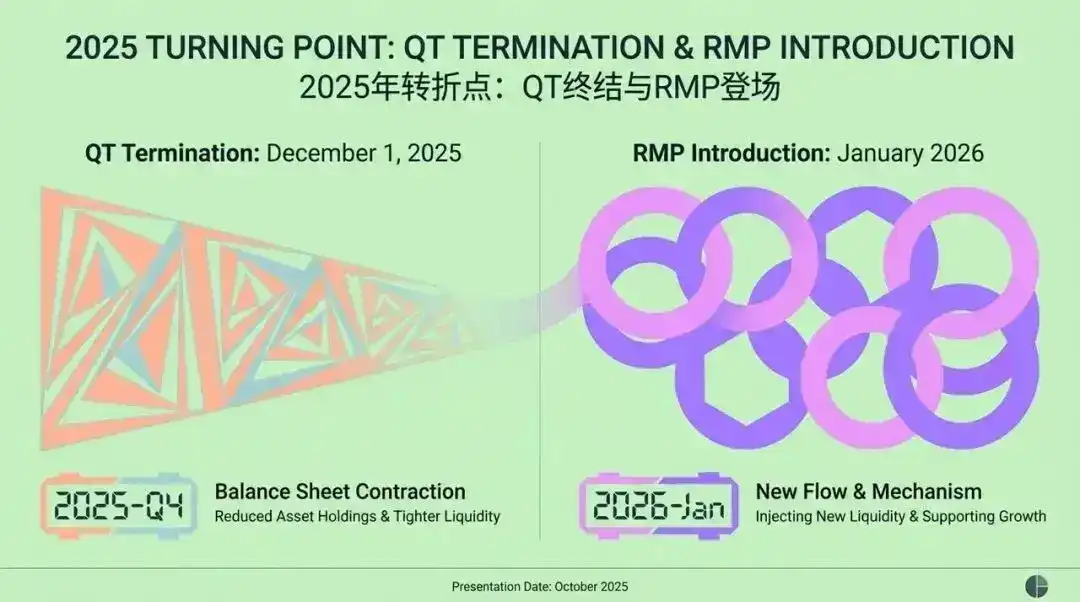
Federal Reserve’s Major Shift: From QT to RMP, How Will the Market Transform by 2026?
The article discusses the background, mechanism, and impact on financial markets of the Federal Reserve's introduction of the Reserve Management Purchases (RMP) strategy after ending Quantitative Tightening (QT) in 2025. RMP is regarded as a technical operation aimed at maintaining liquidity in the financial system, but the market interprets it as a covert easing policy. The article analyzes RMP's potential effects on risk assets, the regulatory framework, and fiscal policy, and provides strategic recommendations for institutional investors. Summary generated by Mars AI This summary was generated by the Mars AI model, and the accuracy and completeness of its content are still in the process of iterative improvement.
Rate Hike in Japan: Will Bitcoin Resist Better Than Expected?

Trending news
MoreCrypto prices
More





