
NYC Election Highlights Identity Politics as Mamdani Counters Anti-Muslim Rhetoric
- Zohran Mamdani, NYC's Muslim mayoral nominee, condemned Islamophobic attacks from rivals Cuomo and Sliwa during a Friday speech. - Cuomo and Sliwa falsely accused Mamdani of supporting "global jihad" and endangering Jewish safety in a polarizing campaign strategy. - Over 650 rabbis opposed Mamdani over his criticism of Israeli policies, while Democratic leaders endorsed him for progressive policies. - Despite personal attacks, Mamdani leads polls at 43% support, framing the race as a choice between statu
On Friday, Zohran Mamdani, the Democratic nominee for New York City mayor, gave a heartfelt address denouncing what he described as "unfounded and racist attacks" targeting his Muslim faith. As the November 4 election nears, his opponents Andrew Cuomo and Curtis Sliwa have intensified accusations rooted in Islamophobia in an attempt to weaken his campaign. Mamdani, a 34-year-old state assemblyman who could become the city's first Muslim mayor, became emotional as he spoke about the "pervasive" anti-Muslim attitudes that have shaped the race.
His comments followed a heated October 22 mayoral debate, where Cuomo, running as an independent, and Sliwa, the Republican candidate, ramped up their personal criticisms. Cuomo alleged that Mamdani was "fueling hatred against Jewish people," while Sliwa wrongly accused him of backing "global jihad." Mamdani firmly denied these claims, emphasizing that he has never supported such views and attributing the criticism to his identity as a Muslim contender. "I have never, at any point, advocated for global jihad," Mamdani stated during the debate, noting that these attacks are linked to his historic candidacy, as reported by
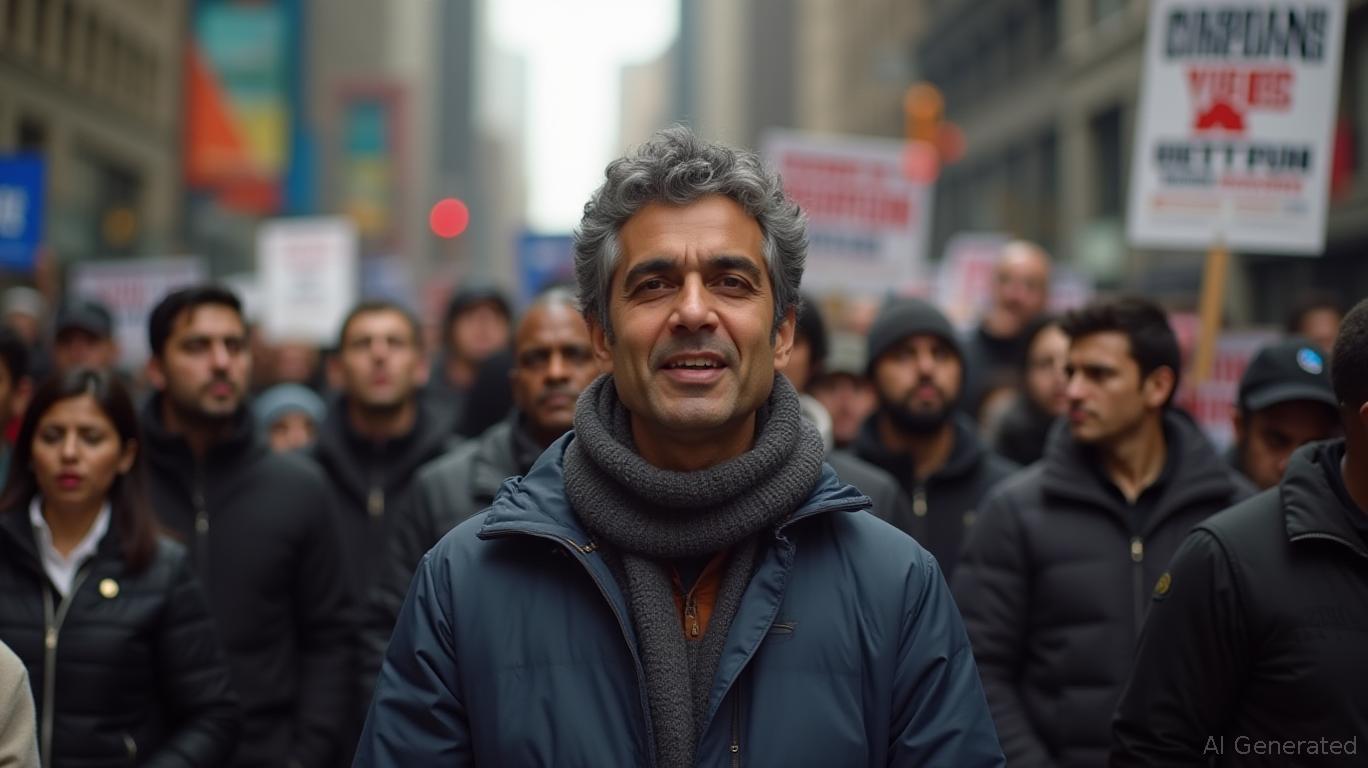
The debate also brought to light a larger conflict over identity and policy. More than 650 rabbis have signed a public letter opposing Mamdani, citing his criticism of Israel's government and his reluctance to outright reject the slogan "globalize the intifada." Despite this, Mamdani has reaffirmed his progressive agenda, promising to defend Jewish New Yorkers from antisemitism while also pushing for affordable housing and changes to policing. His campaign has faced a coordinated narrative from Cuomo and Sliwa, portraying him as inexperienced and a danger to Jewish residents. Cuomo even claimed on a conservative radio program that Mamdani "would celebrate" another 9/11-type attack, according to
These attacks have attracted attention nationwide, with Democratic leaders such as House Minority Leader Hakeem Jeffries recently offering their support to Mamdani, as reported by
During his Friday speech, Mamdani highlighted the impact of the campaign on New York's Muslim community. "Being Muslim in New York means bracing for indignity," he remarked, adding that the campaign is defined by how much that indignity is tolerated. He also called out Cuomo for a history of "using antisemitism for political advantage," while pointing out that his own policies—such as keeping Police Commissioner Jessica Tisch—reflect bipartisan interests, as reported by
The mayoral race has also revealed significant rifts within New York's Jewish community, with some rabbis and political leaders siding with Cuomo due to concerns about Mamdani's views on Israel. Nonetheless, Mamdani's progressive supporters remain enthusiastic, especially among younger voters and communities of color. His campaign has positioned the election as a choice between Cuomo's "status quo" and a "new chapter" of inclusive leadership.
With early voting starting Saturday, the race is a test of whether Mamdani's vision can rise above the divisive rhetoric on race and religion dominating the campaign's final days. As the nation watches New York's largest Muslim population and a divided Jewish community, the results may mark a turning point in the role of identity politics in American elections.
Disclaimer: The content of this article solely reflects the author's opinion and does not represent the platform in any capacity. This article is not intended to serve as a reference for making investment decisions.
You may also like
Aster DEX's On-Chain Momentum: Signaling the Future of DeFi
- Aster DEX reported $27.7B daily volume and $1.399B TVL in Q3 2025, outpacing DeFi benchmarks with 2M users. - Institutional whale activity, including CZ's $2M ASTER purchase, drove $5.7B inflows and 800% volume spikes. - Hybrid AMM-CEX model and ZKP privacy tech enabled 40.2% TVL growth, 77% private transactions, and 19.3% perpetual DEX market share. - ASTER's margin trading upgrades and Stage 4 airdrops fueled 30% price surges, while Aster Chain's 2026 launch will integrate privacy-preserving ZKPs. - On

Astar (ASTR) Price Rally: Protocol Enhancements and Ecosystem Growth Drive Long-Term Value
- Astar (ASTR) surged 150% due to protocol upgrades and ecosystem expansion, positioning it as a sustainable value creation case study in blockchain. - Tokenomics 3.0 (fixed 10.5B supply) and Burndrop mechanism created deflationary incentives, supported by Galaxy Digital's $3. 3M OTC investment and Astar's $29.15M buyback. - Cross-chain interoperability with Polkadot/Plaza and Sony's Soneium, plus partnerships with Toyota and Japan Airlines, expanded real-world utility in logistics, identity, and loyalty p

Astar 2.0 Debut and Tokenomics Revamp: Driving DeFi Innovation and Attracting Institutional Participation
- Astar Network's Astar 2.0 introduces Tokenomics 3.0 with fixed 10.5B ASTR supply and 5% annual burn rate to stabilize value for institutional investors. - The update features Burndrop mechanism, asynchronous cross-chain security, and ESG-aligned protocols to address regulatory risks and attract traditional capital. - Plaza platform enables seamless asset transfers across Ethereum , BSC, and Polkadot , while zkEVM scalability targets 300,000 TPS by 2026 for enterprise-grade DeFi solutions. - Governance sh

PNC Bank launches Bitcoin trading for high-net-worth clients
Trending news
MoreCrypto prices
More





