
Solana News Update: Institutional ETF Investments Propel Solana Toward $200 in Bullish Momentum
- Solana (SOL) rebounded above $180 support, surging to $195 on October 25 amid strong inflows into the SSK ETF (SSK-Osprey Staking Solana ETF). - Institutional interest grows as SSK manages $400M+ assets, with JPMorgan predicting $6B+ inflows for mainstream Solana ETFs within a year. - Technical analysis highlights a potential triple-bottom pattern, with $200 as key resistance and $253 as a possible breakout target if $188 support holds. - Fidelity listing SOL on its platform and Hong Kong's stricter cryp
Solana (SOL) has bounced back from the crucial $180 support zone, fueling bullish sentiment as traders set their sights on the $200 resistance level as the next possible milestone. On October 25, the token climbed to $195, marking a 12% rebound from its monthly low, largely propelled by strong capital inflows into the REX-Osprey Staking
Chart analysis points to a positive trend.
The SSK ETF stands out for its 0.75% expense ratio, which is higher than the expected fees for upcoming Solana ETFs from companies like VanEck and Fidelity. However, its distinctive model of distributing staking revenue has drawn investor interest, according to the crypto.news report. Fidelity has also expanded retail participation by adding SOL to its U.S. trading platform, alongside
At the same time, the Hong Kong Stock Exchange’s stricter listing requirements for crypto-related companies illustrate a shifting regulatory environment, where institutions must prove sustainable business models to justify significant crypto holdings, according to
For Solana, the combination of ETF inflows, stronger network fundamentals, and broader retail access places the asset at a critical point. Experts warn that although $200 is a significant psychological barrier, ongoing momentum will rely on broader economic trends and regulatory developments. For now, bullish investors are hopeful that the $180 support level has provided a foundation for SOL to revisit its September highs.
Disclaimer: The content of this article solely reflects the author's opinion and does not represent the platform in any capacity. This article is not intended to serve as a reference for making investment decisions.
You may also like
Fed Cuts Rates, Announces $40B T-Bill Program, Crypto Dips
U.S. Marine Policy and Blue Economy Prospects: Key Infrastructure and Geostrategic Roles in Oceanic Commerce
- U.S. oceans policy balances geopolitical strategy, deep-sea tech investments, and UNCLOS ratification challenges to secure maritime influence. - Executive actions accelerate seabed mineral extraction while facing environmental criticism and legal risks from bypassing international seabed authority rules. - Offshore energy partnerships with Australia, Japan, and Saudi Arabia aim to diversify supply chains but face geopolitical tensions in chokepoints like the Red Sea. - Maritime security contracts expand

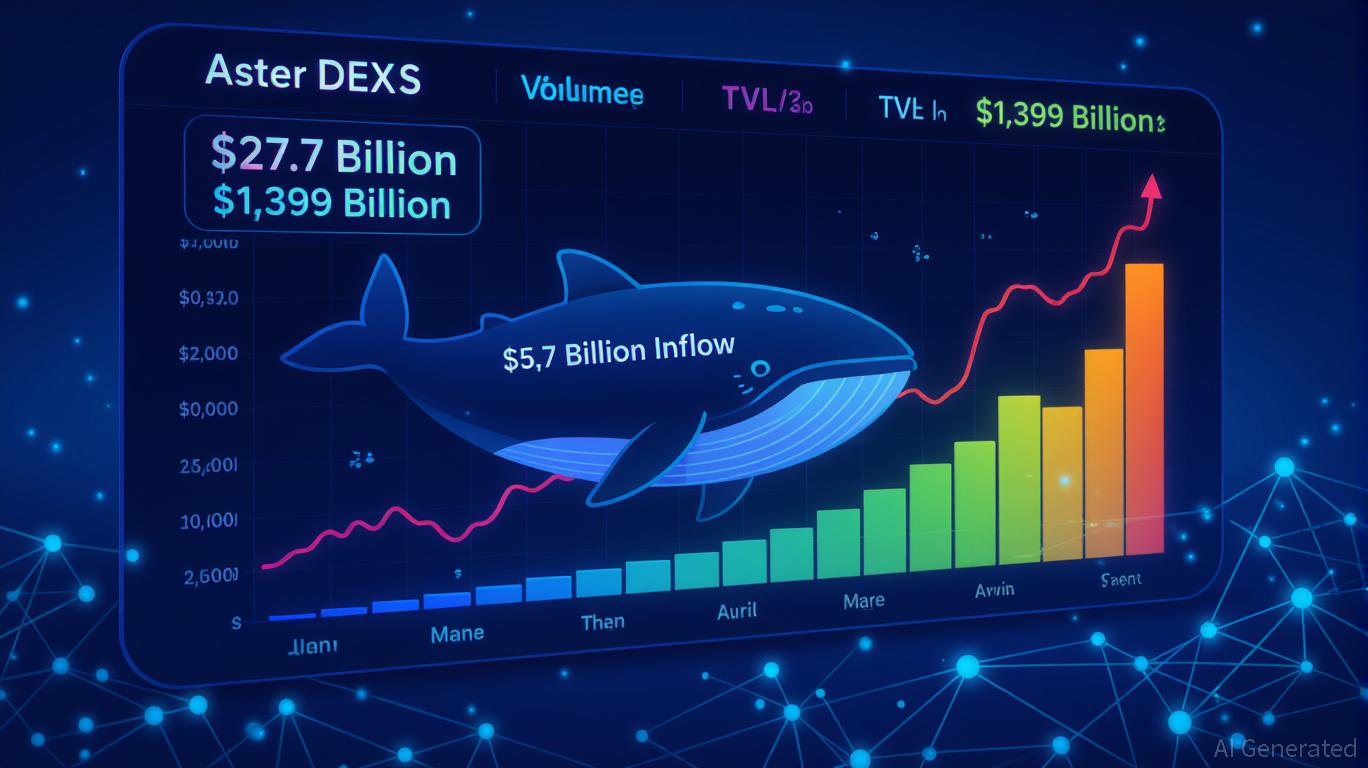
Aster DEX's On-Chain Momentum: Signaling the Future of DeFi
- Aster DEX reported $27.7B daily volume and $1.399B TVL in Q3 2025, outpacing DeFi benchmarks with 2M users. - Institutional whale activity, including CZ's $2M ASTER purchase, drove $5.7B inflows and 800% volume spikes. - Hybrid AMM-CEX model and ZKP privacy tech enabled 40.2% TVL growth, 77% private transactions, and 19.3% perpetual DEX market share. - ASTER's margin trading upgrades and Stage 4 airdrops fueled 30% price surges, while Aster Chain's 2026 launch will integrate privacy-preserving ZKPs. - On
Astar (ASTR) Price Rally: Protocol Enhancements and Ecosystem Growth Drive Long-Term Value
- Astar (ASTR) surged 150% due to protocol upgrades and ecosystem expansion, positioning it as a sustainable value creation case study in blockchain. - Tokenomics 3.0 (fixed 10.5B supply) and Burndrop mechanism created deflationary incentives, supported by Galaxy Digital's $3. 3M OTC investment and Astar's $29.15M buyback. - Cross-chain interoperability with Polkadot/Plaza and Sony's Soneium, plus partnerships with Toyota and Japan Airlines, expanded real-world utility in logistics, identity, and loyalty p
Trending news
MoreCrypto prices
More





