
MMT Token's TGE: Could This Spark Widespread Adoption in the Blockchain Industry?
- Binance's Momentum (MMT) TGE on Nov 4, 2025, saw an 885% price surge, oversubscribed fundraising, and institutional backing, sparking debates on blockchain's mainstream adoption potential. - MMT's hybrid tokenomics blend inflationary and deflationary mechanisms, with buybacks from 20% of fees and 15% of quarterly earnings to stabilize volatility and incentivize long-term participation. - Institutional confidence grew post-TGE, with $10M raised at a $100M valuation, while real-world asset tokenization (e.
Tokenomics and Market Reception: A Double-Edged Sword
MMT’s tokenomics utilize a mixed approach, combining both inflationary and deflationary features. There is no cap on the total supply, with inflation set to begin six months after launch, but the system also includes buybacks and token burns using 20% of marketplace fees and 15% of quarterly profits. This model is designed to reduce price swings and encourage holders to stay invested for the long term.
The initial market reaction was intense. MMT’s price climbed to $0.8859 within just a few hours, fueled by liquidity rewards and cross-chain initiatives. Binance’s launch of MMT/USDT and MMT/USDC futures added further depth to the market, while an upcoming airdrop on the
Institutional Adoption and Real-World Asset Integration
Confidence from institutions in
The project’s roadmap features plans for tokenizing real-world assets (RWA), a crucial move for broader adoption. In 2025, tokenized U.S. treasuries, real estate, and commodities have become more popular, and MMT aims to capitalize on these developments. For example,
Regulatory Clarity and Cross-Chain Ambitions
Recent regulatory changes have made MMT more appealing to institutional investors.
Nevertheless, there are still obstacles.
Investment Implications: Balancing Optimism and Caution
For those considering investment, MMT’s TGE presents a scenario with both high risk and high potential reward. The token’s rapid rise—driven by liquidity programs and airdrops—has created a speculative buzz, but its future value will depend on successfully implementing real-world applications and maintaining regulatory adherence. Short-term traders might benefit from the volatility, with the $0.30–$0.36 range offering possible entry points. However, those with a medium-term outlook should keep an eye on institutional involvement, RWA collaborations, and supply trends to assess long-term prospects.
The larger blockchain ecosystem also faces the challenge of fragmentation. While MMT’s cross-chain plans are encouraging, achieving true interoperability is still a challenge. The project’s progress could serve as a model for others aiming to connect different networks, but this will require strong governance systems—such as
Conclusion
MMT’s TGE has certainly made waves in the blockchain world, blending speculative enthusiasm with institutional support and RWA integration. However, whether it can truly drive mainstream adoption is still uncertain. The token’s shift from a speculative asset to one with real utility will be key to its long-term success. For now, investors must balance the potential for quick profits with the risks posed by supply fluctuations and regulatory changes. As the sector continues to develop, MMT’s progress may provide important lessons for the broader journey toward widespread blockchain adoption.
Disclaimer: The content of this article solely reflects the author's opinion and does not represent the platform in any capacity. This article is not intended to serve as a reference for making investment decisions.
You may also like
Injective’s DeFi repurchase strategies reflect the confidence-building actions commonly seen in traditional financial markets
- Injective Protocol (INJ) will launch community buybacks starting Nov 16, funded by treasury reserves to reward long-term tokenholders. - The move mirrors traditional market trends like Niagen's $10M buyback and New Mexico's 30-year dividend streak to stabilize investor confidence. - On-chain auctions will ensure transparency, aligning with DeFi's recovery from regulatory uncertainties and CNB

Zcash Latest Updates: ZEC Shorts Reduced by $8M, Yet a $21M Deficit Threatens on Hyperliquid
- Hyperliquid's largest ZEC short reduced $8M exposure but still faces $21.75M unrealized losses amid volatile price swings. - ZEC short liquidations hit $17.91M as 25% price surge triggered broader $327M market liquidations in 12 hours. - The position's liquidation price rose to $1,111 while maintaining 245% floating losses on $74.35M leveraged exposure. - The strategy mirrors a $25M POPCAT token manipulation case, highlighting risks of liquidity imbalances on crypto derivatives platforms. - ZEC's $22.29M
PENGU USDT Sell Alert and What It Means for Stablecoin Approaches
- Stablecoin market growth to $4 trillion by 2030 faces risks exposed by 2023-2025 de-pegging events, highlighted by PENGU's volatile performance. - PENGU's 12.8% November 2025 surge masked structural weaknesses shown through Fibonacci levels, weak OBV/MACD metrics, and conflicting on-chain flows. - UST/LUNA and USDC/SVB collapses forced institutions to adopt predictive analytics and automated risk monitoring for stablecoin-linked assets. - Regulatory frameworks like EU MiCA aim to prevent opaque stablecoi
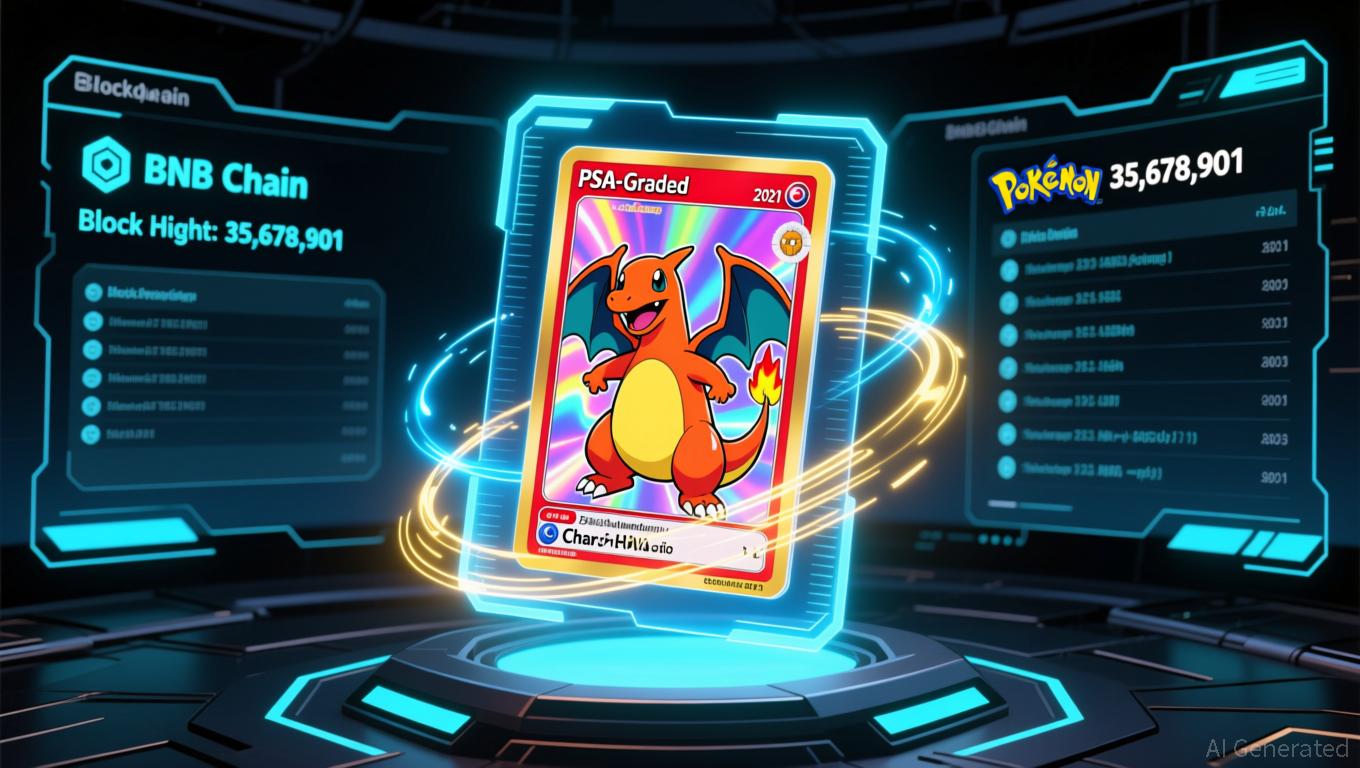
BNB News Today: BNB Chain Integrates Classic Collectibles and Blockchain Through Tokenized Charizard Cards
- BNB Chain's SuperSuperRare launches a Gacha Point Leaderboard, tokenizing a PSA-graded Charizard Pokémon card as RWA. - Users can repurchase, trade, or redeem physical cards, bridging traditional collectibles with blockchain utility via FMV-based rankings. - Binance's partnership with BlackRock to tokenize U.S. Treasuries expands RWA adoption, enabling yield generation on custodied assets. - Collaborations like mXRP and institutional yield tools highlight BNB Chain's strategy to merge traditional and dec
Trending news
MoreCrypto prices
More






