
Hyperliquid News Today: Hayes-Hon Dispute Highlights the Rift Between Crypto Fundamentals and Market Hype
- Monad's MON token collapsed 40% in three days, triggering $6M+ liquidations on HyperLiquid as high-FDV projects face volatility risks. - Arthur Hayes criticized MON's 90% locked supply as a "hot potato" scheme, while founder Keone Hon defended its C++/Rust architecture and 1-second finality. - Whale wallets lost $1.9M-$4.17M in leveraged positions, highlighting systemic risks in low-liquidity tokens amid spoofed transfers and declining trading volume. - The debate underscores crypto's infrastructure vs.
MON Token Crash Sparks Liquidations and Industry Debate
The recent sharp decline of Monad’s native token, MON, has led to a wave of forced liquidations across decentralized exchanges, highlighting the vulnerabilities of high fully diluted valuation (FDV) projects in turbulent markets. Over just three days, MON’s value dropped by 40%, resulting in substantial losses for major investors. Notably, large accounts on platforms such as HyperLiquid saw their holdings wiped out.
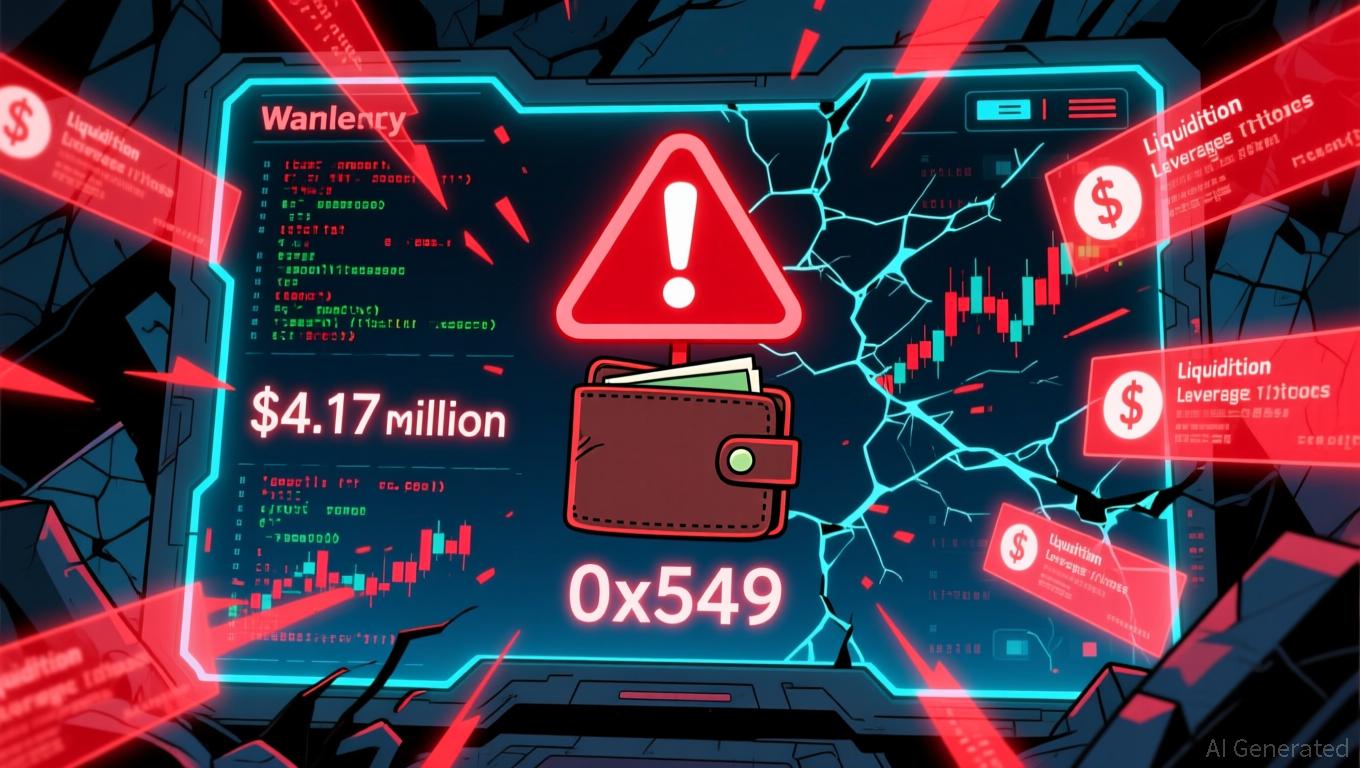
According to Onchain Lens, the wallet identified as "0xccb" suffered a $1.9 million loss in a single liquidation event, while another wallet, "0x549," endured a $4.17 million setback. These incidents underscore the dangers of leveraging positions in tokens with limited liquidity. The turmoil was further fueled by a public dispute between former BitMEX CEO Arthur Hayes and Monad founder Keone Hon, which escalated as MON’s price continued to fall.
Hayes openly criticized MON’s token distribution model, arguing that locking 90% of the supply sets up a scenario where early investors and project teams could eventually flood the market, causing prices to crash. He described MON as a venture capital-backed layer-1 project designed primarily for founders and investors to offload tokens onto retail buyers at the height of market excitement. Hayes even predicted a dramatic 99% price drop.
In response, Hon defended Monad’s technical achievements, emphasizing its use of C++ and Rust, asynchronous processing, and the MonadBFT consensus protocol, which he claims can achieve transaction finality in just one second—posing a challenge to centralized blockchain systems. Hon also pointed to a "bottom-up" token sale on Coinbase aimed at broadening token distribution, countering Hayes’ criticisms regarding retail investor exposure.
Broader Industry Implications
This dispute reflects a larger debate within the crypto sector between speculative, VC-driven projects and those focused on organic, demand-led growth. Hon maintains that Monad’s infrastructure—featuring innovations like a just-in-time compiler and RaptorCast block propagation—positions it as a competitor to established platforms such as Ethereum and Solana. Hayes, however, insists that without immediate full token unlocks, valuations remain artificially inflated, urging the market to determine the true price. Hon, in turn, dismissed this view as overly focused on short-term outcomes.
Market Reactions and On-Chain Activity
Investors are now closely monitoring blockchain activity to assess MON’s prospects. Despite Hayes’ exit, analysis from MEXC indicates that large holders accumulated over 300 million MON after the mainnet launch, suggesting some believe in the token’s long-term potential or are anticipating future liquidity events. However, the presence of fake transfers and simulated trades has complicated price discovery, making it harder for everyday traders to gauge real demand. In the past 24 hours, trading volume dropped by 7.6% to $373.39 million, with MON’s market capitalization standing at $301.57 million as of November 30.
Systemic Risks and Regulatory Outlook
The impact of MON’s volatility has extended beyond its own price. HyperLiquid, a leading derivatives exchange, reported widespread liquidations as users took on leverage up to 1.83x, only to see their positions erased overnight. This episode highlights how the collapse of a single token can send shockwaves through interconnected liquidity pools across the crypto ecosystem. At the same time, regulators are increasing their scrutiny of high-FDV projects, with industry trends for 2025 favoring protocols that deliver tangible returns and liquid staking options over speculative ventures.
The Road Ahead for MON
As the market processes these developments, MON’s future will depend on its ability to foster genuine usage and withstand upcoming token unlocks. The ongoing clash between Hayes and Hon brings a central issue into focus: Can blockchains built on robust infrastructure thrive without immediate price discovery, or will their token models ultimately face the same challenges that have undermined previous layer-1 projects?
Disclaimer: The content of this article solely reflects the author's opinion and does not represent the platform in any capacity. This article is not intended to serve as a reference for making investment decisions.
You may also like
Blockchain’s $6.8 Billion Bet: Will Advancements Outpace Its Security Risks?
- Terminal Finance's collapse exposed blockchain fintech vulnerabilities from delayed tech adoption and security flaws, triggering sector-wide scrutiny. - Naver-Upbit's $6.8B AI-blockchain merger faces challenges after Upbit's $36M Solana breach, mirroring 2019 North Korean-linked attacks. - Balancer's $116M hack revealed systemic DeFi risks, with debates over audit efficacy despite 11 prior security reviews. - Binance's legal troubles and BNB's price slump highlight market skepticism, while initiatives li

Bitcoin News Update: Krugman Links Bitcoin's Decline to Waning 'Trump Trade' Hype
- Bitcoin's 30% drop from October peak linked to fading "Trump trade" speculation, per Nobel laureate Paul Krugman, who frames it as speculative rather than stable value. - BlackRock's IBIT ETF regained $3.2B profit post-$90K rebound, while SpaceX's $105M BTC transfer sparks custodial strategy debates amid market volatility. - Naver's $10B Dunamu acquisition and corporate Bitcoin treasury moves highlight institutional crypto integration, despite $19B industry selloff and regulatory challenges. - Prediction
Bitcoin News Today: "Conflicting Whale Strategies Cast Uncertainty on Bitcoin's Path to $100K"
- Bitcoin's drop below $100,000 coincided with mixed whale strategies, including accumulation, shorting, and exchange deposits, signaling uncertain market direction. - Ethereum whales used 16.08 million DAI to buy 5,343 ETH at $3,010, while Bitcoin whales deposited 9,000 BTC, potentially signaling selling preparation. - Derivatives markets showed conflicting bets, with a $91M BTC short and $36.4M long flip, while ETF inflows ($84M total) hinted at institutional confidence amid macroeconomic risks. - Analys

Exchanges Call on SEC: Deny Exemptions to Maintain Fairness in the Market
- WFE warns SEC against broad crypto exemptions for tokenized stocks, citing risks to investor protections and market integrity. - Tokenized stocks lack dividend rights, voting access, and custody frameworks, creating "mimicked products" with weaker safeguards. - SEC's sandbox-style exemptions risk regulatory arbitrage, allowing crypto platforms to bypass rules enforced on traditional exchanges. - Global bodies like IOSCO warn tokenization amplifies data integrity and custody risks, urging unified standard

Trending news
MoreCrypto prices
More





