
$3 Million in Seized Silk Road BTC Consolidated; Market Volatility Looms

Quick Breakdown
- U.S.-controlled wallets linked to Silk Road-era Bitcoin transferred more than $3 million worth of BTC to a new address.
- On-chain analysts view the movement as a possible precursor to liquidation or further law enforcement action.
- The transfer has revived concerns about government BTC sales and short-term price pressure on the market.
Silk Road-linked Bitcoin moves; market eyes possible government sell-off
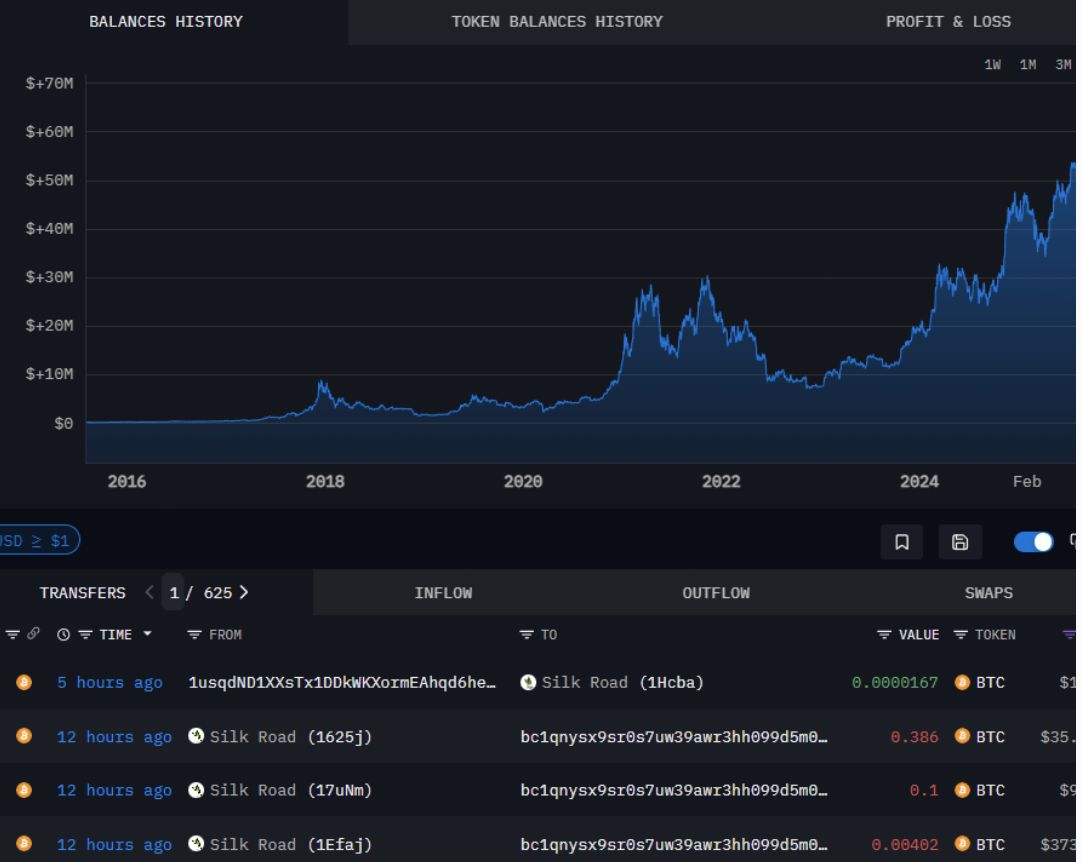
Blockchain monitoring platforms flagged a series of Bitcoin transactions tied to the historic Silk Road seizure, with more than $3 million in BTC consolidated into a new address under apparent U.S. government control. On-chain data shows that the coins originated from long-dormant wallets associated with the original takedown of the Silk Road dark web marketplace, which the Department of Justice (DOJ) has pursued for years through civil forfeiture cases and criminal prosecutions.
The latest movement mirrors earlier episodes in which seized BTC was reorganized and later sold via auction or transferred to custodial agents, often preceding official announcements or court filings. Market participants track these flows closely because large government disposals have historically coincided with bouts of short-term volatility, even when the broader macro trend for Bitcoin remains intact.
 Source:
Arkham
Source:
Arkham
Law enforcement strategy: consolidating seized digital assets
U.S. authorities typically retain control over seized Bitcoin until courts finalize forfeiture and disposal procedures, after which coins can be transferred to the U.S. Marshals Service or other designated entities for sale. Consolidation into new addresses helps law enforcement manage custody, audit trails, and eventual liquidation, especially when seized assets have sat idle for years across multiple outputs.
In earlier Silk Road-related actions, the DOJ and Marshals Service opted for public auctions and over-the-counter transactions rather than dumping large tranches directly on exchanges, partly to limit disorderly market impact and comply with financial controls. If the latest transfers follow that pattern, any eventual sale is likely to be structured rather than sudden, although traders often price in the risk ahead of time.
Meanwhile, the sentencing of Samourai Wallet co-founder William Hill to four years in federal prison for operating an unlicensed money-transmitting business and allegedly facilitating over $237 million in illicit darknet transactions highlights the growing legal risks for crypto privacy tools and the government’s push to regulate them. A complication arose when the defence claimed prosecutors withheld exculpatory evidence from FinCEN, arguing Samourai Wallet did not meet the “Money Services Business” definition, which would have negated the licensing requirement.
Take control of your crypto portfolio with MARKETS PRO, DeFi Planet’s suite of analytics tools.”
Disclaimer: The content of this article solely reflects the author's opinion and does not represent the platform in any capacity. This article is not intended to serve as a reference for making investment decisions.
You may also like
New Studies Reveal How Easily AI Can Sway Voters
Bitcoin Gains Steam as Selling Pressure Eases and Exchange Inflows Fall

Bitcoin’s Decline Triggers a Drop in GameStop Stock

Revealed: Crypto Trading Volumes Plunge 20% in November’s Market Slump
Trending news
MoreCrypto prices
More





