
Nivex’s Global Strategy and the Massive Opportunities in Emerging Web3 Markets

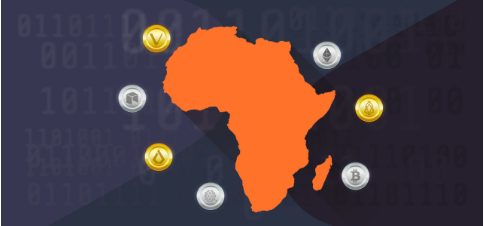
As the global digital asset market accelerates, regions such as Africa, Central Asia, South Asia, and Latin America are entering the crypto era at unprecedented speed. Rapid internet penetration, fast-growing digital payments, and underdeveloped traditional financial services have made these regions natural soil for Web3 adoption.
At this critical moment of global industry reshaping, the players who truly understand emerging-market opportunities and can build a global, multi-center operational network will establish an unbeatable growth moat over the next five years. As a leading AI-driven digital asset exchange, Nivex represents one of the most compelling forces in this industry transition. With its global expansion framework, multi-jurisdictional compliance licenses, AI-powered product ecosystem, and deep penetration in emerging markets, Nivex is building a “global growth curve” that competitors will find difficult to replicate.
1. Emerging Markets Are Becoming the New Engine of the Crypto Industry

The shift in crypto user growth from Europe and the U.S. toward emerging nations is no coincidence—it is the outcome of powerful structural forces.
First, emerging markets host the world’s fastest-growing internet user base. In regions such as Africa, Central Asia, and parts of South America, smartphone adoption has surged exponentially in recent years. As a “globally unified mobile financial tool,” cryptocurrencies spread rapidly in these environments. Nivex notes in its official materials that emerging economies “are becoming the new engine of cryptocurrency growth,” indicating that the next decade of user expansion will primarily occur in these regions.
Second, traditional financial systems in these markets are often insufficient—credit access is limited, and cross-border payment costs remain high. Digital assets fill this gap by offering more accessible, transparent, and open financial services. Across Latin America and Africa, many users encounter digital assets for the first time through centralized exchanges (CEX) or OTC channels as part of their daily payment and savings activities.
Third, demographic advantages fuel rapid adoption. Countries like India, Indonesia, Pakistan, and Nigeria have massive young populations, forming the strongest demographic dividend for global Web3 expansion—and providing new momentum for crypto market growth.
For exchanges, this shift means much more than user increases—it also generates new trading behaviors, asset demands, and financial service scenarios. Competition has moved beyond product experience in mature markets, toward a new battleground: who can enter emerging markets faster, deeper, and more effectively.
2. Competitive Landscape: Global Exchanges Compete for the “Gateway to Emerging Markets”
After major exchanges such as Binance, OKX, and Bybit established global user bases, competition is no longer limited to feature upgrades. It now revolves around global operational capability and localized penetration strength.
Three competitive factors have become decisive:
1. Global compliance capability has become the entry barrier.
Securing regulatory licenses across jurisdictions is now essential for market entry. Nivex has obtained FinCEN MSB registration in the United States and is actively pursuing licenses in Australia, Singapore, Dubai, and other key regions—establishing a strong regulatory foundation for its global expansion.

2. Local operational capability determines penetration speed.
Beyond localized customer support, exchanges must localize activities, payment infrastructures, partnerships, communities, and ecosystems. Many exchanges rely on “proxy-style expansion,” while few build genuine local teams.
3. Product differentiation fuels growth.
AI-powered trading tools, asset management products, copy-trading strategies, lending, and payment solutions have become top demands among emerging-market users. These users value simplicity, safety, and stable returns, making intelligent financial tools a key competitive edge for exchanges.
As a result, an industry consensus is forming: emerging markets will be the core battlefield of the future, and the ability to build a multi-center global operational network will determine the ultimate winners.
3. Nivex’s Global Strategy: From Globalization to a “Global + Deep Localization” Dual-Engine Model

Unlike platforms that rely solely on “virtual operations,” Nivex has built an extensive physical network across key global regions—including North America, Europe, Asia, South America, Africa, and Central Asia—supported by dedicated local teams.
This means Nivex’s globalization is not superficial. Its teams gain deep understanding of user behavior, cultural differences, and regulatory landscapes within each region—creating a durable foundation for long-term global growth.
Operationally, Nivex has developed a multi-center parallel growth model, enabling precise market-specific campaigns, community operations, partner development, and regulatory communication. This structure gives Nivex a significant competitive advantage in diverse markets.
4. AI-Driven Product Ecosystem
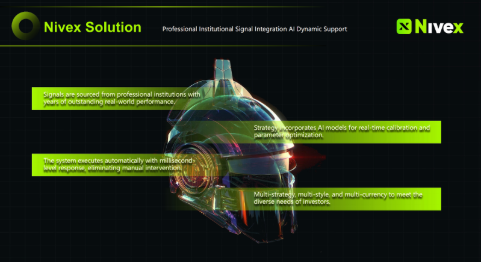
Users in emerging markets typically exhibit higher trading demand and stronger yield expectations, while relying heavily on automated, low-barrier tools. Nivex has invested deeply in AI to build one of the industry’s most advanced AI trading ecosystems—spanning spot trading, futures, asset management, and strategy copy-trading.
Its AI modules include:
- Real-time market intelligence
- Automated risk control
- Personalized trading strategies
- Automated execution systems
These tools help users navigate highly volatile crypto markets with confidence. Nivex emphasizes its “automated yield-capture tools,” updating its AI modules weekly to maintain cutting-edge strategies—making the platform an ideal intelligent assistant for everyday investors in emerging markets with limited access to sophisticated financial infrastructure.
5. Nivex Is Building an Influence Network Across Emerging Markets
Success in emerging markets requires more than technology—it requires brand trust and ecosystem influence.
Nivex has formed media partnerships with numerous top crypto outlets and built a network of over 1,000 KOLs worldwide. It also conducts major offline events, meetups, and conferences across Central Asia, South Asia, Africa, and Latin America to build credibility with users and project teams.
Combined with its localized agent programs, accelerator services, token listing support, and brand exposure channels, Nivex has developed a robust regional growth engine—positioning itself not merely as an exchange, but as a Web3 ecosystem accelerator and infrastructure builder in emerging markets.
6. Emerging Markets Will Drive the Next Wave of Growth—and Nivex Is Positioned to Lead
Over the next five years, emerging nations will enter a golden era of Web3 adoption. Demographic trends, payment innovation, improving regulatory frameworks, and strengthening financial demand all point to these regions becoming the primary battlefield for the global crypto industry.
With its global compliance architecture, AI-powered capabilities, local operational networks, media influence matrix, and comprehensive ecosystem products, Nivex is positioned at one of the most advantageous starting points in the market.
Nivex’s strategic goal is not simply to operate an exchange—it aims to become “the next-generation digital financial infrastructure for emerging-market users.” This marks both the starting point of its global strategy and one of the biggest opportunities in the future of Web3.
Disclaimer: The content of this article solely reflects the author's opinion and does not represent the platform in any capacity. This article is not intended to serve as a reference for making investment decisions.
You may also like
Aster DEX's On-Chain Momentum: Signaling the Future of DeFi
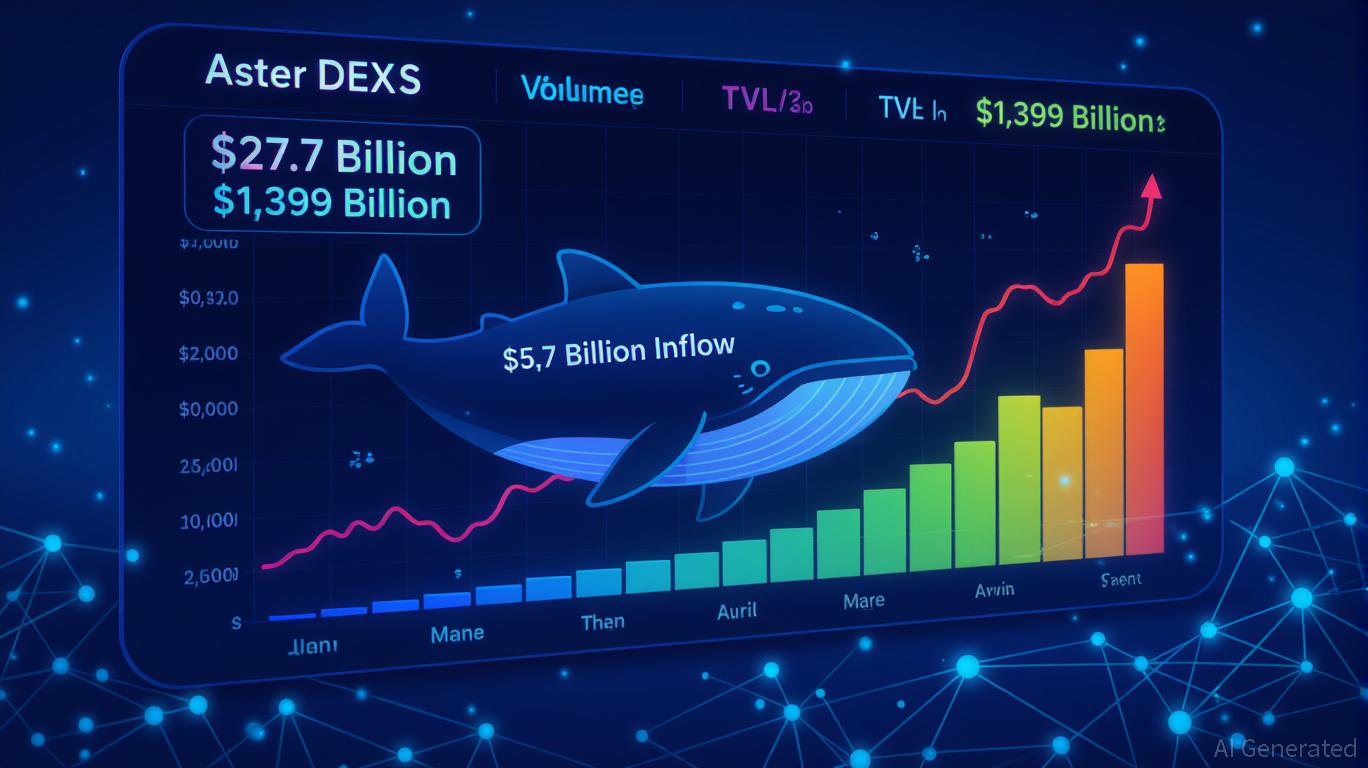
- Aster DEX reported $27.7B daily volume and $1.399B TVL in Q3 2025, outpacing DeFi benchmarks with 2M users. - Institutional whale activity, including CZ's $2M ASTER purchase, drove $5.7B inflows and 800% volume spikes. - Hybrid AMM-CEX model and ZKP privacy tech enabled 40.2% TVL growth, 77% private transactions, and 19.3% perpetual DEX market share. - ASTER's margin trading upgrades and Stage 4 airdrops fueled 30% price surges, while Aster Chain's 2026 launch will integrate privacy-preserving ZKPs. - On
Astar (ASTR) Price Rally: Protocol Enhancements and Ecosystem Growth Drive Long-Term Value
- Astar (ASTR) surged 150% due to protocol upgrades and ecosystem expansion, positioning it as a sustainable value creation case study in blockchain. - Tokenomics 3.0 (fixed 10.5B supply) and Burndrop mechanism created deflationary incentives, supported by Galaxy Digital's $3. 3M OTC investment and Astar's $29.15M buyback. - Cross-chain interoperability with Polkadot/Plaza and Sony's Soneium, plus partnerships with Toyota and Japan Airlines, expanded real-world utility in logistics, identity, and loyalty p

Astar 2.0 Debut and Tokenomics Revamp: Driving DeFi Innovation and Attracting Institutional Participation
- Astar Network's Astar 2.0 introduces Tokenomics 3.0 with fixed 10.5B ASTR supply and 5% annual burn rate to stabilize value for institutional investors. - The update features Burndrop mechanism, asynchronous cross-chain security, and ESG-aligned protocols to address regulatory risks and attract traditional capital. - Plaza platform enables seamless asset transfers across Ethereum , BSC, and Polkadot , while zkEVM scalability targets 300,000 TPS by 2026 for enterprise-grade DeFi solutions. - Governance sh
PNC Bank launches Bitcoin trading for high-net-worth clients
Trending news
MoreCrypto prices
More





