
Ripple’s Push for a Federal Reserve Master Account Pushes Financial Shift

Quick Take Summary is AI generated, newsroom reviewed. Ripple pursued a Federal Reserve master account for RLUSD. Ripple acquired Hidden Road and launched Ripple Prime. Riksbank shifted to urgent stablecoin regulation. U.S. digital asset policy accelerated in 2025. Ripple positioned itself for global financial infrastructure dominance.References X Post
This was one of the points that was pointed out in a post by Ledarsidorna.se, and that Ripple quietly but firmly pushed to have a Federal Reserve master account. This operation would enable the Ripple Labs to issue and custody its own RLUSD stablecoin. The shift made Ripple a part of the United States payment system core. The creation was not expected by a lot of observers since the mainstream financial outlets did not cover the news. Ripple had been working on expanding its regulatory footprint in the U.S. in 2025.The action was an indication of a change since stablecoin issuers could hardly work directly with the Federal Reserve.
Ripple enhanced its position by building RLUSD in line with banking-grade compliance designs. The master account may enable Ripple to make settlements without intermediaries. This would make it faster and decrease the systemic costs across the cross-border markets. This progress demonstrated the long-term plan by Ripple to become a global settlement backbone and not a niche crypto project. This news raised powerful responses in the financial industry as the consequences went much further than price fluctuations of XRP.
Ripple Prime Grows With a Big Acquisition
In 2025 Ripple acquired Hidden Road (a $1.25 billion deal) and renamed it Ripple Prime. The buy made Ripple a multi-asset prime broker in the world. The company has ventured into markets which dealt with volumes equivalent to national GDPs. The growth meant that Ripple Prime was able to offer equities, FX, commodities and digital assets to institutions on a single infrastructure. The integration brought a new competitive movement since it put traditional brokers under pressure to modernize faster. The acquisition demonstrated how Ripple intends to take over institutional finance through integrating blockchain rails with already existing market structures.
The company employed this to further develop RLUSD and gear towards further penetration into controlled financial markets. The relocation was related to the larger goal of Ripple to lock stablecoins within conventional settlement systems. The digital asset industry saw the acquisition as one of the biggest steps in transforming the institutional liquidity flows. Ripple showed that crypto-native businesses would be capable of buying the old-fashioned financial organizations and refurbishing them within a short time. Such development drove the company towards the global systemic settlement player.
Central Banks Change in the U.S. and Europe
These developments were associated with Riksbank, Sweden in the analysis. In late 2025, the Swedish central bank changed its position on the skeptical to urgent in terms of regulation of stablecoins. The shift has happened because U.S. policy revisions have incorporated digital assets into the national security and economic infrastructure at the beginning of 2025. This policy change put strain on the institutions in Europe such as Riksbank and ECB. Such institutions discovered that the U.S. stablecoin systems were speeding up at a rate higher than theirs.
The post encouraged leadership reforms as the failure to respond promptly would make the European financial systems disadvantaged. The quick growth of Ripple proved that the international infrastructure race ceased to be the zone of the mere cryptocurrencies stories. The discussion had now shifted to transaction architecture, efficiency of settlements and the modernization of securities. That analysis alleged Ripple as being a focal point in this shift. The dislocation compelled global regulators to be flexible. The traction of RLUSD and Ripple Prime generated structural effects of payment networks across the globe over the long term.
Global Finance Ready to Undergo Structural Alignment
The post indicated that the general transformation could not be comprehended among many institutions. Ripple entered into controlled international markets. The company manipulated payment tracks, liquidity systems, and banking principles. The takeover and master account acquisition established a powerful base of domination in the future. The evolution revealed that crypto infrastructure became an indispensable part of the global finance. Investors, regulators and policymakers started reevaluating their strategies. The movement at Ripple indicated a restructuring that can define the global financial architecture in 2026 and beyond.
Disclaimer: The content of this article solely reflects the author's opinion and does not represent the platform in any capacity. This article is not intended to serve as a reference for making investment decisions.
You may also like
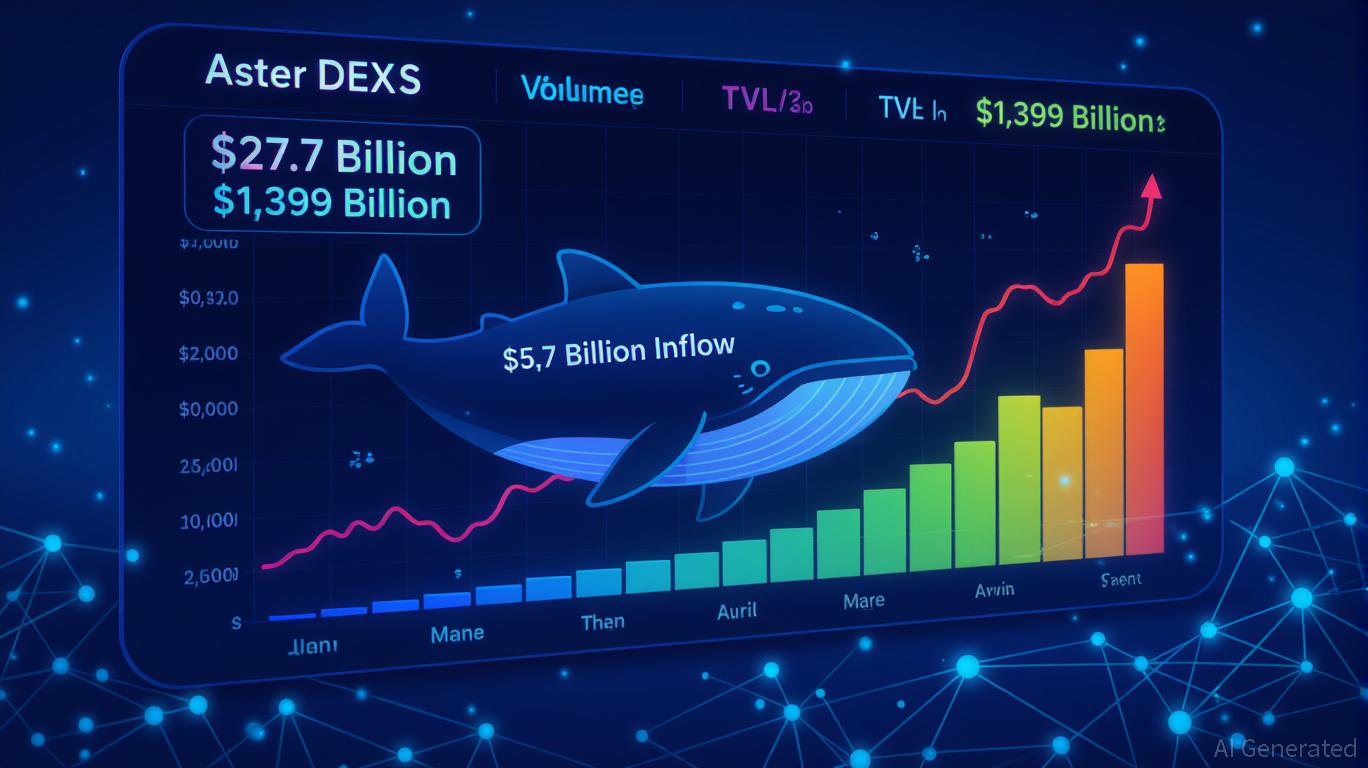
Aster DEX's On-Chain Momentum: Signaling the Future of DeFi
- Aster DEX reported $27.7B daily volume and $1.399B TVL in Q3 2025, outpacing DeFi benchmarks with 2M users. - Institutional whale activity, including CZ's $2M ASTER purchase, drove $5.7B inflows and 800% volume spikes. - Hybrid AMM-CEX model and ZKP privacy tech enabled 40.2% TVL growth, 77% private transactions, and 19.3% perpetual DEX market share. - ASTER's margin trading upgrades and Stage 4 airdrops fueled 30% price surges, while Aster Chain's 2026 launch will integrate privacy-preserving ZKPs. - On
Astar (ASTR) Price Rally: Protocol Enhancements and Ecosystem Growth Drive Long-Term Value
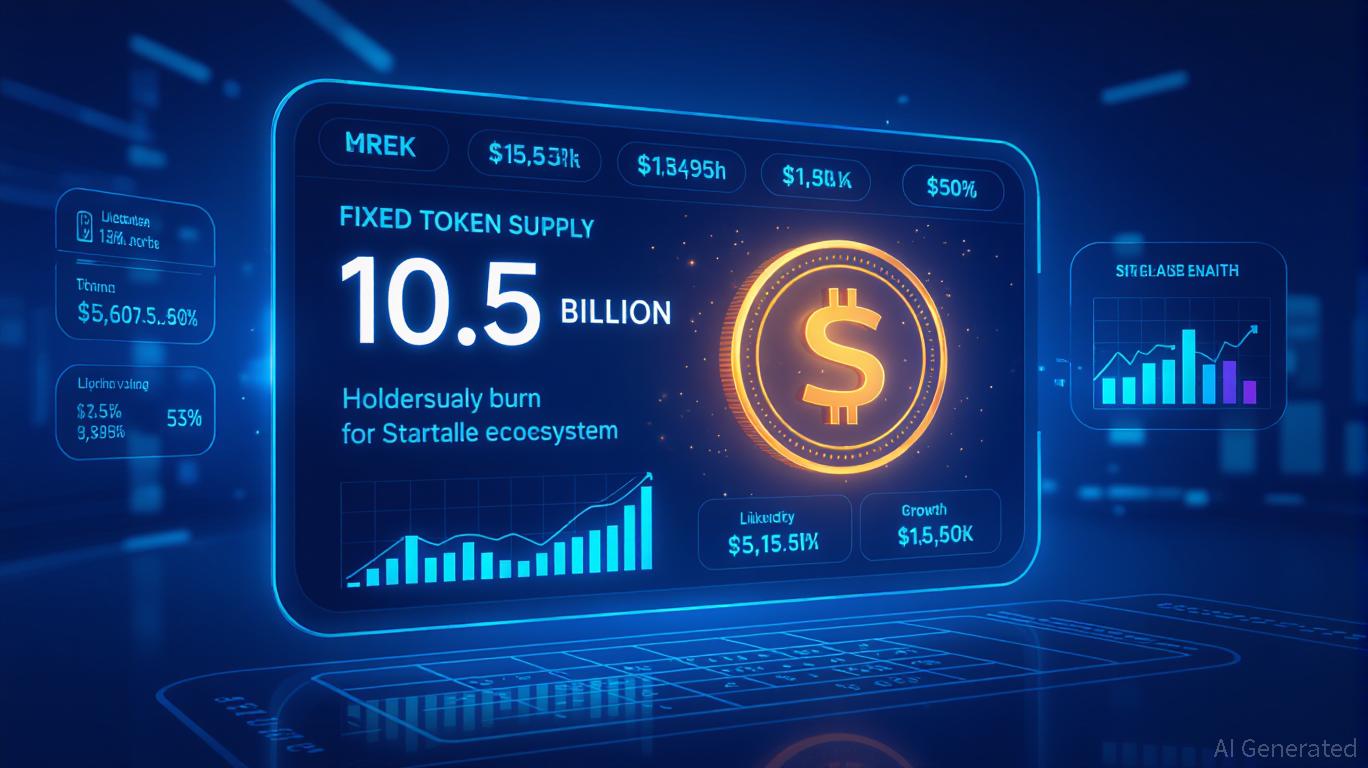
- Astar (ASTR) surged 150% due to protocol upgrades and ecosystem expansion, positioning it as a sustainable value creation case study in blockchain. - Tokenomics 3.0 (fixed 10.5B supply) and Burndrop mechanism created deflationary incentives, supported by Galaxy Digital's $3. 3M OTC investment and Astar's $29.15M buyback. - Cross-chain interoperability with Polkadot/Plaza and Sony's Soneium, plus partnerships with Toyota and Japan Airlines, expanded real-world utility in logistics, identity, and loyalty p

Astar 2.0 Debut and Tokenomics Revamp: Driving DeFi Innovation and Attracting Institutional Participation
- Astar Network's Astar 2.0 introduces Tokenomics 3.0 with fixed 10.5B ASTR supply and 5% annual burn rate to stabilize value for institutional investors. - The update features Burndrop mechanism, asynchronous cross-chain security, and ESG-aligned protocols to address regulatory risks and attract traditional capital. - Plaza platform enables seamless asset transfers across Ethereum , BSC, and Polkadot , while zkEVM scalability targets 300,000 TPS by 2026 for enterprise-grade DeFi solutions. - Governance sh
PNC Bank launches Bitcoin trading for high-net-worth clients
Trending news
MoreCrypto prices
More





