
News
Stay up to date on the latest crypto trends with our expert, in-depth coverage.

1Bitget UEX Daily | Iran Confirms Larijani's Death; “Cathie Wood” Bullish on AI; Micron Stock Hits New All-Time High (March 18, 2026)2Morgan Stanley exec says crypto ETF adoption still 'very early' as advisors weigh allocations3SOL price signal tied to previous 142% rally flashes again: Are the bulls back?

RIVER Price Hits $48 Record High Amid Rising Market Manipulation Scrutiny
Cryptotale·2026/01/22 10:42
Ray Dalio Observes Continued Shift Away From US Investments
101 finance·2026/01/22 10:39
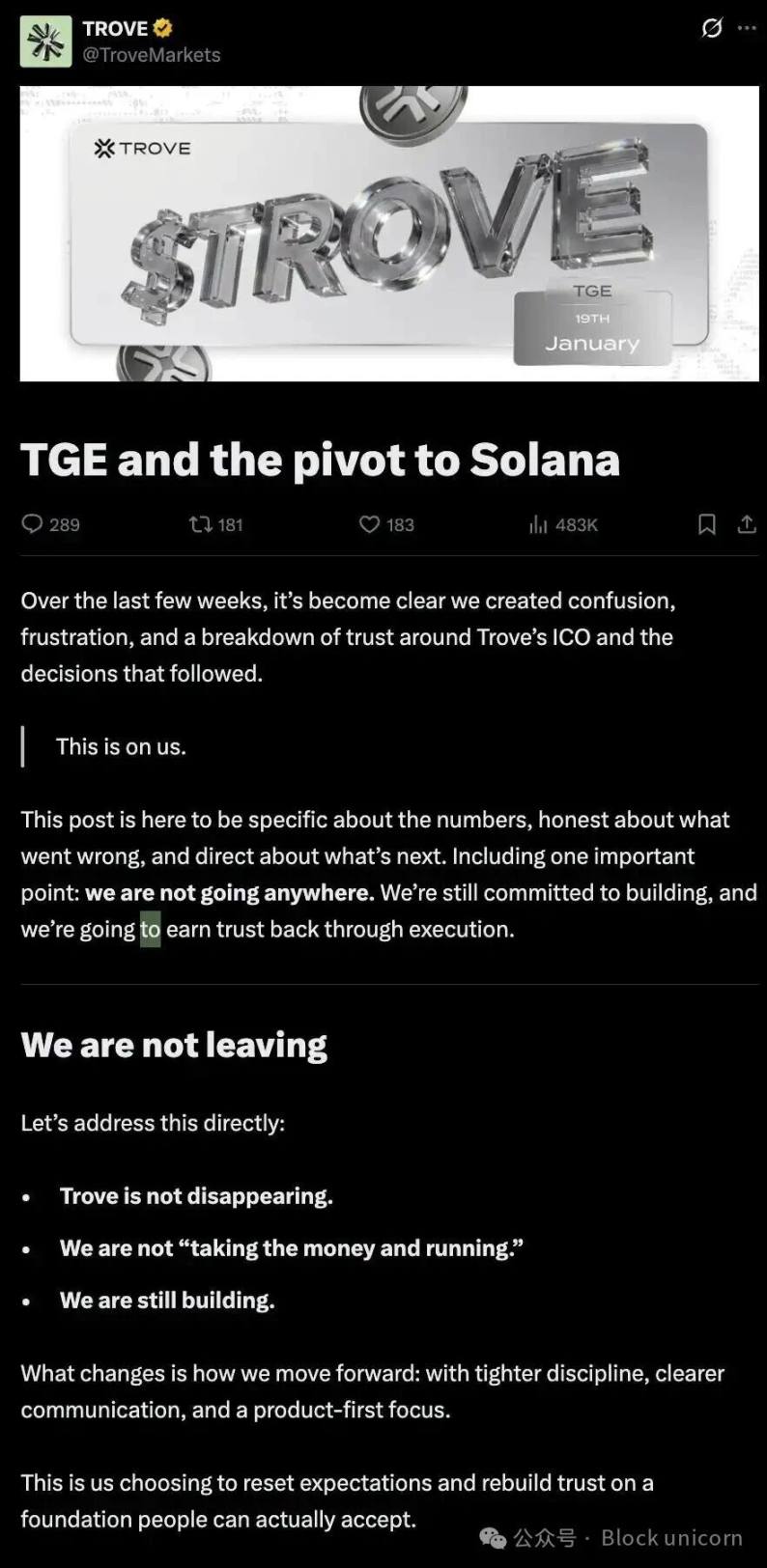
New ICO Test
Block unicorn·2026/01/22 10:17

Rich Dad Poor Dad Author Explains Why Silver Could 2x From Current Highs
Coinpedia·2026/01/22 10:00

US Senate Crypto Market Bill Heads to January 27 Markup Without Democratic Support
Coinpedia·2026/01/22 10:00
U.S. Market Structure Reform Pulls Crypto Into Banking
Cryptotale·2026/01/22 10:00
Inside the Steve Aoki Arena: How a New PvP Game Is Redefining Live Crypto Competition
BlockchainReporter·2026/01/22 09:42
Track Crypto Positions with CoinStats’ Real-Time Platform Integration
Cointurk·2026/01/22 09:39
Flash
10:21
Liberty Global PLC announces the appointment of Ian Larkin as CEO of its subsidiary Liberty BlumeThis personnel change aims to strengthen the strategic execution and operational management of this business segment. **Background and Responsibilities of the New CEO** Ian Larkin has over 20 years of management experience in the telecommunications and media industries, having led multiple digital transformation and market expansion projects. He will be responsible for the daily operations, business development strategy, and team building of Liberty Blume, reporting to the senior management of Liberty Global. Larkin’s appointment is seen as a key measure for the company to optimize resource allocation and enhance competitiveness in niche markets. **Liberty Blume’s Business Positioning** Liberty Blume is a business unit under Liberty Global focused on broadband and entertainment services in the European market, and has continuously expanded its user base in recent years through technology upgrades and content partnerships. With the proliferation of 5G and intensifying competition in streaming media, this segment needs to maintain growth momentum through refined operations. Larkin’s tasks include driving service innovation, controlling costs, and exploring cross-market synergy opportunities. **Background of Parent Company’s Strategic Adjustment** Liberty Global has continuously adjusted its business structure in recent years, successively divesting some non-core assets and increasing investment in high-growth regions. This personnel arrangement continues its strategy of enhancing subsidiary efficiency through specialized management teams. Industry analysts point out that, amid accelerated consolidation in the telecommunications industry, efficient management execution is particularly important for maintaining market share. **Industry Challenges and Opportunities** The European telecommunications market faces pressures from infrastructure investment, changes in regulatory policies, and the impact of emerging technologies, but stable demand for household broadband and the digitalization of entertainment services still provide growth opportunities. Liberty Blume needs to balance short-term profitability with long-term technological investment, and Larkin’s experience may help optimize this balance. Over the next six months, the market will focus on the business’s performance in user growth, ARPU, and profit margins.
10:18
Cybersecurity company CUJO AI launches network-level protection against cryptocurrency investment scamsForesight News reports that cybersecurity company CUJO AI has officially launched a network-layer cryptocurrency investment scam detection capability designed specifically for network service providers (NSPs), which can identify scams that bypass application-layer and platform-layer defenses. CUJO AI stated that modern cryptocurrency investment scams often rely on rotating domain names, wallet interactions, and social engineering tactics, making it difficult for a single platform to grasp the full picture. The network layer is the key location where such threats are concentrated and presented.
10:16
DeAgentAI has distributed the second round of AIA airdrops to Genesis NFT holdersChainCatcher News, Sui ecosystem's leading decentralized AI infrastructure DeAgentAI announced that the second round of AIA airdrop for DeAgentAI Genesis NFT holders has been distributed to their linked Sui wallets. Users can directly check it by opening the wallet connected on the official website, without needing to claim or interact.
News