
News
Stay up to date on the latest crypto trends with our expert, in-depth coverage.

Ethereum enters October under pressure as growing supply, ETF outflows, and weak demand threaten to push ETH below $4,000.

Simply put, if you are scammed or hacked, in theory, you can get your money back.
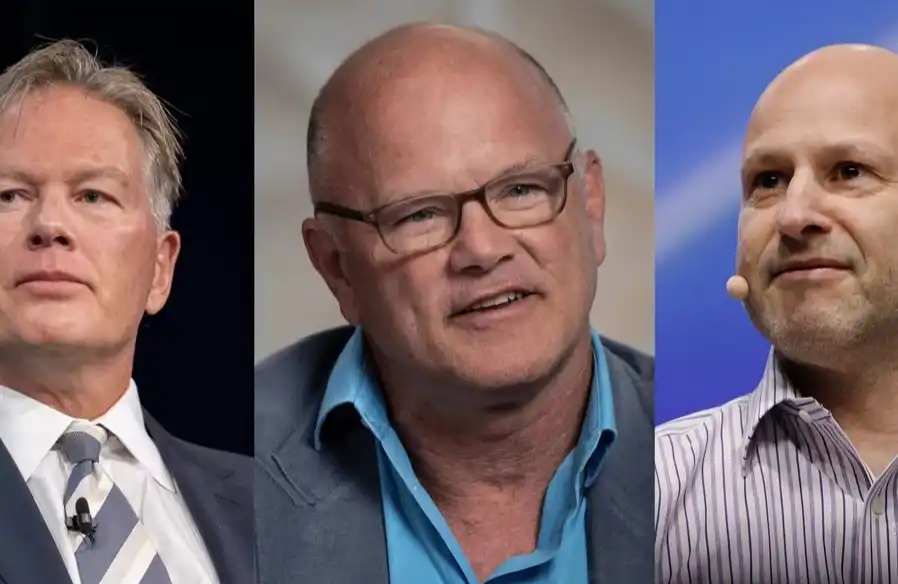
Princeton alumni such as Novogratz, Morehead, and Joe Lubin have repeatedly appeared in multiple transactions, shaping one of the boldest bets in the new crypto era: the digital asset treasury boom.

With Eric Adams out, New York’s crypto community faces a shift as Zohran Mamdani—skeptical but not hostile—looks set to win.

China has launched the world's first regulated yuan-pegged stablecoin, AxCNH, in Kazakhstan. The move aims to reshape cross-border trade and challenge the US dollar's dominance.

Digital asset treasuries (DATs) — once the institutional engine of Bitcoin’s rally — are faltering. Purchases collapsed 76% in September, casting doubt on a model powered by Wall Street veterans and Princeton alumni. While ETFs still draw inflows, the slowdown in DAT activity raises questions about whether corporate treasuries can continue fueling Bitcoin’s rise.

Crypto markets faced a sharp reversal last week as $812 million exited investment products, according to CoinShares. Bitcoin and Ethereum bore the brunt of the outflows, while Solana and XRP managed gains. The shift followed stronger US macro data, dampening hopes of multiple Fed rate cuts and highlighting fragile investor confidence.


As October 2025 begins, Jupiter, Celo, and Onyxcoin are key altcoins to watch. New lending features, Ethereum Layer 2 testnet shifts, and the Goliath rollout may provide catalysts for recovery after steep monthly losses.

Qatar National Bank integrates JPMorgan’s Kinexys blockchain, enabling faster US dollar payments, 24/7 settlement, and improved transparency for corporate clients.
- 12:32Morgan Stanley: U.S. Treasury yields are currently too low, and future Fed rate cuts may be less than market expectationsChainCatcher News, Morgan Stanley Investment Management stated in its outlook report that the current 10-year US Treasury yield, which is close to 4%, may be too low relative to the outlook for the US economy. The company believes that economic growth in 2026 is facing increasingly strong tailwinds. "Stronger growth combined with persistent inflation is likely to result in the Federal Reserve cutting rates less over the next 12 to 18 months than what is currently priced in by the market." Against this backdrop, Morgan Stanley Investment Management has taken an underweight position on US Treasuries.
- 12:11Kenan Saleh joins a16z as an investment partnerChainCatcher reported that former Lyft executive Kenan Saleh has announced his appointment at venture capital firm a16z as an early-stage investment partner, focusing on the Speedrun program, which provides $1 million in seed funding and support for scaling to early-stage projects. Kenan previously worked at Lyft, where he had extensive collaboration with a16z, and also expressed gratitude to Bain Capital Ventures for the venture capital training he received there.
- 12:05An Ethereum ICO participant address awakens after over 10 years of dormancy, earning more than 10,000 times profitJinse Finance reported, according to monitoring by lookonchain, an Ethereum ICO wallet, after being dormant for over 10 years, has just transferred 1 ETH to an exchange. This wallet holds 850 ETH (approximately $2.82 million). This early investor only invested $263.5 in the ICO back then and received 850 ETH—in terms of the current price, the return rate is as high as 10,684 times.