
News
Stay up to date on the latest crypto trends with our expert, in-depth coverage.

1Bitget UEX Daily | Houthi Armed Forces Join Middle East Conflict, Two Oil Futures Surge Over 3%; Analysts Predict Tesla and SpaceX May Complete Merger in 2027 (March 30, 2026)2Even a "ceasefire" does not mean "normalization," the world in 2026 will be more "stagflated" than expected3Iran Oil Waiver Releases 140 Million Barrels to Ease Price Pressure—Yet Boosts Iran’s Revenue, Heightening Risks for Market Balance



Abingdon Health’s U.S. Reshoring Bet Fuels High-Growth S-Curve in Multiplex Diagnostics
101 finance·2026/03/30 06:57
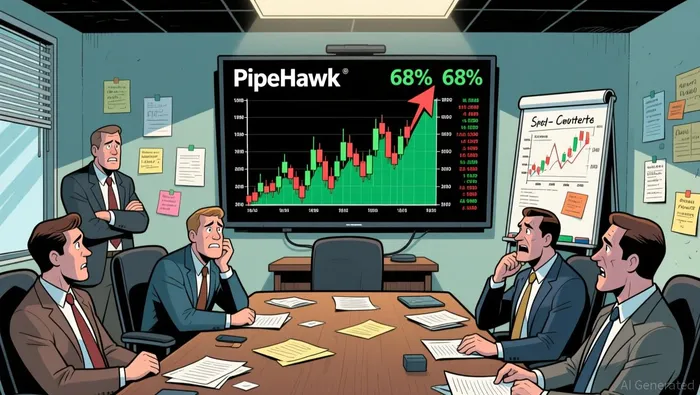
PipeHawk’s Binary Risk/Reward: Utsi Sale Upside Compared to Adien Liquidation Risks
101 finance·2026/03/30 06:57

Plus500 Repurchase at 17% Below 52-Week Peak Reflects Strategic Approach to Capital Management
101 finance·2026/03/30 06:57

STRC's Volatility Advantage and Bitcoin Movement Engine
101 finance·2026/03/30 06:54


STRC Demonstrates That Cryptocurrency Outperforms Stocks – Surpassing Even the S&P's Fluctuations
101 finance·2026/03/30 06:51

NIP Group faces imminent removal from Nasdaq—internal members signaled for departure as savvy investors withdraw
101 finance·2026/03/30 06:48

Losing $19K per Coin Mined: Bitcoin Mining Industry’s Collective "Defection" to AI
Cointime·2026/03/30 06:46
Flash
07:02
Soaring oil prices ignite stagflation concerns; the US dollar remains steady while the Japanese yen rebounds under intervention threats1. The US dollar remained largely stable on Monday, but is set to record its largest monthly increase since July, as investors worry about the long-term impact of ongoing war in the Middle East. This month has seen continued market turmoil, with the conflict effectively blocking the Strait of Hormuz, pushing Brent crude oil prices towards their largest monthly gain and disrupting global interest rate expectations.2. Although Iran warned it is prepared to respond if the United States launches ground military actions, Pakistan stated it is still ready to host "substantial talks" aimed at ending the conflict in the coming days. US President Trump claimed the US and Iran have been in dialogue, and said Iran's new leader is "rational", but investors reacted indifferently to these remarks.3. The US dollar weakened slightly during Asian trading hours; the euro traded in a narrow range, currently hovering around 1.1511, and is likely to fall 2.5% in March, marking its worst monthly performance since July. The pound remained mostly steady and is expected to decline 1.5% this month. Analysts note that traders are still maintaining a defensive stance, with the strategy of selling risk assets on rallies.4. The market focus remains on oil prices, with Brent crude rising about 59% in March so far, setting a record for the largest monthly gain. Elevated oil prices have revived inflation concerns, prompting US interest rate futures to begin reflecting the possibility of a Federal Reserve rate hike later this year, which stands in sharp contrast to earlier expectations of a rate cut.5. The yen rebounded against the US dollar to 159.70, after earlier hitting 160.47, its lowest level since July 2024. Officials from Japan's Ministry of Finance issued the strongest intervention warning to date, stating that if speculative activity continues in the foreign exchange market, authorities are ready to take "decisive" action.6. The Australian dollar once fell to a two-month low against the US dollar, with a potential decline of about 3.5% in March, marking the largest monthly drop since December 2024. The New Zealand dollar has fallen 4.2% so far this month. Analysts say central banks are facing a dilemma: price data supports policy tightening, while signs of economic growth require caution, which is a hallmark of stagflation.
06:50
Stock and Mining Slump:South African Stock Market Suffers Worst Monthly Performance in Two DecadesAccording to Golden Ten Data on March 30, South Africa's benchmark stock index is heading for its worst-performing month in nearly two decades. Hit by a double blow, the Iran war has weakened demand for emerging market assets, while the plunge in precious metal prices has also put pressure on the country's mining stocks. As of Friday's close on March 27, the FTSE/JSE All Share Index had fallen by 13% this month, its worst performance since the peak of the 2008 global financial crisis. Previously, the benchmark index had posted 12 consecutive monthly gains as of February, marking its longest ever winning streak, but the current situation undoubtedly represents a sharp reversal. The precious metals and mining sector, which accounts for a quarter of the index's weighting, has plunged 27% since the outbreak of the Middle East conflict, erasing all of this year's gains as gold and platinum prices have declined. Meanwhile, emerging market stocks are experiencing broad sell-offs as investors worry that surging oil prices will push up inflation and force central banks to raise interest rates.
06:50
Environmental redline triggers shutdown crisis; Zambian government plans to invest 100 millions kwacha to "protect" the core copper industry```htmlGolden Ten Data reported on March 30 that, due to new environmental requirements and Glencore's threat to close Canada’s only copper smelter, the Canadian and Quebec governments are working to take action to save the plant. The Horne Smelter, located about 390 miles northwest of Montreal, is one of the few facilities in North America capable of processing concentrates and recyclable materials such as electronic waste. Last month, the Swiss commodity company announced it was suspending plans to invest nearly 1 billion Canadian dollars in its Quebec copper business after negotiations with Quebec over measures to reduce harmful arsenic emissions reached an impasse. If no agreement is reached, the facility will have to shut down, affecting North America’s already limited copper processing capacity. However, Quebec has now proposed legal amendments to address some of Glencore’s key demands. If approved, the metal company will have more time to meet stricter emission targets. Meanwhile, according to sources, the Canadian government is considering a financial aid application of about 150 million Canadian dollars to help cover the costs of a new pollution control system. In an email statement, Glencore said: "While awaiting regulatory certainty, we are willing to evaluate other mechanisms, especially financial mechanisms, to share the risk."```
News