Bitget App
Trade smarter
Buy cryptoMarketsTradeFuturesEarnSquareMore

News

Stay up to date on the latest crypto trends with our expert, in-depth coverage.

banner
Chart Warns of Pi Coin Price Crash After Short Bullish Spike

Pi Coin has experienced a sharp drop in price this week, hinting at a short-term bullish pattern even as its broader outlook weakens.  The altcoin is attempting to stabilize after recent volatility, but the macro setup suggests any recovery may be brief before a deeper decline sets in. Pi Coin Can’t Escape Its Bearish Fate

BeInCrypto·2025/12/02 02:00
ZEC experiences a 35.93% decline over 7 days as the overall market undergoes a correction

- ZEC fell 35.93% in the week ending Dec 1, 2025, amid a broader crypto market slump affecting BTC and ETH. - Analysts link the decline to global liquidity tightening and lack of Zcash-specific catalysts despite strong annual gains. - Institutional interest in ZEC persists, but price stability remains elusive as macroeconomic risks and leveraged positions drive volatility. - Short-term corrections may continue until central bank policies and liquidity conditions provide clearer directional signals.
Bitget-RWA·2025/12/02 01:59
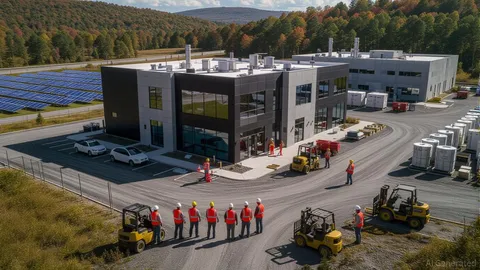
Infrastructure-Fueled Growth in Industrial Property Across Upstate New York

- New York State's FAST NY program allocates $283M by 2025 to revitalize 7,700 acres of industrial land through public-private partnerships. - Shovel-ready grants enable projects like Webster's $650M dairy facility and Genesee County's green hydrogen/semiconductor park, creating 2,750+ jobs. - Infrastructure investments boost adjacent residential property values by 10.1% and attract high-tech firms like Micron through improved site readiness. - Public funding reduces private-sector risks while scaling indu

Bitget-RWA·2025/12/02 01:50
Flash
11:54
If the full reopening of the Suez Canal were to occur, it would directly affect approximately 20% of global oil shipping flow.
BlockBeats News, June 15th, President Trump of the United States announced that a peace agreement had been reached with Iran to end the conflict, stating that both parties would "immediately and permanently cease all military actions" and work to reopen the Strait of Hormuz to restore the global energy transportation passage. Trump stated that the agreement was finalized on his birthday and is scheduled to be formally signed at a ceremony in Switzerland on Friday. He posted on social media saying "Let the oil flow" and announced the lifting of the U.S. Navy's blockade of the strait. According to Pakistani officials involved in the mediation, both sides have agreed to a ceasefire and cessation of military actions, and plan to conduct a series of technical consultations before the formal signing to work out the follow-up implementation mechanism, including key issues such as the Iran nuclear program and regional security arrangements. Reports indicate that the core content of the agreement has not been made public, including key controversial points such as the future direction of Iran's nuclear plan that remain unresolved. In the market, as expectations of easing tensions rise, crude oil prices are under pressure. Analysts believe that if full shipping resumes in the Strait of Hormuz, it will directly affect about 20% of global crude oil transportation flow, significantly suppressing the energy market. However, the reports also point out that the agreement still faces high uncertainty, including whether Israel will accept the agreement, whether regional conflicts will be fully de-escalated, and whether the implementation mechanisms of all parties can be realized, all of which may affect the final outcome. It is widely believed that while this agreement marks a significant cooling of tensions, it is closer to a phased ceasefire framework rather than a final political solution.
11:54
OpenAI and Anthropic Employees Cash Out $14 Billion in Five Years
According to Dynamic Beating monitoring, as OpenAI submits its initial public offering (IPO) prospectus, OpenAI is planning a new round of tender offer for employees at a pre-money valuation of $730 billion. Based on The Information's estimate, over the past five years, OpenAI and Anthropic, two leading artificial intelligence companies, have cumulatively allowed employees and early investors to cash out approximately $14 billion.Over the past five years, OpenAI has provided employees with cash-out opportunities totaling over $9 billion through at least eight tender offers. In contrast, its five-year-old competitor, Anthropic, has had a lower equity buyback frequency. Anthropic completed its first employee stock buyback a few months after its valuation reached $580 billion in May 2025, and completed another multi-billion-dollar equity cash-out earlier this year after a funding round at a $3.5 trillion valuation.As the time that startups remain private extends, employees face pressure from taxes on vested equity, and company-initiated tender offers have become a primary liquidity release channel. Meanwhile, SoftBank, after leading a $330 billion financing round for OpenAI last year, also purchased at least $1.7 billion in existing shares through private transactions. With employees generally anticipating the company's IPO, some shareholders choose to wait for the initial public offering, leading to Anthropic's recent cash-out scale falling short of investors' expectations of $5 billion to $6 billion. Currently, both companies are also tightening compliance restrictions, cracking down on unauthorized secondary market equity trades through special purpose vehicles and other means.
11:51
Strait of Hormuz Reopening Expectations Rise, Shipping Companies Cautiously Await US-Iran Agreement Details
BlockBeats News, June 15th. According to The New York Times , the US and Iran have preliminarily reached an agreement framework to end the conflict and plan to reopen the Strait of Hormuz. However, global shipping companies have stated that they will not immediately resume large-scale passage until clear security assurances are in place. Several shipping companies have pointed out that the current major uncertainty lies in the lack of a clear security mechanism for strait passage. It is still necessary to confirm whether Iran has committed to no longer attacking commercial ships and whether there are stable and actionable navigation rules. Some companies have said that full resumption of passage may take weeks or even months. An American shipping company, Safesea Group, has stated that its vessels in the Gulf region are still damaged or detained and that they require a "clear guarantee of no attack" before resuming navigation. Norwegian shipping company Hoegh Autoliners has also stated that despite the positive progress in the agreement, it is not sufficient to immediately resume shipping activities. The Japan Shipowners' Association has similarly stated that they will wait for more specific safety and navigation arrangements, as up to 38 relevant vessels are still detained in the Gulf region. The International Maritime Organization has said that the agreement is an important step towards restoring shipping safety but has emphasized the need to establish a security mechanism and gradually evacuate around 11,000 stranded seafarers. Industry bodies have pointed out the need for a neutral coordination mechanism in the future to avoid risks such as collision due to concentrated vessel passage. According to vessel tracking agency Kpler, there are still around 500 large commercial ships detained in the Persian Gulf region. Analysts believe that whether the Strait of Hormuz will truly return to normal navigation will depend on the progress of subsequent security enforcement mechanisms and trust rebuilding among all parties.
Markets