
News
Stay up to date on the latest crypto trends with our expert, in-depth coverage.

Today, Cashie has evolved into a programmable execution layer, enabling AI agents, creators, and communities not only to participate in the market, but also to actively initiate and drive the building and growth of markets.
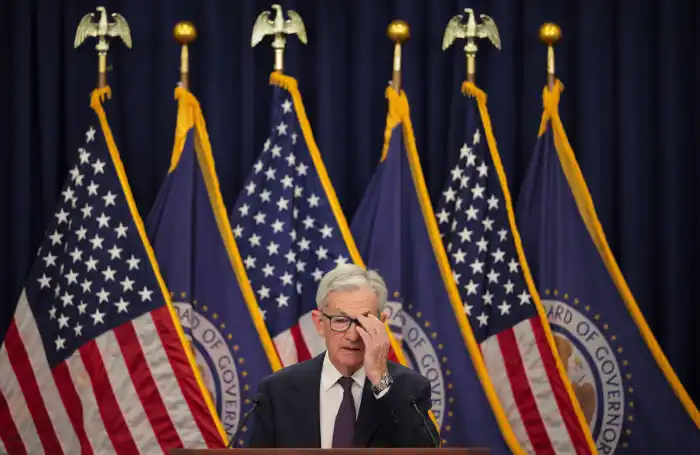
A once-in-a-century major transformation is taking place in the U.S. financial system.

Gensyn previously raised over 50 million dollars in total through its seed and Series A rounds, led by Eden Block and a16z, respectively.

Creativity will continue to increase in value through collaboration, remixing, and shared ownership.
Creativity will continue to appreciate through collaboration, remix, and shared ownership.

In the debate over "further tightening" versus "maintaining the status quo," divisions within the European Central Bank are becoming increasingly public. Investors have largely ruled out the possibility of the ECB cutting interest rates in 2026.

Dead fundamentals, vibrant speculation.

This article reviews the identification of macro turning points and the capital rotation patterns in the crypto market, and delves into specific allocation strategies and practical approaches for the TRON ecosystem during market cycles.
What I focus on is not the price of bitcoin itself, but rather the position allocation of the group of people I am most familiar with—those who possess significant wealth, are well-educated, and have successfully achieved compounding returns on capital over decades.
- 16:15Data: Bitcoin mining company MARA deposits 275 BTC to FalconXChainCatcher News, according to monitoring by Lookonchain, bitcoin mining company MARA deposited 275 BTC, worth $25.31 million, to FalconX two hours ago.
- 16:15Data: In the past 24 hours, total liquidations across the network reached $417 millions, mainly affecting short positions.According to ChainCatcher, in the past 24 hours, the total liquidation amount in the cryptocurrency market reached 417 million US dollars, with long positions liquidated for 119 million US dollars and short positions liquidated for 299 million US dollars. A total of 123,505 people were liquidated globally, with the largest single liquidation occurring on a certain exchange in the BTC-USDT pair, valued at 23.9894 million US dollars.
- 16:15Data: 101,400 SOL transferred out from a certain exchange, routed through an intermediary, and then sent to another anonymous addressAccording to ChainCatcher, Arkham data shows that at 23:32, 101,400 SOL (worth approximately $13.9 million) were transferred from a certain exchange to an anonymous address (beginning with CGYY3t...).