
News
Stay up to date on the latest crypto trends with our expert, in-depth coverage.


CZ Buys $2M Worth of Aster for Long-Term Hold
Binance founder CZ invests $2 million in $Aster, signaling long-term confidence in the project.A Bold Move from the Binance FounderWhat is $Aster and Why It MattersLong-Term Vision or Strategic Bet?
Coinomedia·2025/11/02 22:24

Fed’s Waller Backs December Rate Cut Amid Cooling Economy
Fed Governor Waller supports a December rate cut, citing signs of a cooling U.S. economy.A Shift in Tone from the Federal ReserveWhat This Means for the MarketEyes on the December Meeting
Coinomedia·2025/11/02 22:24

Trump and Xi seal trade truce while Bitcoin attempts to break through $111.
Portalcripto·2025/11/02 22:24
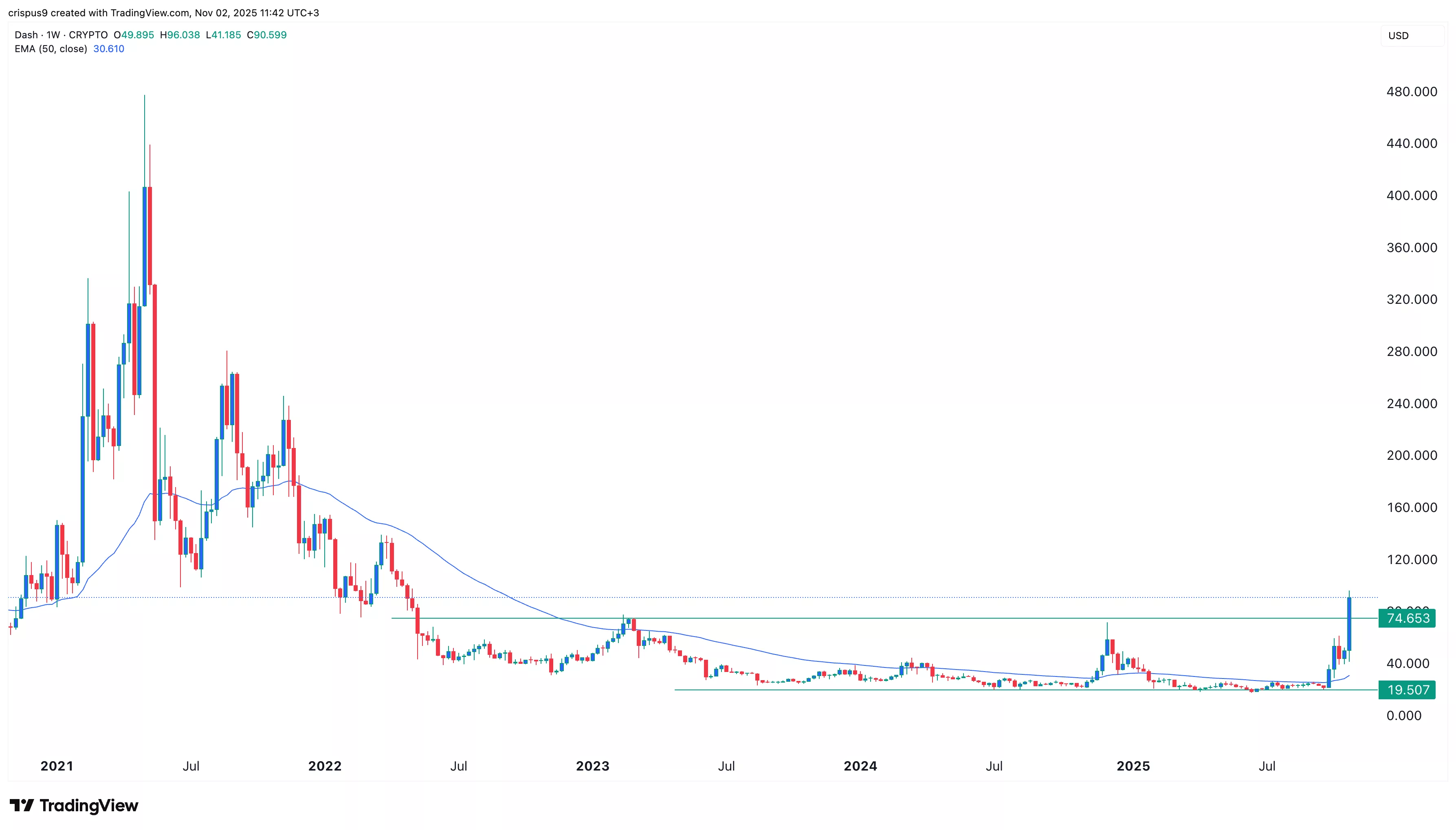
Why Dash price is going parabolic today
CryptoNewsNet·2025/11/02 22:21
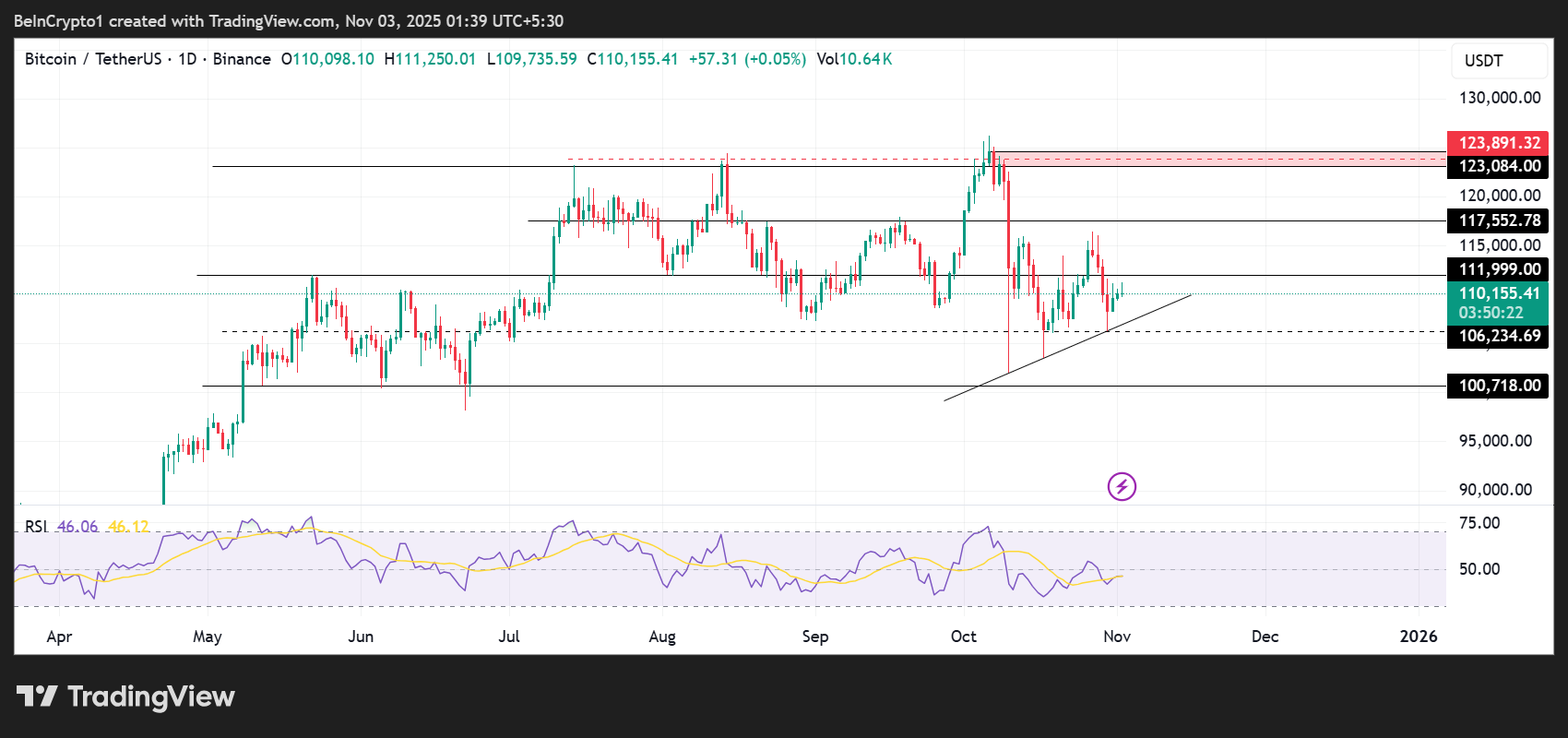
Bitcoin Eyes Liquidity Race As Fed Injects $29 Billion While China Floods Markets
CryptoNewsNet·2025/11/02 22:21
IOTA Recognized by OECD for Driving Digital Trade Infrastructure With TLIP and WEF
CryptoNewsNet·2025/11/02 22:21
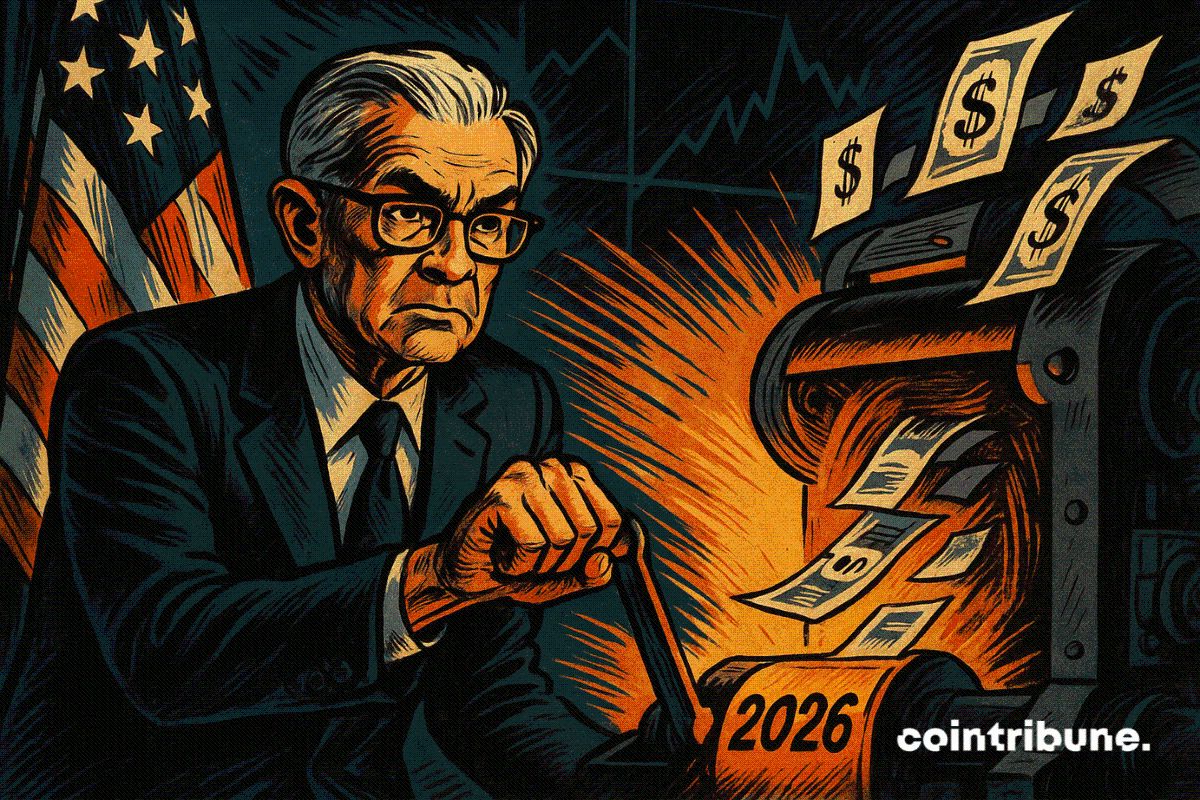
Deutsche Telekom Expands Into Decentralized Cloud With Theta Network
Cointribune·2025/11/02 22:09

Fed to Resume Treasury Purchases in Early 2026 as U.S. Economy Gains Relief
Cointribune·2025/11/02 22:09

Crypto: Why fear persists despite the USA-China tariff truce
Cointribune·2025/11/02 22:09

ECC Lays Out New Tech Roadmap For Q4 2025
Cointribune·2025/11/02 22:09
Flash
07:59
BIT: Bitcoin may continue to consolidate in the short termForesight News reported that BIT tweeted, "Regarding Bitcoin, the continuous rise over the past period has largely depended on the shifting balance between institutional demand and the available market supply. Over the past year, spot Bitcoin ETFs and Strategy have been major sources of such demand. When ETF inflows accelerate and Strategy continues to accumulate Bitcoin, the Bitcoin price usually continues to rise. Currently, the combined net purchases of ETFs and Strategy have decreased to only 870 million US dollars, mainly due to significant capital outflows from ETFs, which have shifted from net buying to net selling. Before ETF inflows stabilize and pick back up, Bitcoin may continue to consolidate in the short term."
07:57
Infographic: An Unprecedentedly Divided US Economy! While US Stocks Surge, American Sentiment Has Plummeted to 1950s Levels!Glonghui, May 26th — The disconnect between the current US capital markets and the real-economy sentiment is reaching a historic high. In May, the three major US stock indices surged to all-time highs amid a strong rally, with the S&P 500 index once rising sharply above the 7,500-point mark. However, on the other hand, the University of Michigan US Consumer Sentiment Index, reflecting the everyday experience of ordinary people, plummeted to 44.8 in May, the lowest level in over 70 years. Wall Street’s wealth celebration and the deep anxiety on Main Street together paint a grand picture of a macroeconomic paradox. The core reasons behind this rare “decoupling” are concentrated in three structural dimensions:1. Different “felt pain” under stubborn inflation:- The public foots the bill for soaring oil prices: The conflict in Iran has directly led to persistently high gasoline and other energy prices in the US, with inflation expectations rebounding to a startling 4.8%. In the University of Michigan survey, up to 57% of consumers said that the rising cost of living had severely deteriorated their personal finances. This tangible “physical pain” of daily essentials is both intuitive and inescapable.- US stocks have anti-inflation characteristics: On the contrary, stocks as nominal assets naturally resist inflation. Multinational giants are able to leverage strong pricing power to pass high raw materials and supply chain costs on to consumers, preserving or even boosting earnings per share (EPS) and driving indexes to rise unilaterally.2. The “K-shaped split” brought by the AI technology boom: - A feast for capital: The current US stock bull market is deeply driven by the profits of artificial intelligence (AI) and tech giants. The AI story opens vast future possibilities, and technology-driven productivity gains greatly expand the profit margins of listed companies, with passive capital and hedge funds staying near their peaks.- The job crisis for workers: Yet for ordinary workers, the spread of AI and companies’ pursuit of cost reduction and efficiency has, to some extent, intensified the broader fear of being replaced. The hidden weakness in the job market has further hurt confidence among low- and middle-income groups.3. Serious mismatch between index weightings and population structureThe stock market is not the whole economy: The S&P 500 index is heavily weighted towards tech and financial companies that are earning excess profits globally; yet consumer confidence indices cover all ages and classes across the US, particularly those without a college degree and low-income groups who are highly sensitive to price changes. Historical experience has shown that a long-term deep divergence between capital markets and real-economy consensus is extremely rare and dangerous. When financial valuations at the top of the pyramid are pushed ever higher, while ordinary consumers at the base cut back on travel and major purchases due to high interest rates and high oil prices, the ultimate engine of the US economy—consumption—is bound to slow down. Whether Wall Street’s castle in the air can finally land safely depends on when real-economy sentiment can rebound from its lows.
07:54
Veteran commodity analyst: The market may adjust positions in the short term based on political statementsHowever, senior commodities analyst Jeff Currie reminded in an interview that the market may adjust positions in the short term according to political statements, but ultimately it still comes down to one core issue: whether the actual oil supply is sufficient. Currie pointed out that as the conflict continues, global oil inventories are still declining. In just the past week, inventories have decreased by about 17 million barrels. He also noted that, on the surface, there are still around 8 billion barrels of global oil inventories, but a large portion of this is pipeline fill and system-required stocks, which cannot actually be tapped by the market. In Asia, the supply pressure is not only evident in the crude oil market, but is also being transmitted down the line to a key refined product—naphtha. Naphtha is a fundamental raw material for many chemical products, and is therefore sometimes referred to as the “flour” or “rice” of the industrial sector. According to British consulting firm Oxford Economics, Japan and South Korea are the countries most affected by the current supply shortage. In South Korea, the shortage of naphtha has already begun to impact the petrochemical industry chain. A report from The New York Times pointed out that some South Korean petrochemical giants have been forced to significantly cut operating rates, and some chemical manufacturers, due to a lack of raw materials, are unable to deliver orders as agreed to major automobile and electronics manufacturers, declaring that related deliveries are affected by “force majeure.” Additionally, there is analysis suggesting that South Korea’s semiconductor industry has also been affected by the naphtha shortage.
News