
News
Stay up to date on the latest crypto trends with our expert, in-depth coverage.

1Bitget UEX Daily | US-Iran Sign Electronic Agreement; SpaceX Market Cap Surges and FAB10 Concept Emerges; Nvidia Issues Bonds to Expand AI Capacity (June 16, 2026)2Hormuz Strait Reopens: Will the Federal Reserve Pivot Dovishly and Will the Market Reprice Rate Cuts?3US Stock Market Financing Hits Historical Limit! Morgan Stanley Warns: A Deleveraging Storm is Brewing

Bitcoin’s Price Breaks $66K, Reaching a 1-Month High
Cryptodnes·2024/07/19 16:16

Best Crypto to Buy Now July 19 – Mantle, Dogwifhat, Bittensor
Cryptonews·2024/07/19 15:49
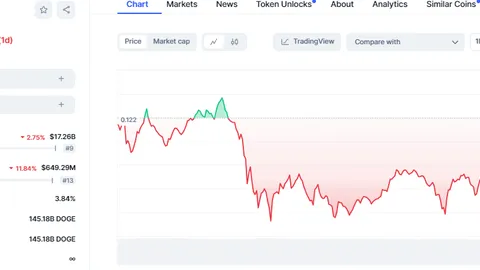
Meme Coins in Turmoil: DOGE Down 2%, SHIB Drops 3%, PEPE Falls 6%
Coinedition·2024/07/19 15:28

Is It Too Late To Buy PIXFI? Pixelverse Price Skyrockets 248% And This Might Be The Next Crypto To Explode
Insidebitcoin·2024/07/19 15:20

Cardano Hard Fork Near – What’s Next For ADA’s Price?
Cryptodnes·2024/07/19 14:07
Ripple (XRP) Shows Strength in Key Areas, Bullish Momentum Rises
BeInCrypto·2024/07/19 13:53
ZKEX.com Unveils ‘Super DEX’ Following $2.5m Fundraise
Cryptonews·2024/07/19 13:25

Meme Games Scores Over $160,000 in Presale in Less Than 3 Days as Market Seeks Gold Medal Meme Coin
Cryptonews·2024/07/19 13:17
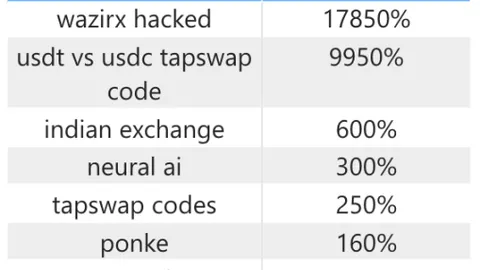

Memes to watch out for after the market rebounds, just read this article
Odaily·2024/07/19 09:17
Flash
06:03
Barclays: Upgrades Porsche rating to "Neutral"Glonghui, June 16 — Barclays upgraded Porsche's rating from "Underweight" to "Neutral" and raised its target share price from 40 euros to 50 euros.
06:02
Opinion: Space AI Computing Power Deployment Could Become a Significant Upside Option for SpaceX Valuation, Orbital Approach Not GPU-Cost-Prohibitive and Potentially Only 1/4 Ground ExpensesBlockBeats News, June 16th - In the latest episode of the BG2 podcast, Fox and Brad Gerstner discussed the economics of deploying AI computation power in space, viewing it as a potential long-term option value within SpaceX's valuation.
BG2 is a tech investment podcast hosted by Altimeter co-founder Brad Gerstner and former Benchmark general partner Bill Gurley, highly recognized in the Silicon Valley investor community. Gerstner is the founder and CEO of Altimeter Capital; Andrew Fox (often nicknamed Foxy) is an analyst at Atreides Management.
Fox stated that, by his calculations, each Starship launch could correspond to approximately 5 terawatts of computing power capacity. Extrapolating further, the capital expenditure to deploy relevant equipment in space could be around $5 billion per gigawatt.
He compared this figure to ground-based data centers, mentioning that the capital expenditure on switching equipment, generators, transformers, buildings, power acquisition, and cooling systems in ground data centers could reach $20-25 billion per gigawatt. Therefore, if the orbital computation power plan materializes, some non-GPU infrastructure costs could be significantly lower than those on the ground.
Gerstner added from the perspective of overall computation construction costs, noting that today, deploying 1 gigawatt of computation power on the ground may require around $60 billion, with about $35 billion for GPUs and chips and around $25 billion for land, buildings, power, and cooling. He believes that these ground elements may also face inflationary pressures in the future, while in space, space, power, and cooling are nearly free in the economic model.
However, Fox also made it clear that orbital computation power is not a necessary condition for establishing SpaceX's IPO valuation. He believes this business is more like significant upside potential rather than a core premise of the current valuation.
06:00
Bitcoin on-chain indicators remain weak, recovery depends on US-Iran peace agreementAccording to Odaily, LVRG Research director Nick Ruck stated that although Bitcoin recently regained the $67,000 level, its momentum remains weak, with declining trading volumes and stagnant on-chain indicators, indicating an insufficient recovery. U.S. President Donald Trump said on Sunday that the United States has reached a peace agreement with Iran to end months of ongoing conflict, with the agreement expected to be signed on Friday. Many details of the deal remain unknown, but Trump stated that the agreement will keep the Strait of Hormuz open, the United States will lift the blockade on the strait and Iranian ports, and the two countries will conduct 60 days of negotiations on Iran's nuclear program and potential sanctions relief. Swissblock said on Monday that Bitcoin price momentum and energy flow indicators remain in a "weak momentum and weak participation" state. Although Bitcoin rebounded to $67,000 on Monday after dropping below $60,000 on June 6, price momentum is still at -1, and OBV has fallen to a multi-year low of -1.7 million. (Cointelegraph)
News