
News
Stay up to date on the latest crypto trends with our expert, in-depth coverage.

1Bitget UEX Daily | Iran Confirms Larijani's Death; “Cathie Wood” Bullish on AI; Micron Stock Hits New All-Time High (March 18, 2026)2Morgan Stanley exec says crypto ETF adoption still 'very early' as advisors weigh allocations3SOL price signal tied to previous 142% rally flashes again: Are the bulls back?

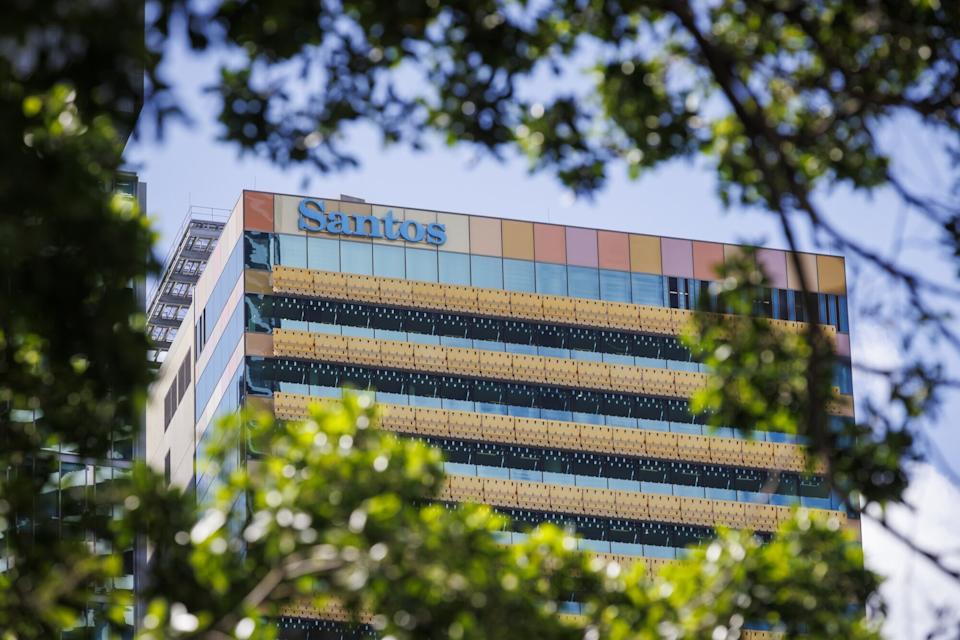
Santos Plans to Reduce Staff by 10% Following Drop in Yearly Earnings
101 finance·2026/02/18 03:18

Alarm.com (ALRM) Q4 Earnings: What To Expect
Finviz·2026/02/18 03:15
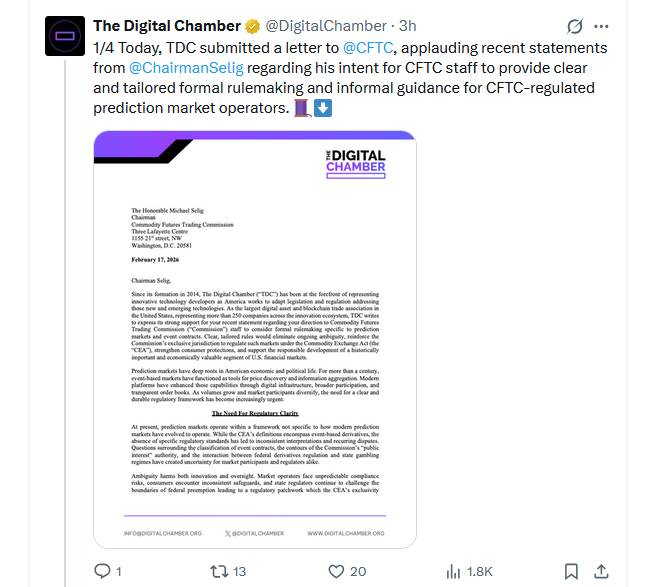
Crypto lobby forms working group seeking prediction market clarity
Cointelegraph·2026/02/18 03:15
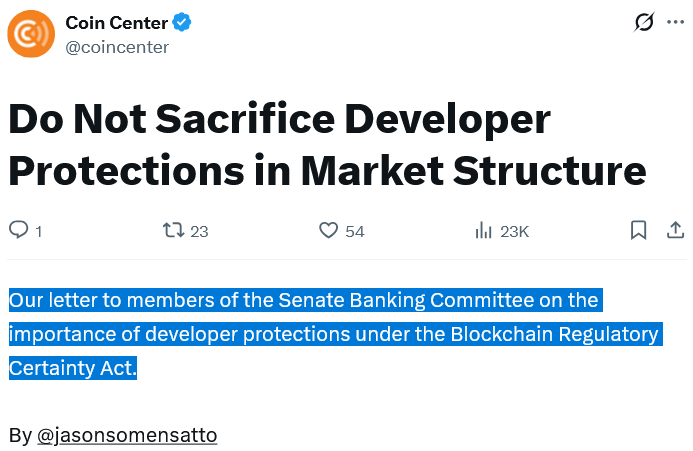
Coin Center urges Senate not to axe crypto developer protection bill
Cointelegraph·2026/02/18 03:09
Santos Announces 10% Workforce Reduction as Free Cash Flow Reaches $1.8 Billion
101 finance·2026/02/18 02:48
Flash
18:34
Strike Authorization Passed by Overwhelming Majority: Teamsters Announce Members at Keurig Dr Pepper (KDP) Plants in Norcross and Union City, Georgia, Have Voted Overwhelmingly to Authorize a StrikeThis voting result grants the union the legal right to organize strike actions in the event of a breakdown in labor negotiations. **Labor negotiations enter a critical stage** The vote comes at a time when KDP and the union are engaged in crucial contract negotiations. Union representatives emphasize that this strike authorization vote is an important tool to pressure management, aiming to secure fairer compensation, improve working conditions, and ensure job security. Currently, KDP operates multiple production and distribution centers across the United States, and any disruption at the Georgia plant could affect the beverage supply chain in the Southeast region. **Tensions persist in beverage industry labor relations** In recent years, labor disputes have frequently occurred in the U.S. beverage industry. As inflationary pressures persist, unions have adopted increasingly tough stances in wage negotiations. Earlier this year, several beverage giants faced similar strike threats, reflecting ongoing tensions in industry labor relations. As a major beverage supplier in North America, KDP's labor negotiations are closely watched by the market. **Potential operational risks and market impact** If a strike is actually implemented, KDP's operations at the Georgia plant will face direct disruption, potentially affecting its supply capacity in the Southeast. Analysts point out that if such labor disputes are prolonged, they will not only increase corporate operating costs but may also negatively impact brand image and market share. Investors are closely monitoring developments and assessing the potential impact on KDP's performance in the second half of the year.
18:34
US real estate technology platform Compass recently filed documents with the court to voluntarily withdraw its property data lawsuit against competitor Zillow.This move marks a temporary conclusion to the legal dispute between two companies with significant influence in the online real estate services sector. **Background of the Lawsuit and Industry Landscape** The lawsuit originated from the long-standing competition for control over property listing data within the real estate brokerage industry. As the leading internet real estate database company in the United States, Zillow dominates the real estate information search market thanks to its extensive property listing system. Compass, as a technology-driven real estate brokerage, relies heavily on timely and accurate listing information to serve its clients. In the U.S. real estate transaction market, the Multiple Listing Service (MLS) is the core source of property data, but platforms differ significantly in how they access and use this data. Such data disputes are not unprecedented in the industry; several brokerages have previously clashed over data access rights. **Strategic Considerations Behind the Withdrawal** Analysts point out that Compass’s decision to withdraw the lawsuit may be based on multiple factors. Firstly, ongoing legal proceedings consume substantial management resources and funds, and for Compass, which is seeking a path to profitability, focusing on core business development is more urgent. Secondly, the real estate technology sector has recently faced changing market conditions, with rising interest rates slowing transaction volumes and prompting companies to reassess their competitive strategies. Notably, the decision to withdraw came after Zillow announced an upgrade to its technology platform. Zillow is advancing its “super app” strategy, aiming to provide users with end-to-end services from property search to transaction completion, which may have shifted the balance of interests between the two parties. **Industry Impact and Market Response** The withdrawal has symbolic significance for the real estate technology industry. It may signal a shift in competitive focus from data control to service experience and technological innovation. With the development of virtual tours, AI-powered valuations, and digital transaction tools, pure data advantages are being replaced by comprehensive service capabilities. Market observers believe this development could leave room for future collaboration between the two companies. As real estate transactions become increasingly digital, data sharing and cooperation between platforms are becoming more important. Compass and Zillow each have unique strengths, and if they can find a win-win model, it could raise industry service standards. As of press time, neither company has commented further on the matter. Investors will closely monitor subsequent developments, especially whether the two parties will explore new forms of collaboration in technology integration or data sharing.
18:33
Goldman Sachs advises companies to proceed with mergers and acquisitions without waiting for the perfect timing.“If you wait until everything is perfect, you may find it difficult to complete a transaction,” said Nimesh Khiroya, Co-Head of M&A for Europe, Middle East, and Africa at Goldman Sachs. “You have to strike a balance between strategic momentum and managing volatility.” Goldman Sachs expects that the volume of pure M&A transactions will reach $3.8 trillion in 2026, a slight increase compared to last year. Despite a poor start this year, with technology stocks being sold off, private credit being impaired, and the Iran war causing energy prices to soar. (Bloomberg)
News