
News
Stay up to date on the latest crypto trends with our expert, in-depth coverage.


BlockStreet (BSB) 24-hour amplitude at 126.5%: Binance Futures listing drives trading volume surge
Bitget Pulse·2026/03/25 22:19
Bedrock (BR) fluctuates 49.4% within 24 hours: abnormal surge in Binance Futures trading volume drives movement
Bitget Pulse·2026/03/25 22:02
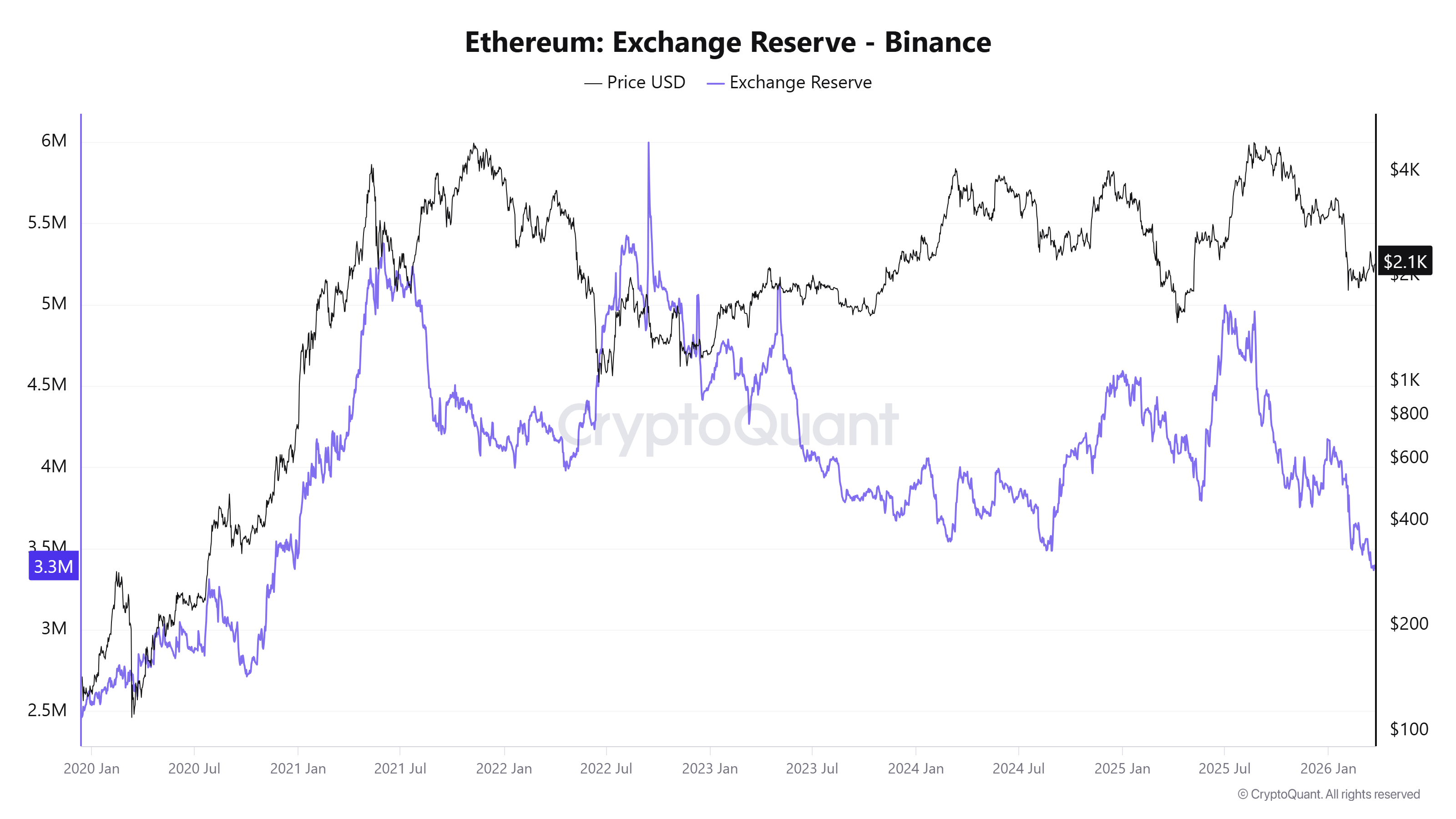
Data points to accelerating Ether supply crunch: Will ETH price follow?
Cointelegraph·2026/03/25 21:21
Analyst Predicts Imminent XRP Price Breakout. Here’s the Bullish Signal
TimesTabloid·2026/03/25 21:12
MemeCore (M) 24-hour volatility reaches 65.1%: Supply shortage and short squeeze drive surge
Bitget Pulse·2026/03/25 20:52
Morgan Stanley warns dollar rally may be bull trap amid growth risks
101 finance·2026/03/25 20:42
Mastercard set to be crypto-fiat 'network connector' following BVNK acquisition: Mizuho
The Block·2026/03/25 20:36
Flash
14:21
U.S. Job Openings in May Rise to Near Two-Year High, Well Above Market ExpectationsBlockBeats News, June 30th, the U.S. Bureau of Labor Statistics (BLS) released data showing that the number of job openings in the U.S. in May, known as JOLTS, rose to approximately 7.6 million, up from 7.59 million in April, hitting a new high in nearly two years and remaining unaffected by the uncertainty brought about by the Iran conflict.
Previously, economists had widely expected job openings in May to decrease by about 10% to around 6.975 million, believing that the sharp increase in job openings in April might have been a temporary phenomenon.
Analysis suggests that the latest data indicates that the U.S. labor market has not significantly weakened due to the Middle East situation and energy price fluctuations, but may instead be further stabilizing and recovering. Earlier data from job platforms such as Indeed and LinkUp had shown a overall slowdown in hiring demand this year, but this official data is significantly different from market expectations.
14:07
Plume partners with FalconX to launch $1 billion-level FALX structured credit assetsForesight News reported that the institutional open finance platform Plume has announced a partnership with the world-leading digital asset prime broker FalconX to launch the FALX structured credit asset. This asset has a scale of 1 billion dollars, with assistance from Pareto and managed by M11 Credit. Its underlying assets are entirely based on high-quality overcollateralized loans issued through the FalconX prime brokerage platform. This asset utilizes programmable smart contracts to fully support "mid-month subscriptions" and "real-time interest accrual from the first day," enabling global investors to deeply participate in traditional credit yield strategies through compliant, programmable tools.
14:03
Affected by news of competition from Open USD, CRCL fell nearly 9% intraday.Odaily reported that due to the news of several institutions such as Visa, Stripe, Mastercard collaborating to launch the stablecoin Open USD, Circle (CRCL) fell below $70 during the day, currently quoted at $69.53, with a daily decline of 8.59%.
News