
Alleged Hack of DeGods CEO Frank’s Wallet After Exit Sparks Debate

Just days after stepping down, DeGods founder Frank allegedly lost 16 NFTs in a hack. Now, the crypto world is split: was it real—or a calculated exit?
The sale of 16 DeGods NFTs from the Solana wallet of former DeGods CEO Rohun Vora, popularly known as Frank DeGods, has sparked intense debate within the crypto community.
The unexpected move has led to speculation about his motives and timing. Notably, the bulk sale occurred just three days after Frank officially announced his resignation as CEO of DeGods.
Frank’s Resignation and the Sudden Sale of 16 NFTs
Frank DeGods, the founder of DeGods, announced his resignation as CEO via his X account on May 12, 2025. He shared that he would step down from leadership after three years of dedication.
“I dedicated 3 years of sleepless nights trying to make DeGods & y00ts a success. I’m proud of the work I did. I’m excited to hand the resign to the team and watch them cook. maybe we’ll look back at this fixation on ‘frank degods’ as the thing that was holding us back,” he said on X.
Just days after the resignation announcement, Frank’s Solana wallet was compromised, leading to the sale of 16 DeGods NFTs on the Magic Eden platform.
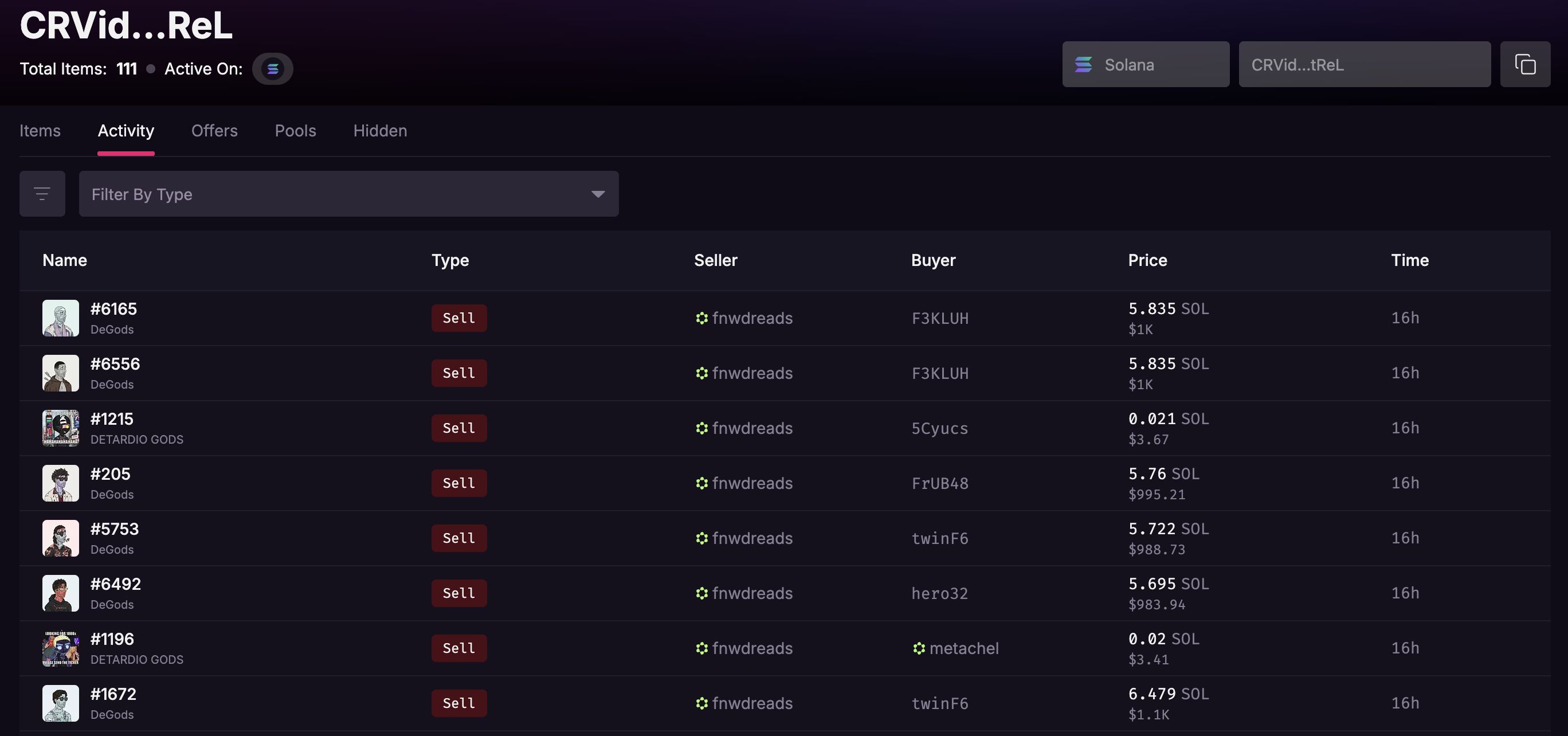 List of Frank’s NFTs Sold on Magic Eden. Source:
Magic Eden
According to a Discord chat allegedly from the DeGods team, Frank’s account was hacked. The laptop he used for transactions was compromised, allowing the hacker to earn over 108 SOL, equivalent to nearly $19,000, from the stolen NFTs.
A Hack or Did Frank Sell the NFTs Himself?
Frank and the team insist this was a hack. However, the crypto community remains divided, with some believing the claim and others questioning its motives.
“I’m not seeing any other assets stolen. So the hacker was kind enough to only sell his degods and nothing else?” an X user questioned.
Another X user claimed that the timing of the sale is suspicious. Meanwhile, other users suggested the incident might be a staged move to allow Frank to exit the project without backlash.
These suspicions aren’t baseless. The timing of the hack, immediately following Frank’s resignation, raises questions about intent. Additionally, DeGods’ value has significantly declined from its peak of over $37,000 to just $1,000.
Some speculate Frank may have chosen this moment to “cash out” before the NFT’s value drops further. However, no concrete evidence supports these accusations, and Frank maintains he was the victim of a cyberattack.
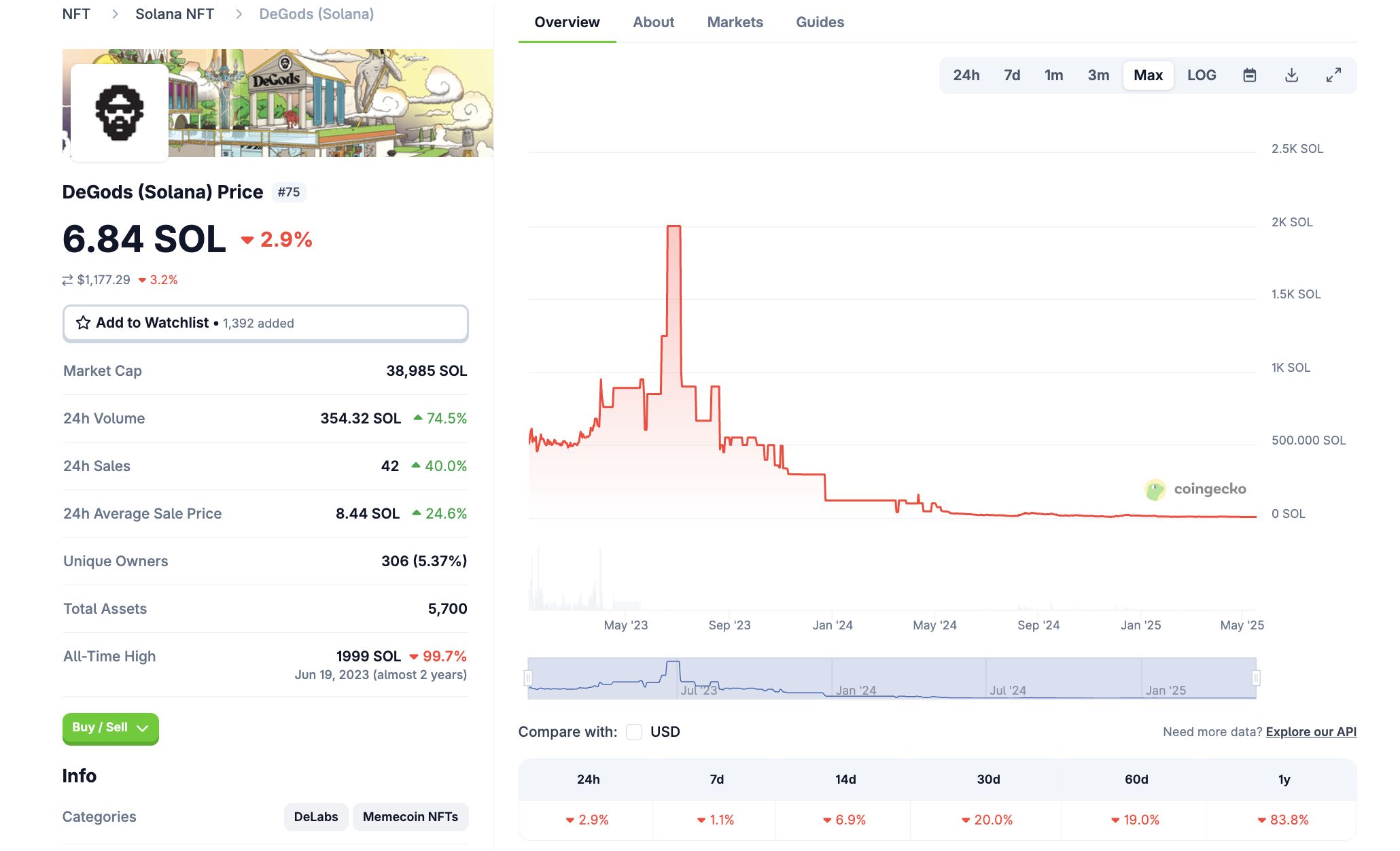 DeGods NFT Performance on Solana. Source:
CoinGecko
This decline reflects broader NFT market sentiment, which has cooled significantly since the 2021-2022 boom.
Moreover, DeGods has faced controversy before, particularly with its decision to migrate from Solana to Ethereum and later return to Solana, alienating parts of its community. These choices and a lack of innovation and market pressures have eroded DeGods’ former prominence.
Whether genuine or orchestrated, Frank’s hack has amplified uncertainty, leaving investors questioning the project’s recovery potential.
Disclaimer: The content of this article solely reflects the author's opinion and does not represent the platform in any capacity. This article is not intended to serve as a reference for making investment decisions.
You may also like
The global semiconductor equipment industry faces a critical test! Bernstein: The new US export control bill may trigger sector turbulence; next week is an important observation window.
Bernstein has released a new research report stating that the recent legislative progress of the U.S. "Multilateral Coordination for Hardware Technology Controls Act" warrants the close attention of the global semiconductor industry.
Rare "Three Firsts"! State Council's Major Moves to Stabilize the Market, How Do Institutions View It?
The State Council executive meeting has featured three "firsts": for the first time, the release time was advanced to trading hours; for the first time, the phrases "the capital market is crucial to the overall economic development" and "national team" were explicitly mentioned in the official statement. Analysts such as Tao Chuan from Guolian Minsheng and Wang Han from Industrial Securities believe that the market stabilization mechanism is evolving from short-term support to an institutionalized, diversified, and coordinated upgrade, with policy focus shifting to optimizing Huijin’s functions, introducing long-term funds into the market, and promoting dividends and share buybacks. Chen Guo from East Money regards this State Council meeting as an “important policy bottom.” CITIC Securities expects the market may see an oversold rebound in the short term. Going forward, key areas of attention will be Huijin’s actions and the implementation of fundamental policies.

U.S. Senate Democratic leader election to be voted on December 1, impacting AI regulation and tariff agenda
The election for the Democratic leader in the U.S. Senate will be held by secret ballot on December 1, and the winner must reach the threshold of 28 votes.

From Earning 20% Annually to Going Negative in a Single Month, Wall Street’s Favorite Arbitrage Trade “Fails”
After rising for six consecutive months, the Bloomberg FX Carry Index turned negative for the first time in November, falling by 0.9%. Cooling enthusiasm for AI has increased market volatility, and Brazil’s election led to an 8% single-day plunge in the real, nearly wiping out the carry trade's 18% annual return overnight. Industry giants such as Goldman Sachs and Citigroup have issued warnings: “The era of mindless long positions is over.” Although capital has not withdrawn, trading thresholds have surged, requiring defensive hedging and a shift toward selective strategies.

Crypto prices
More


